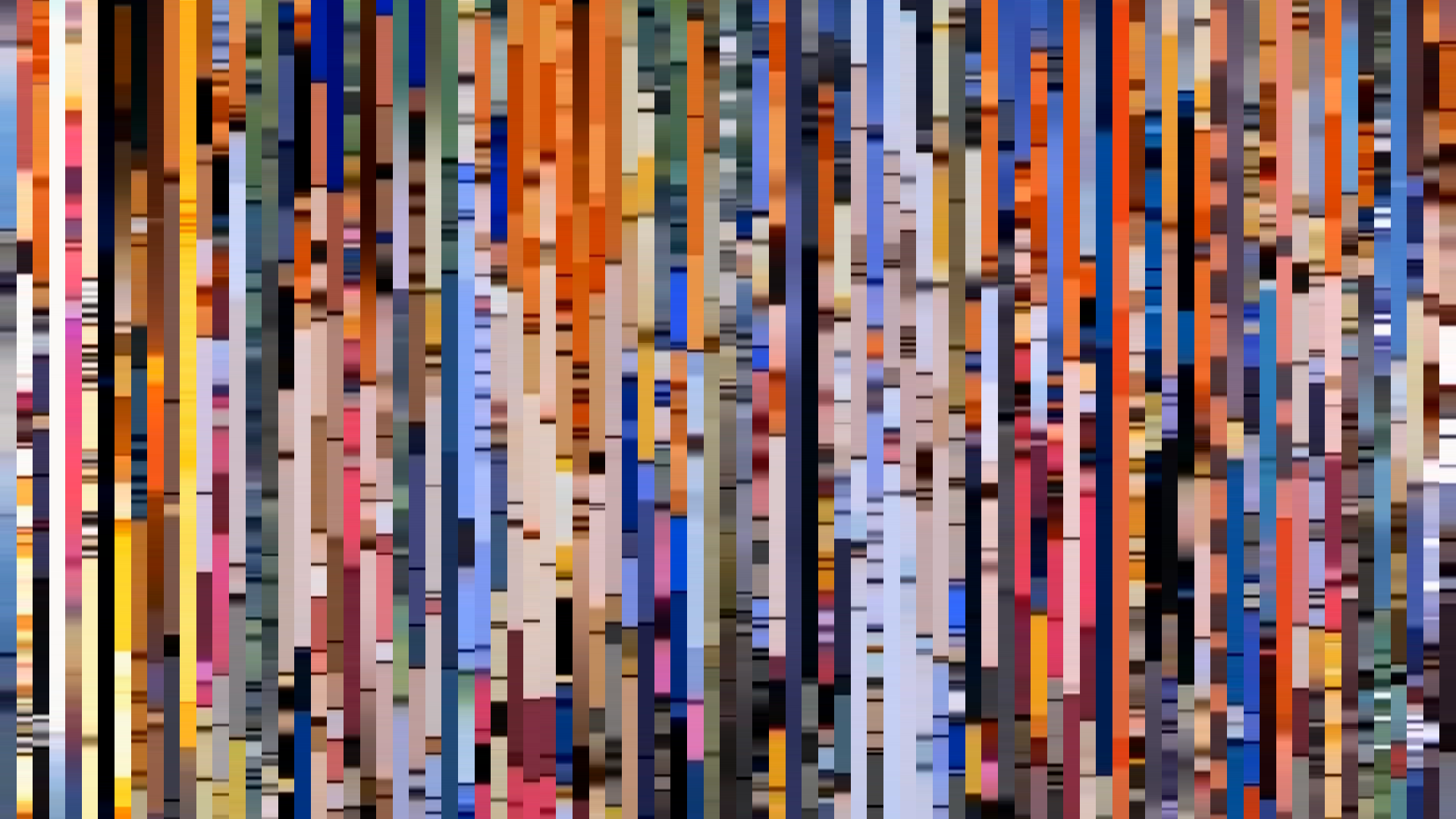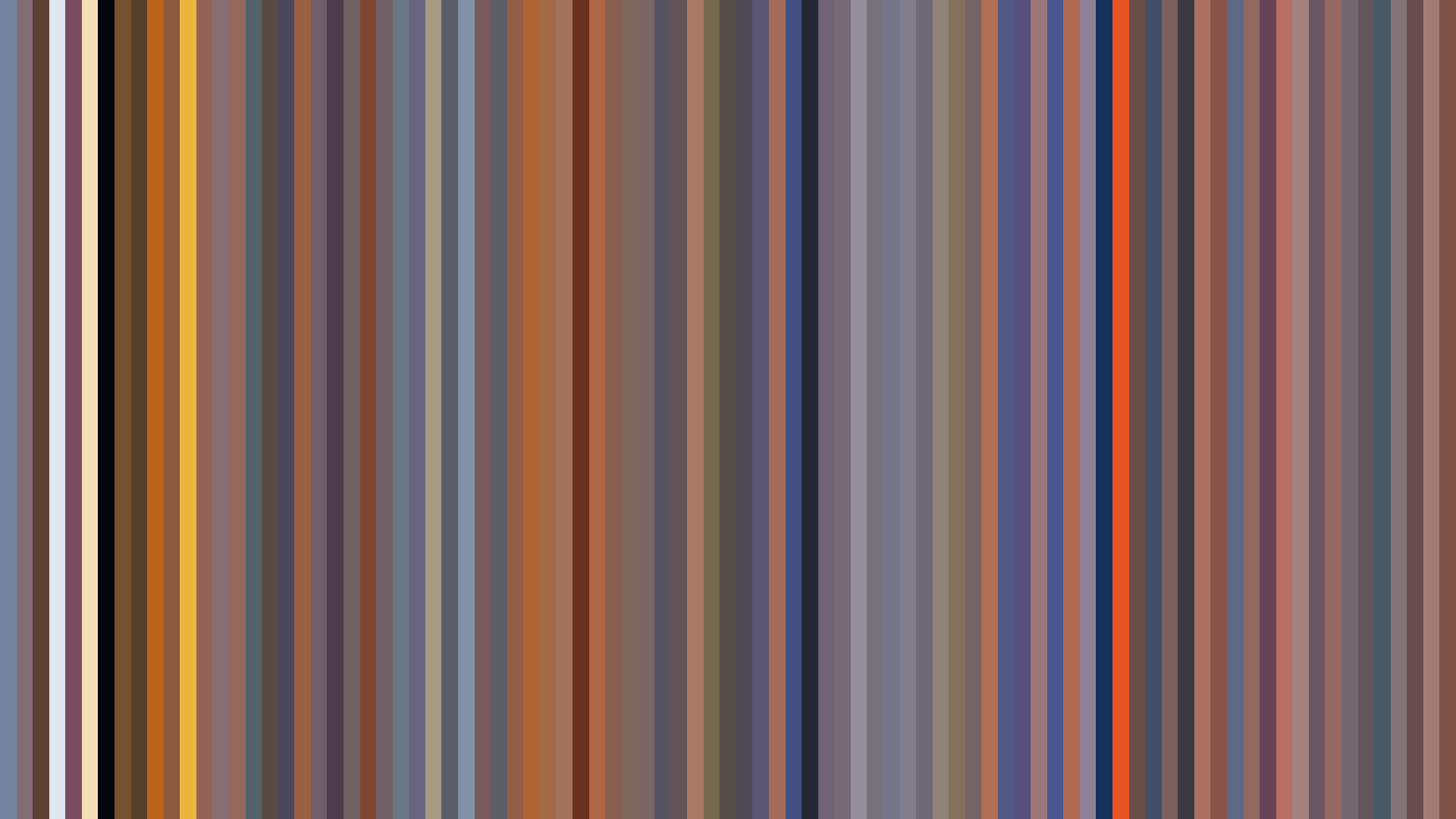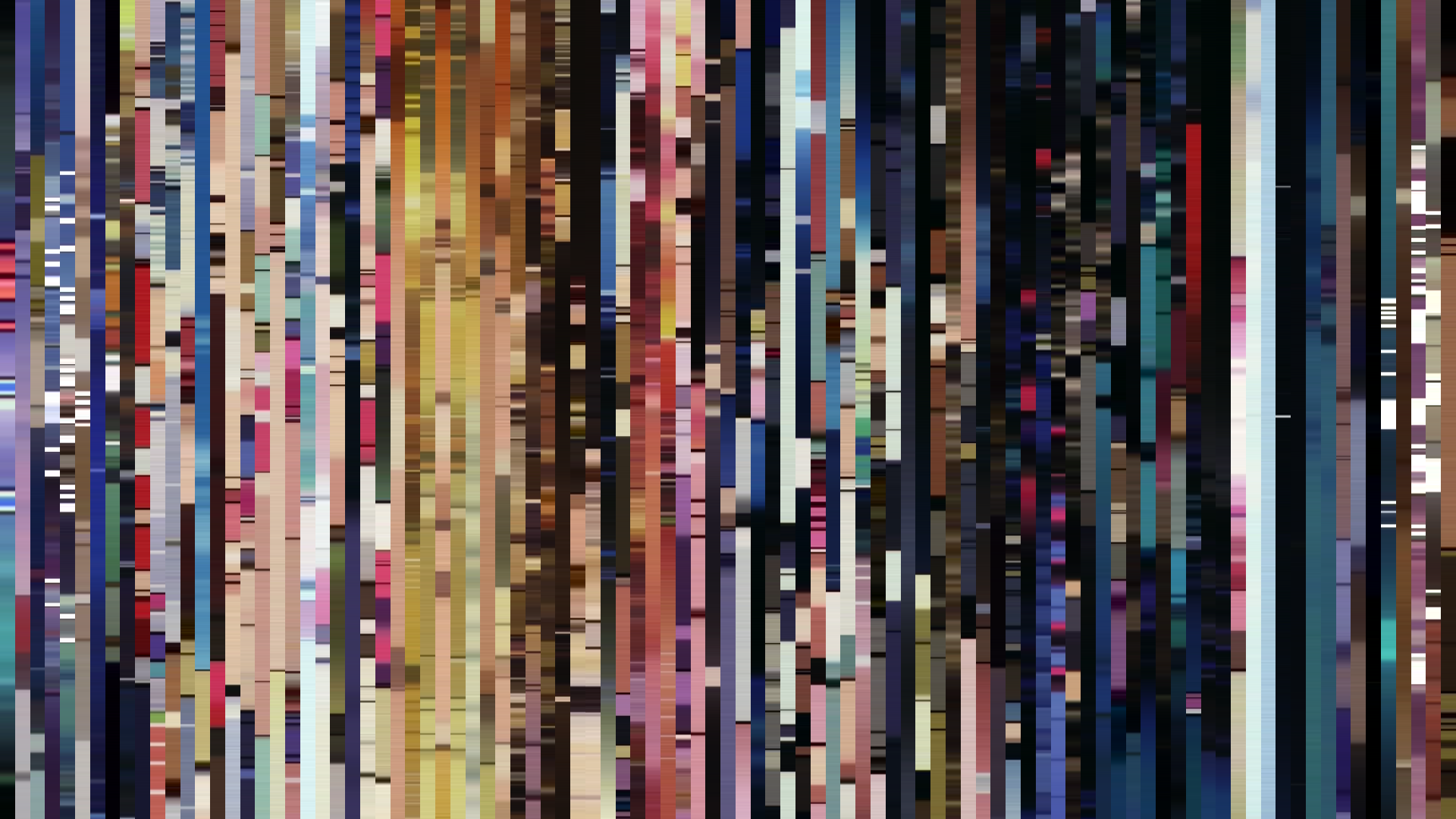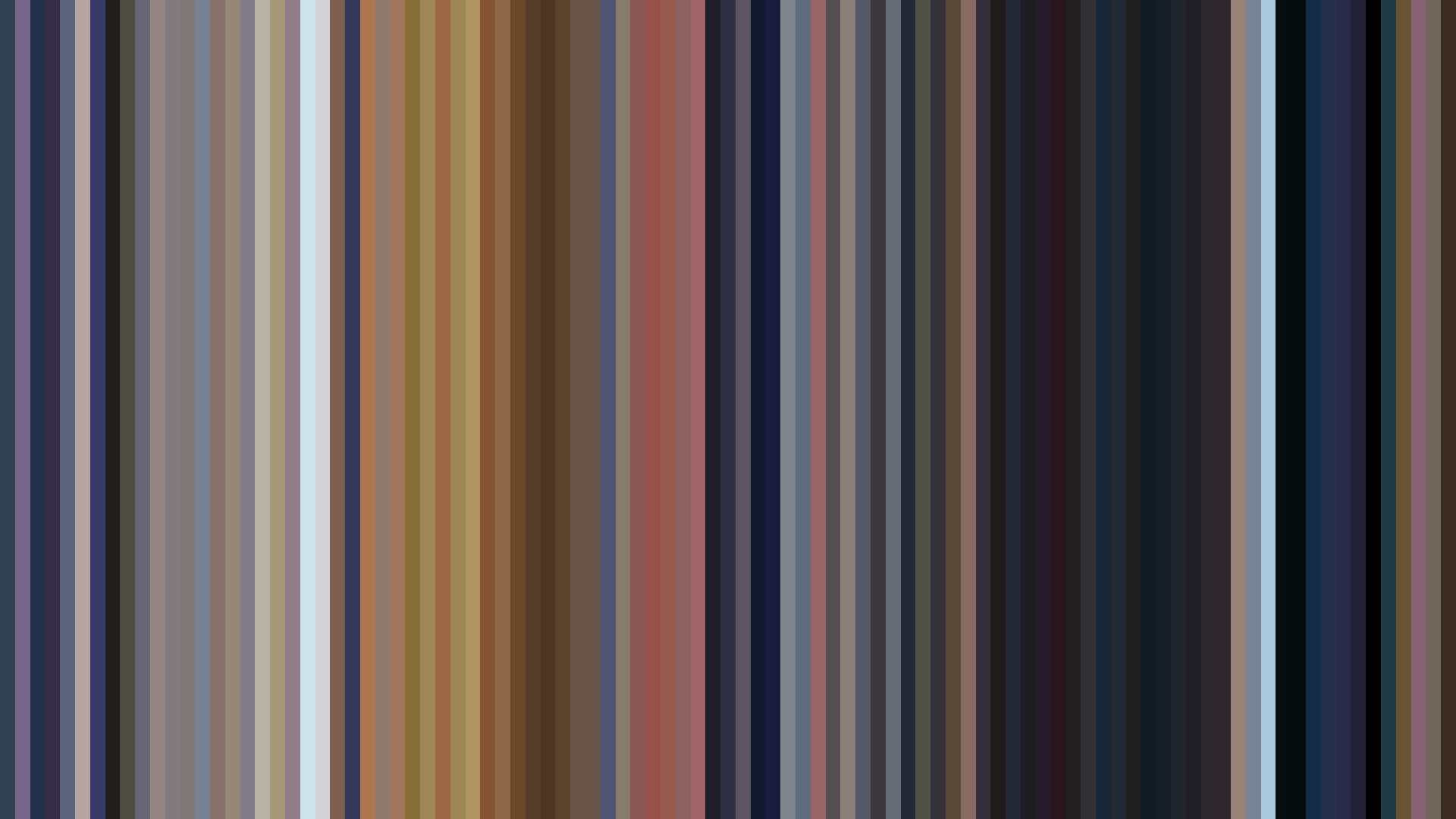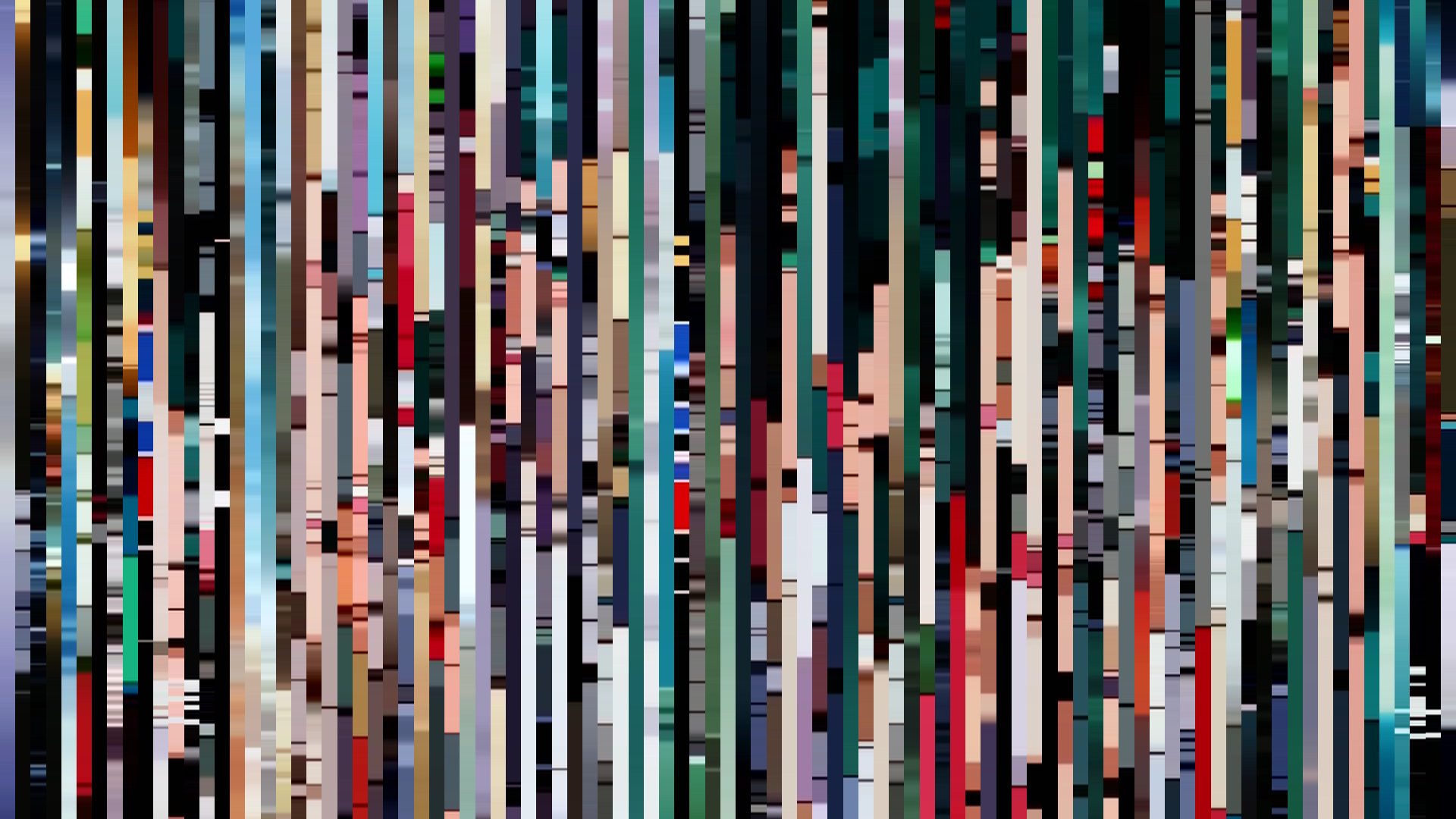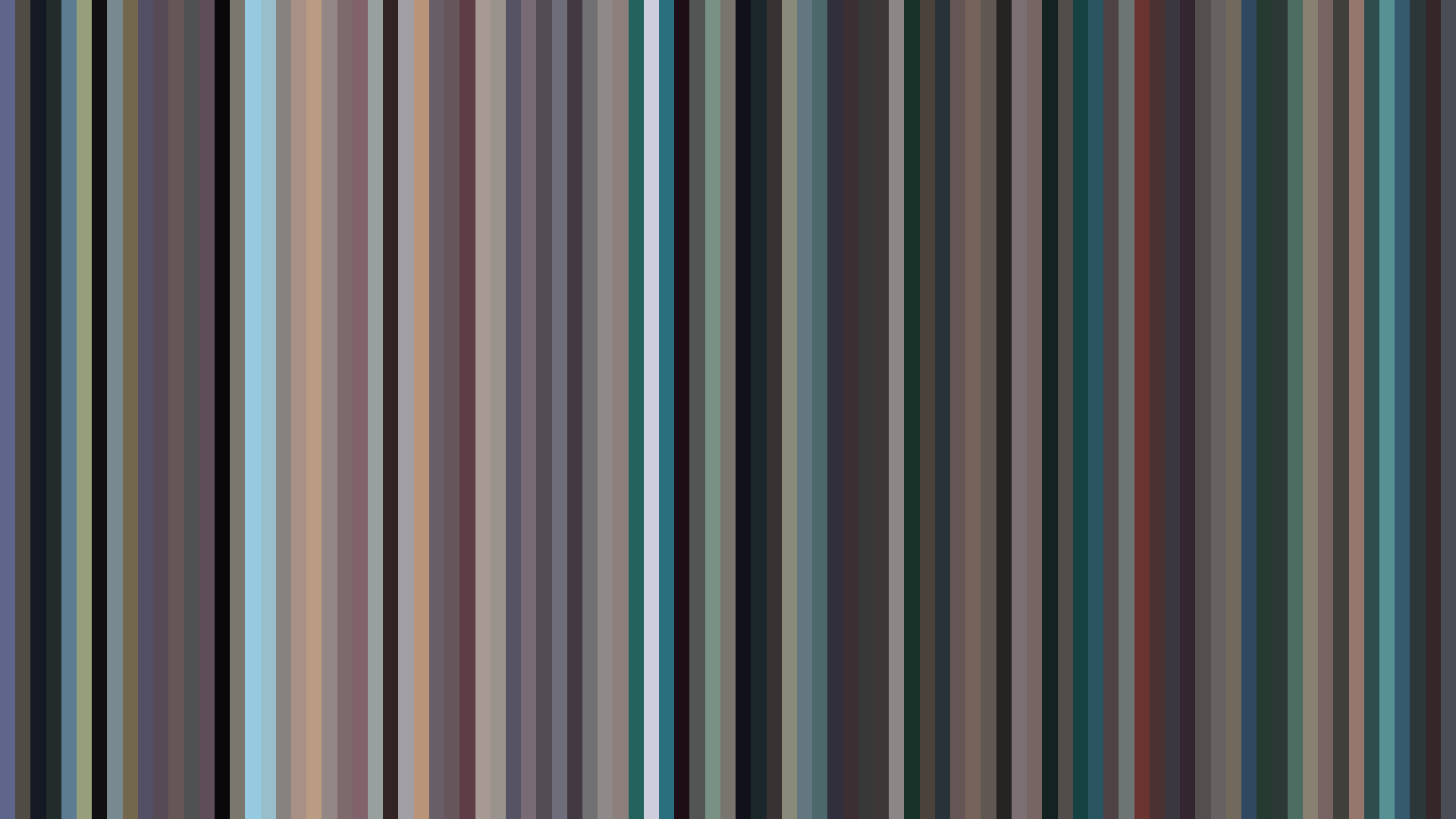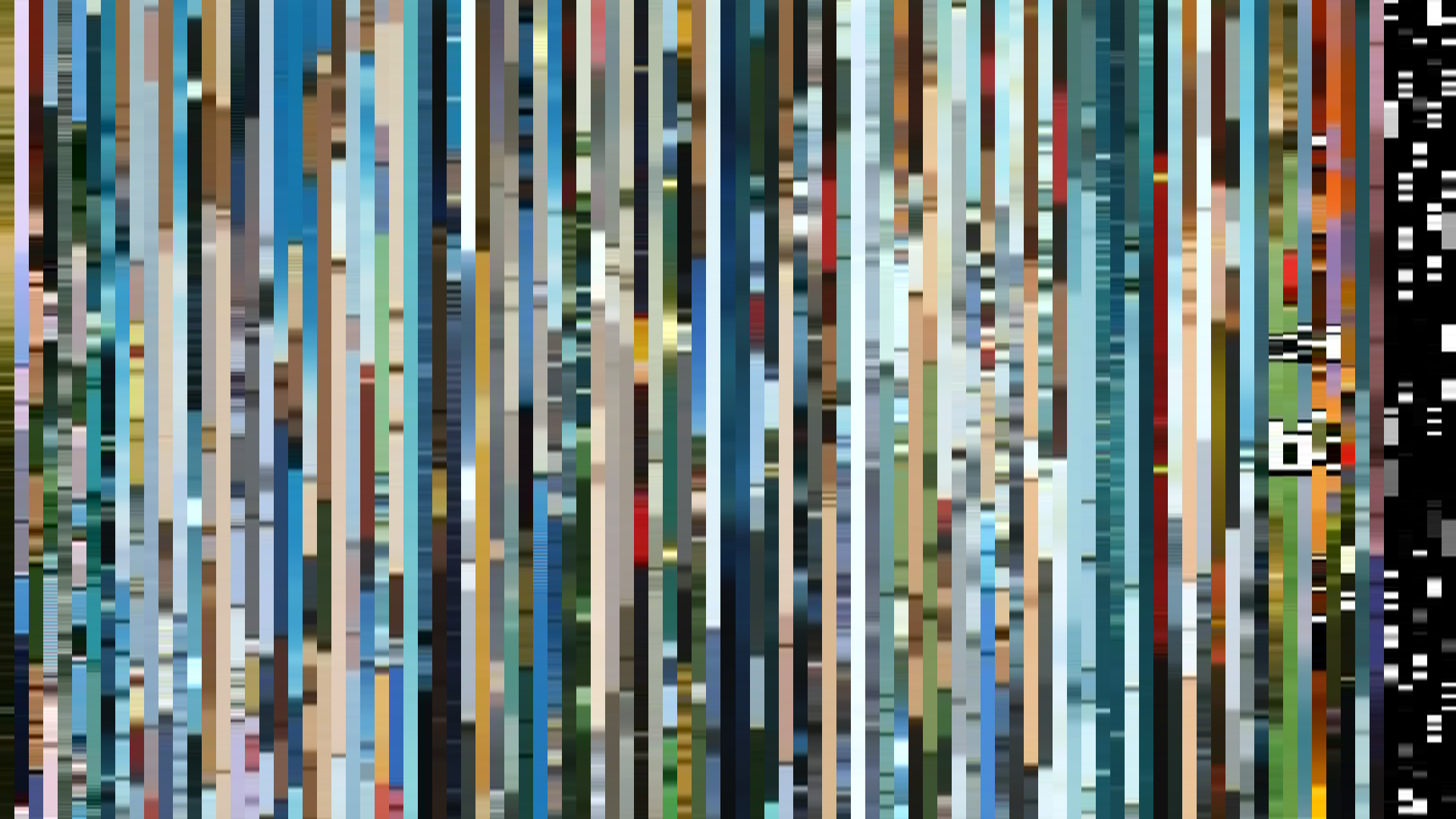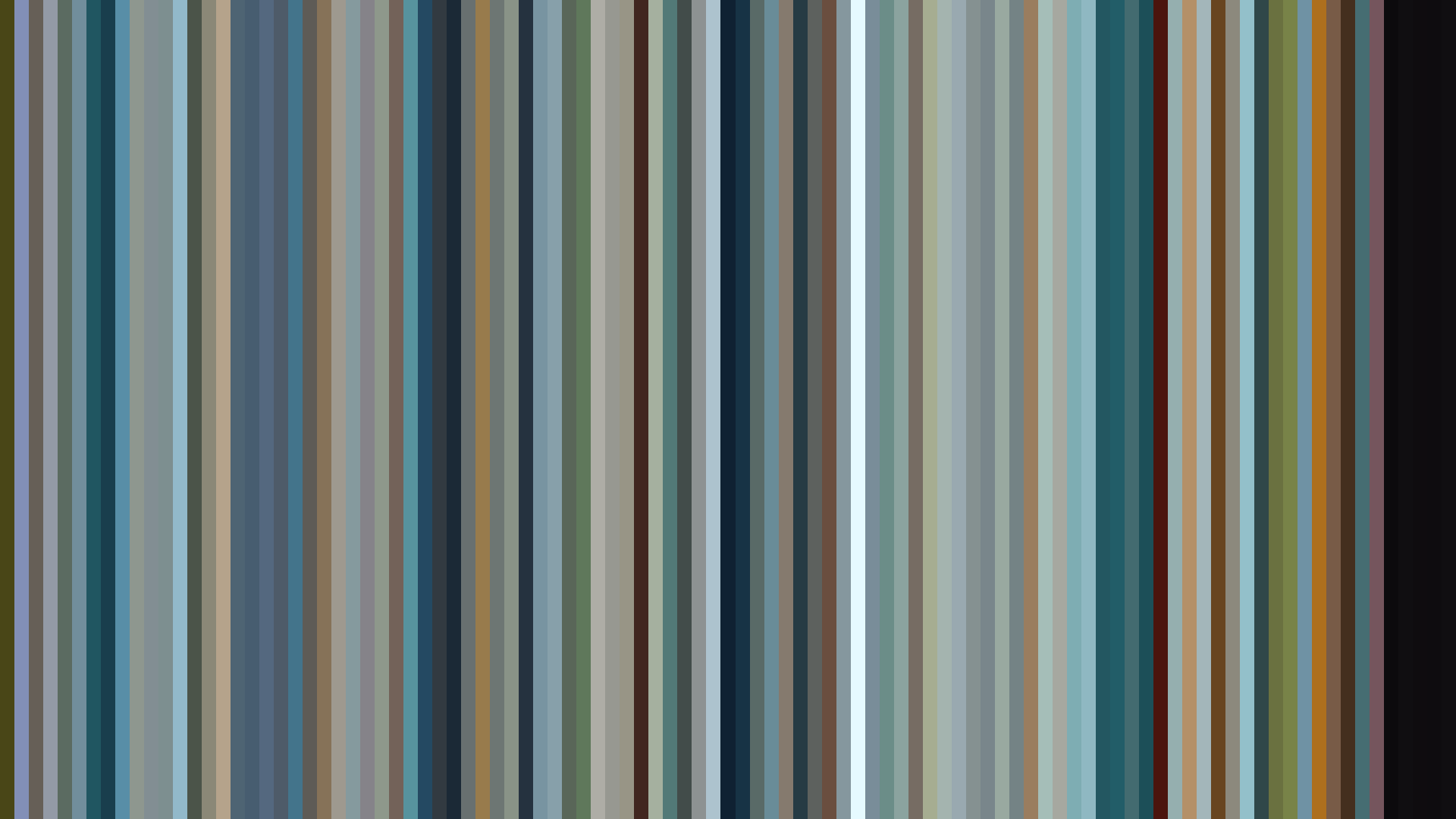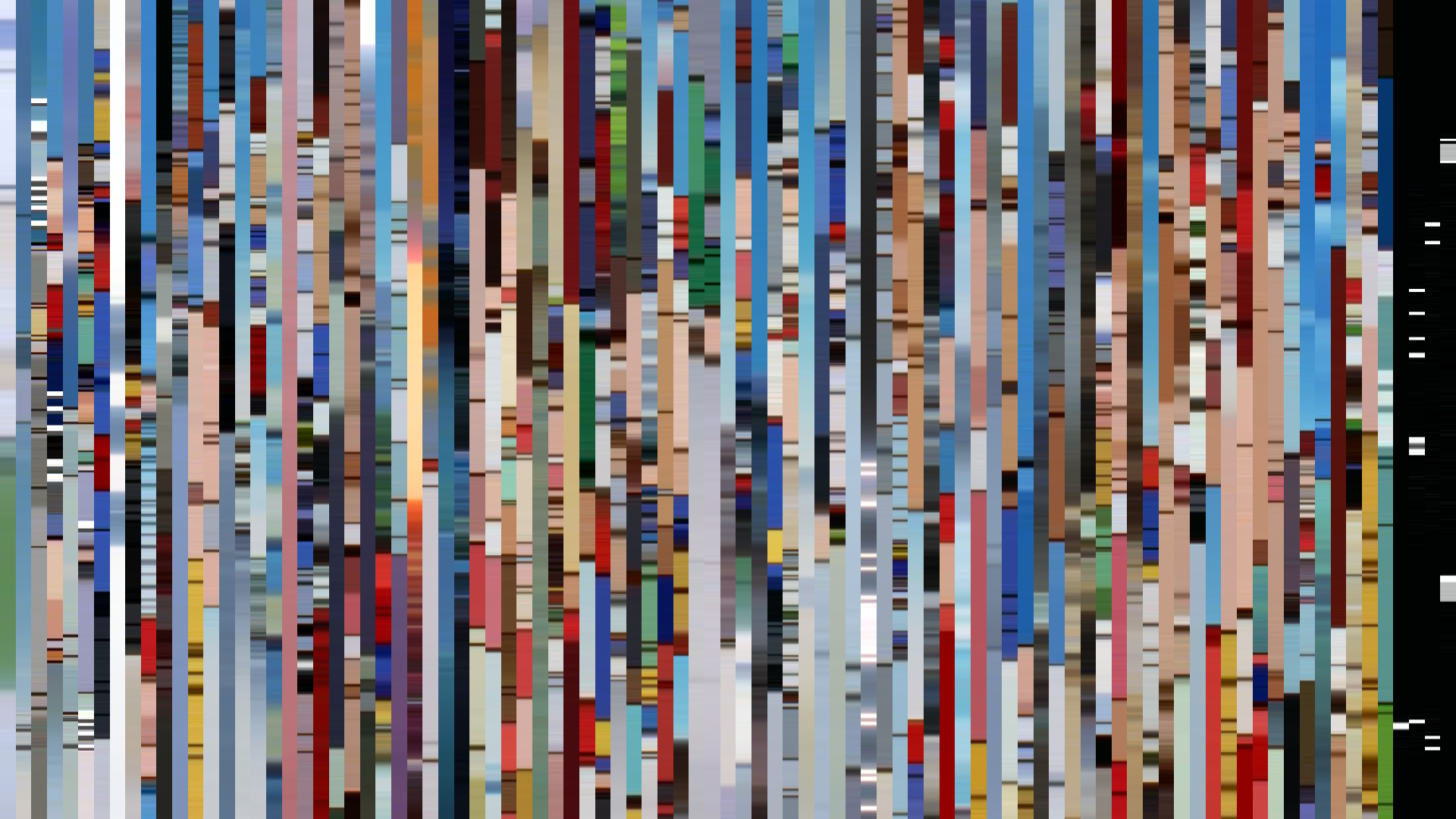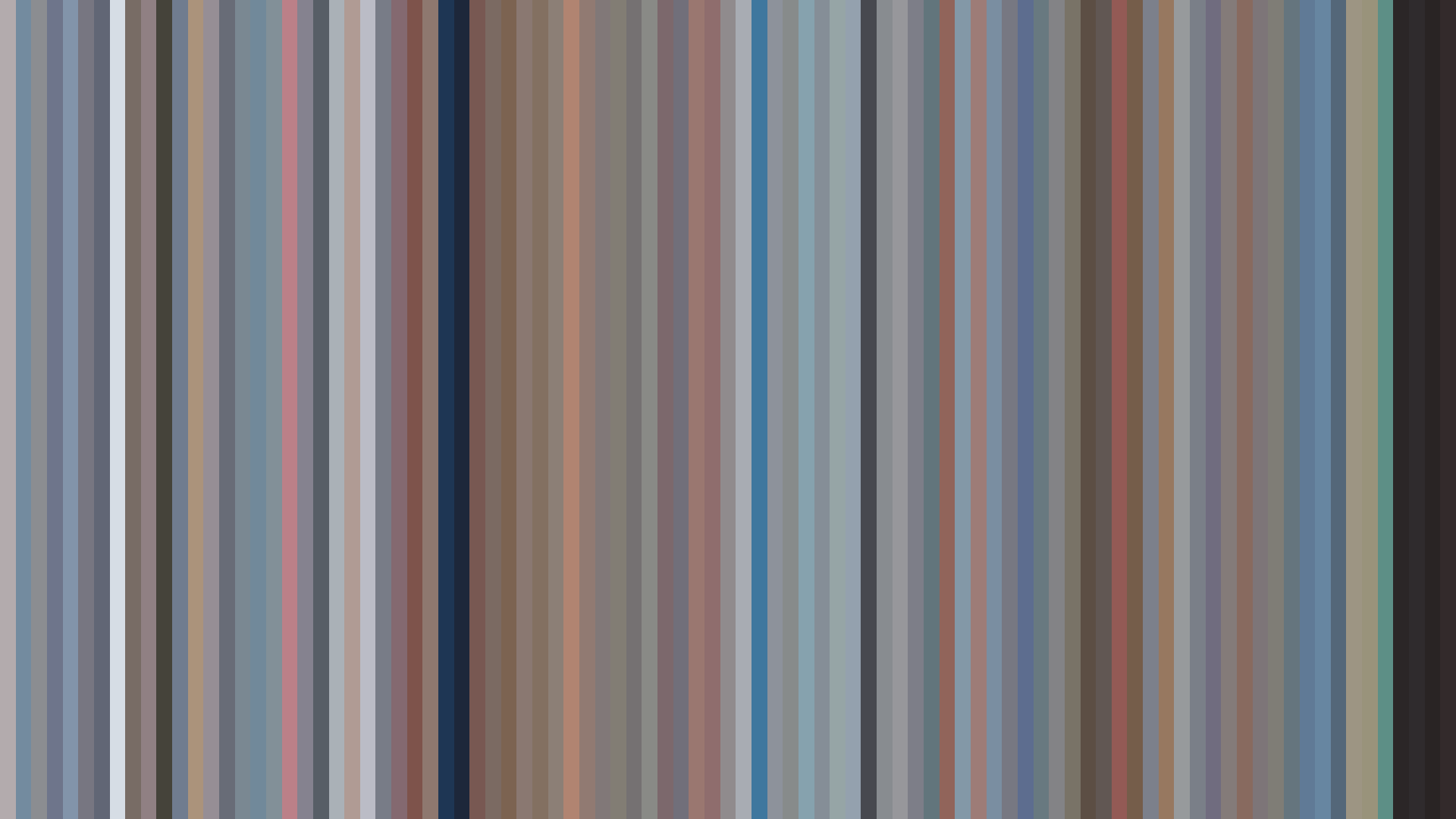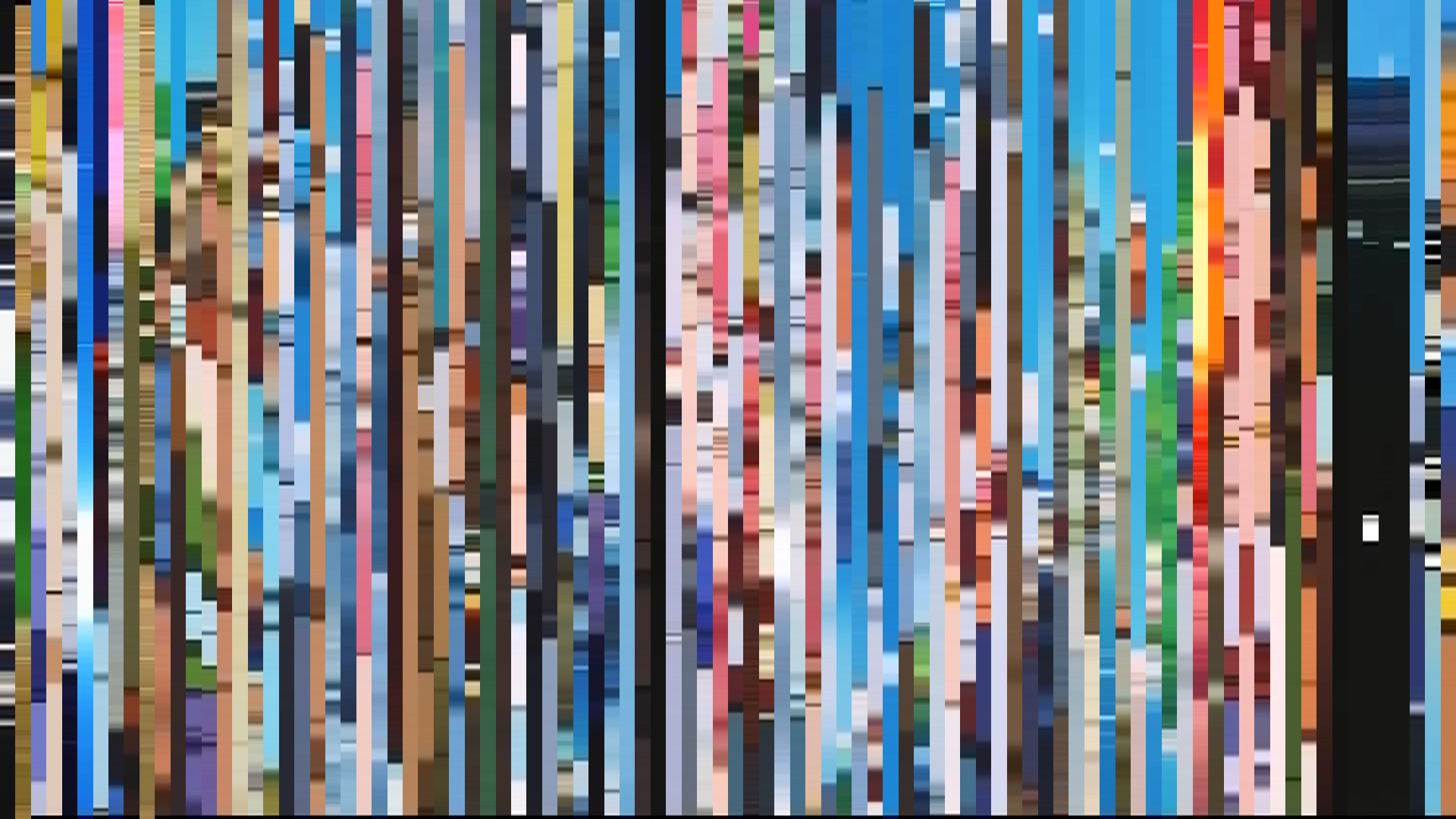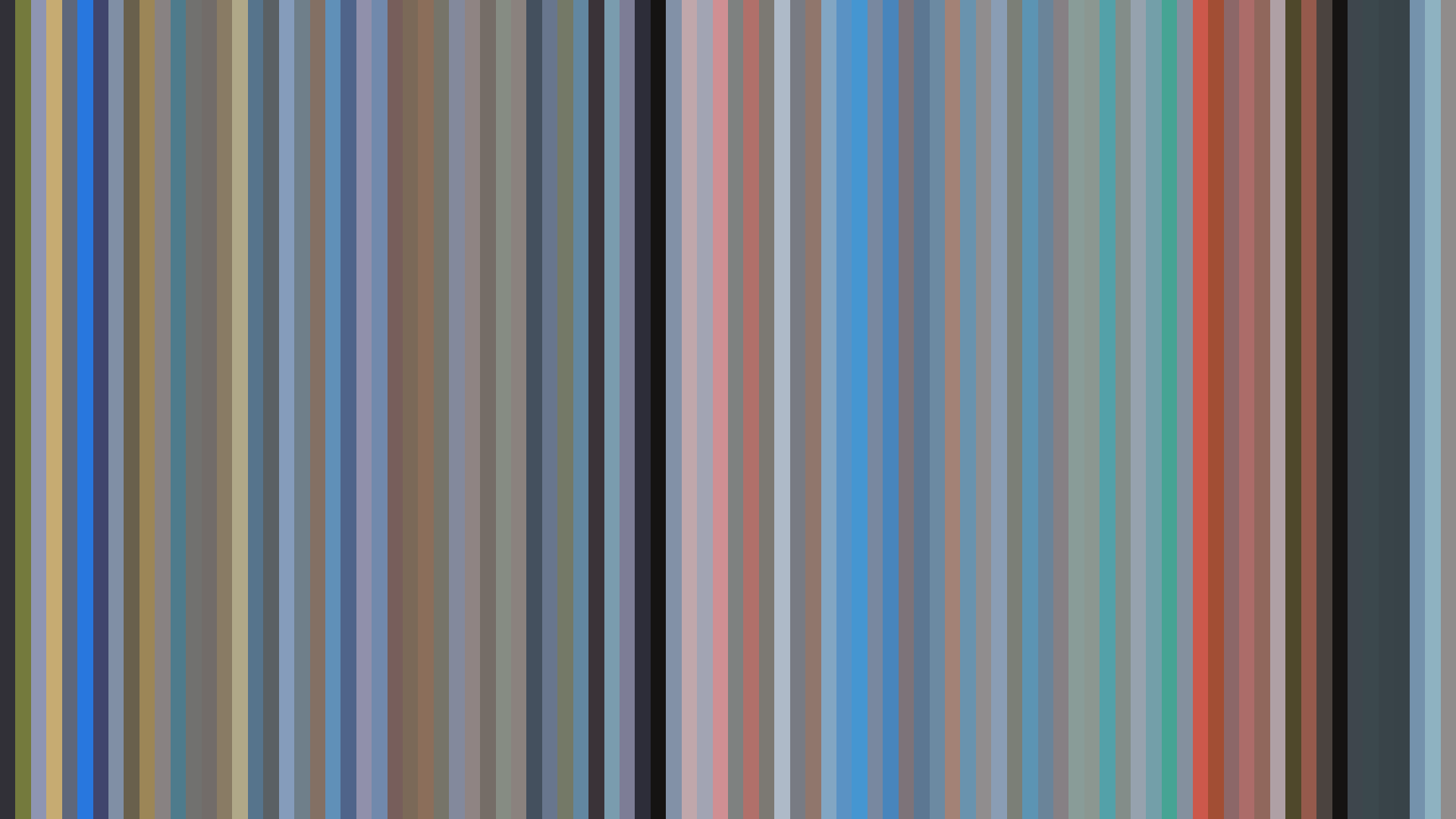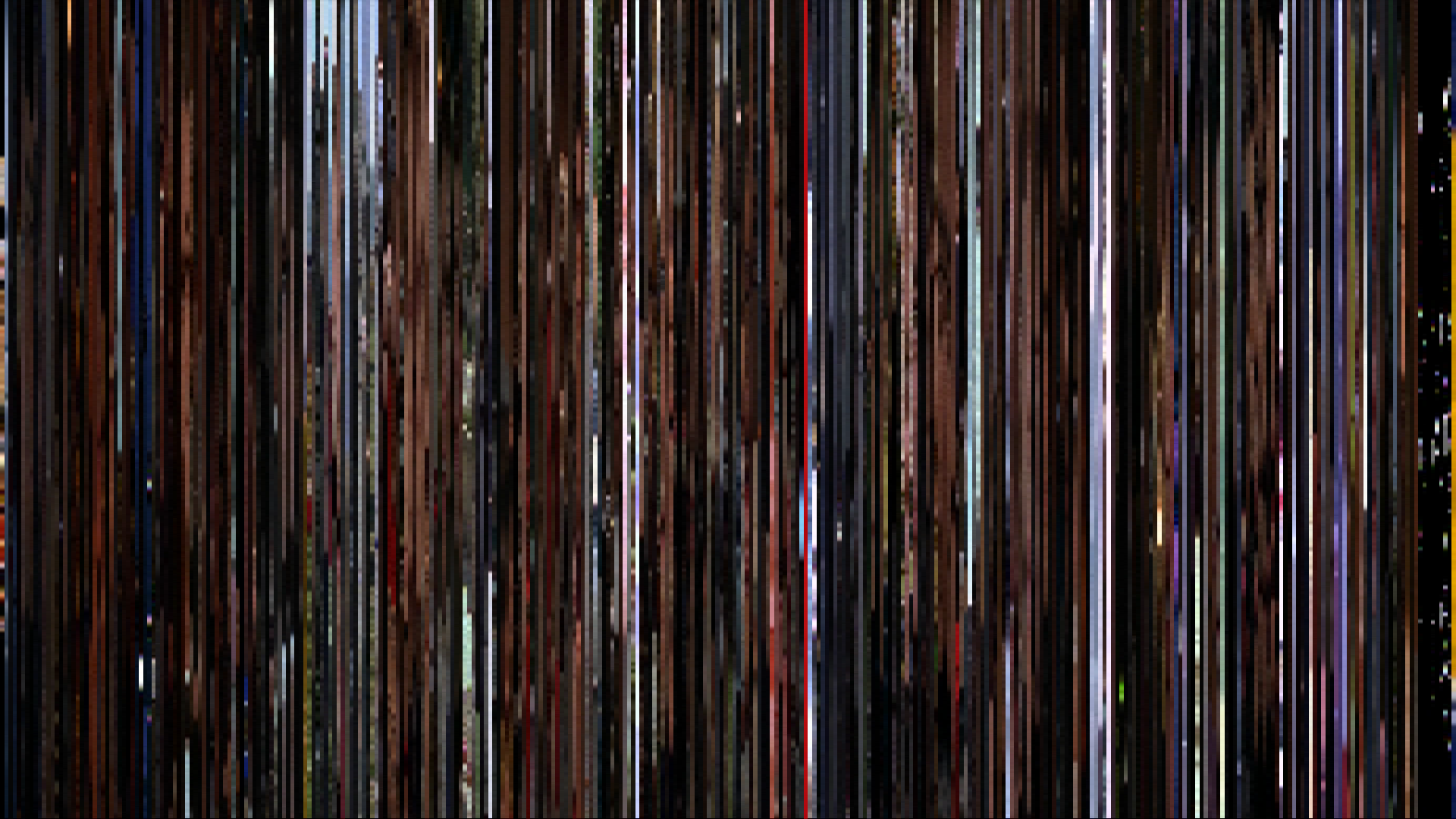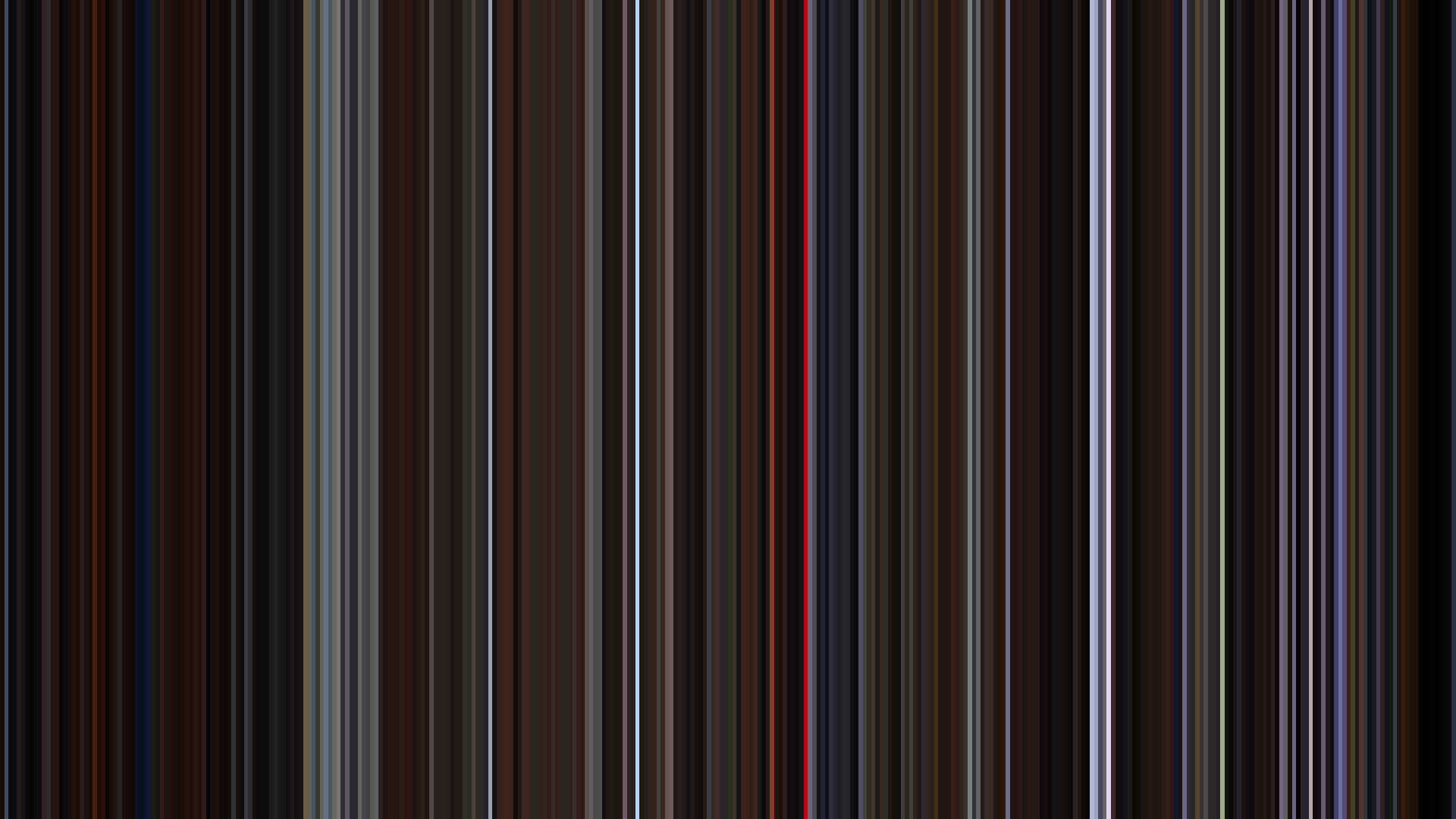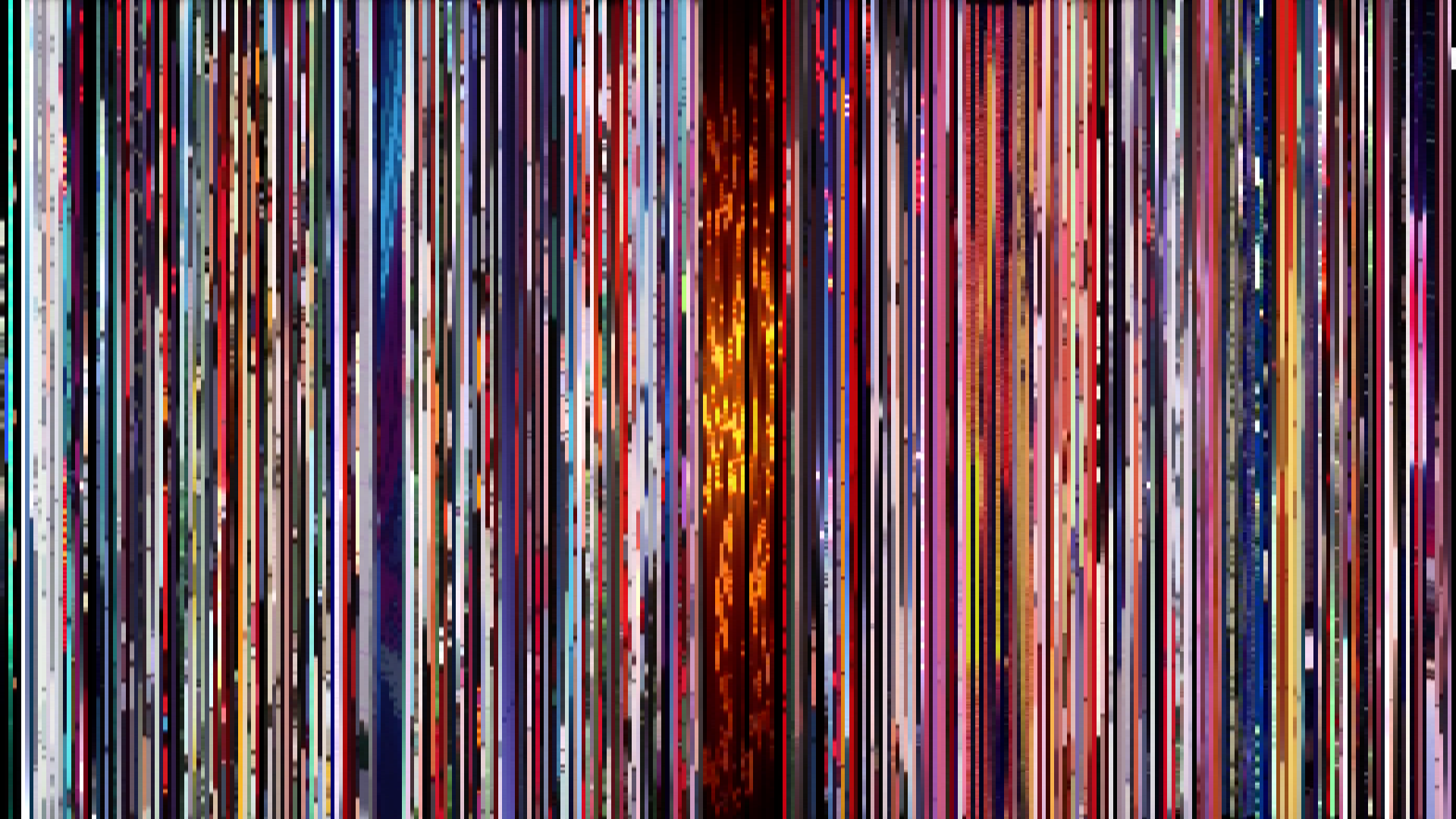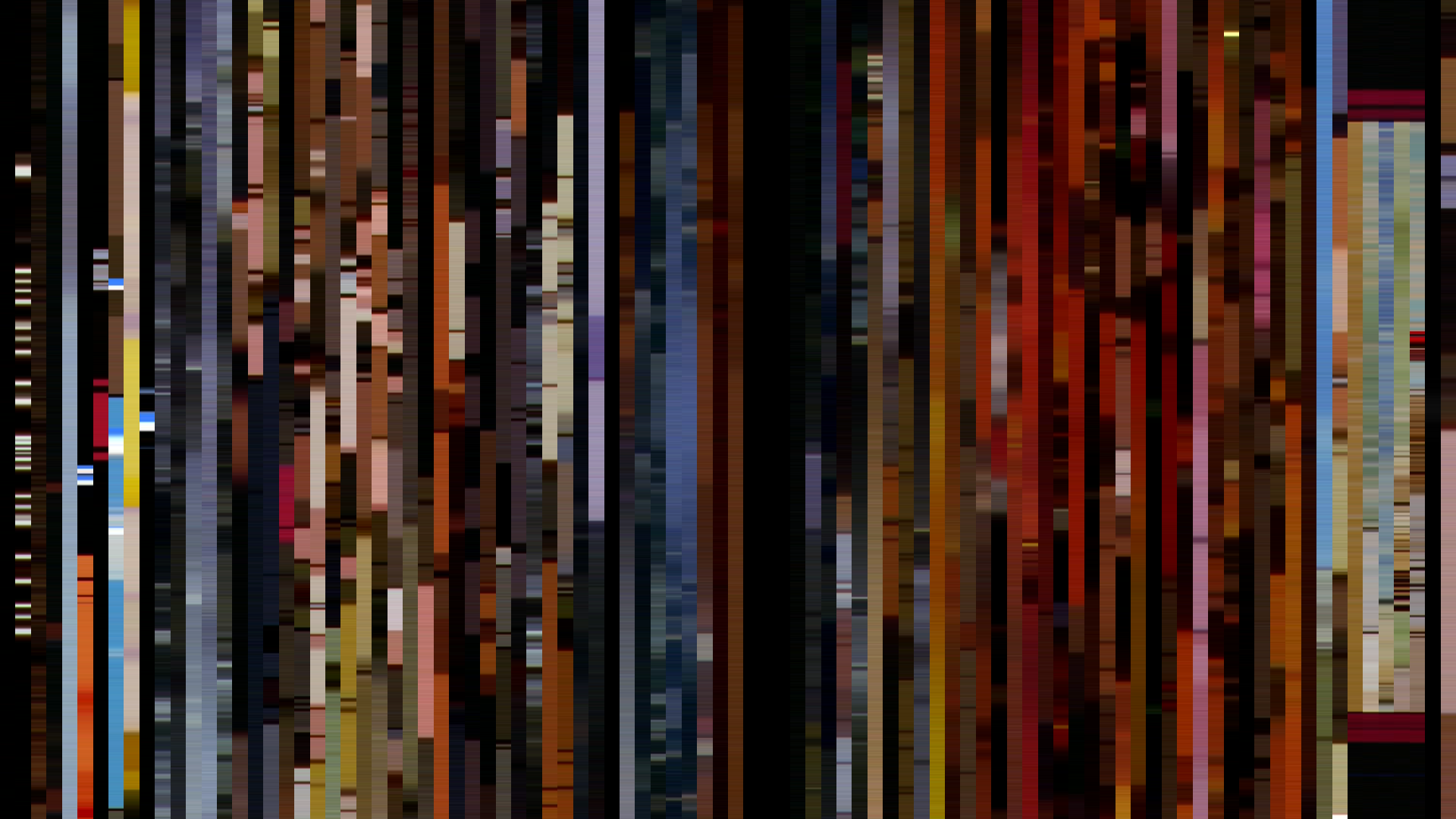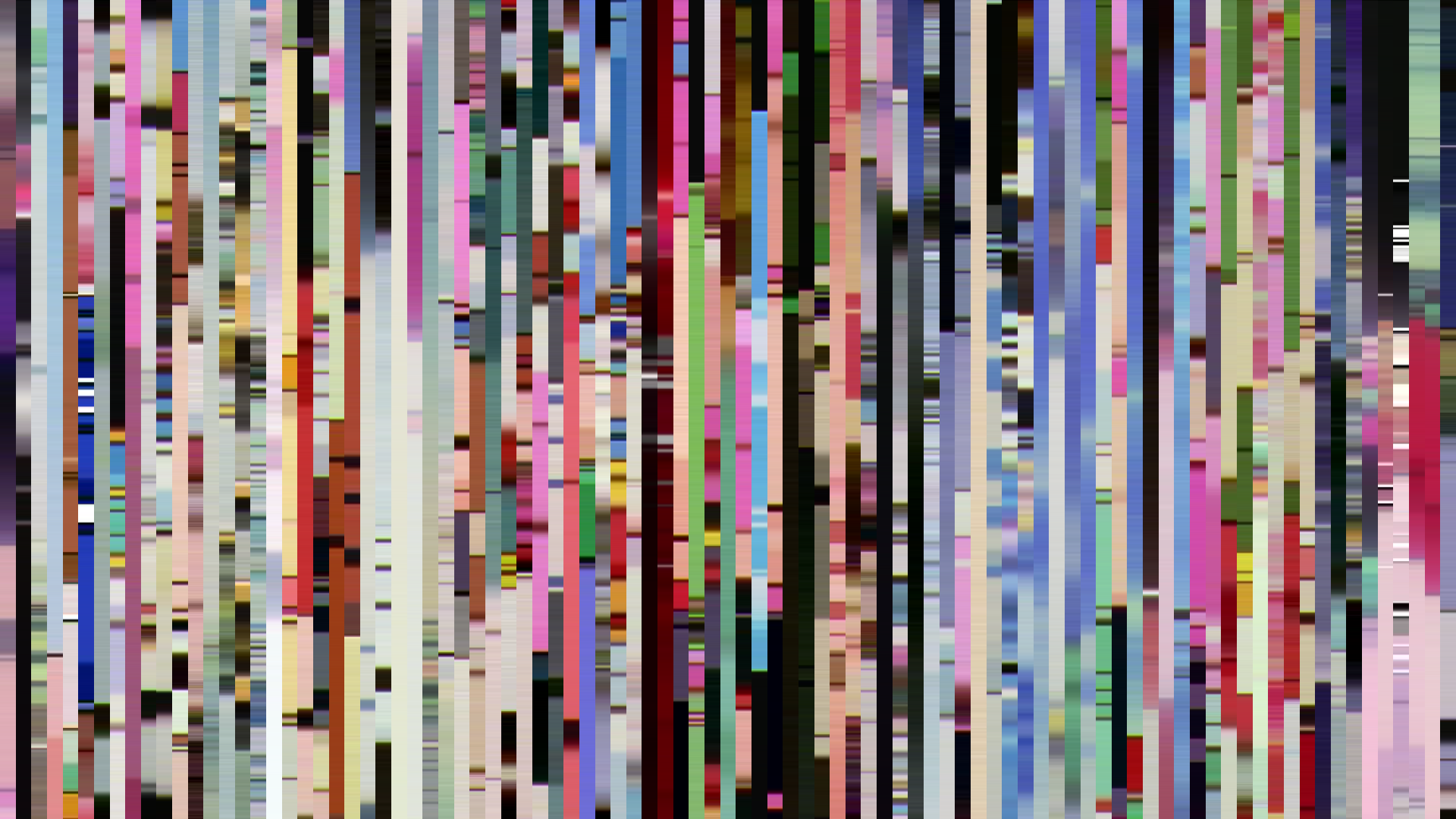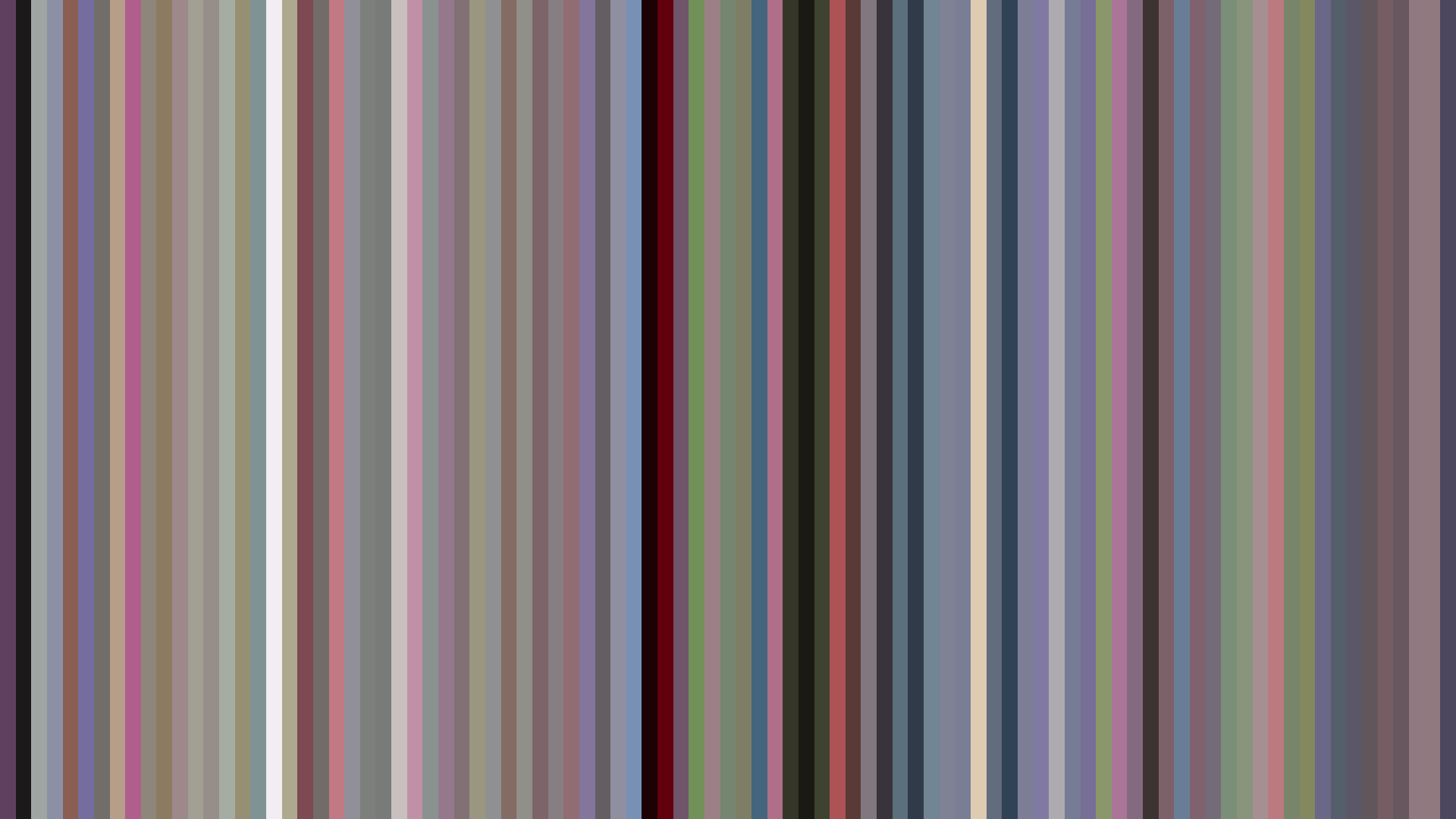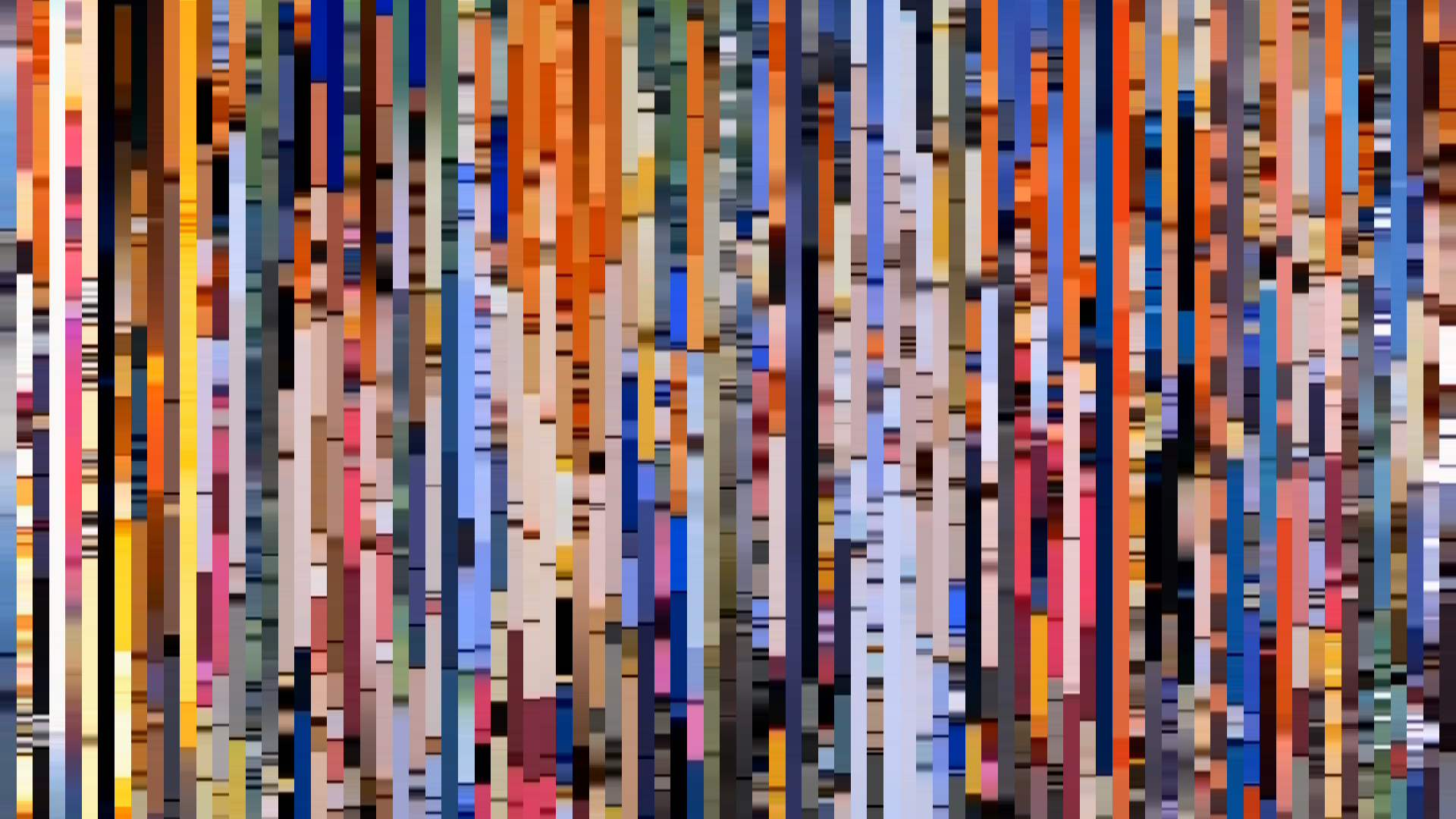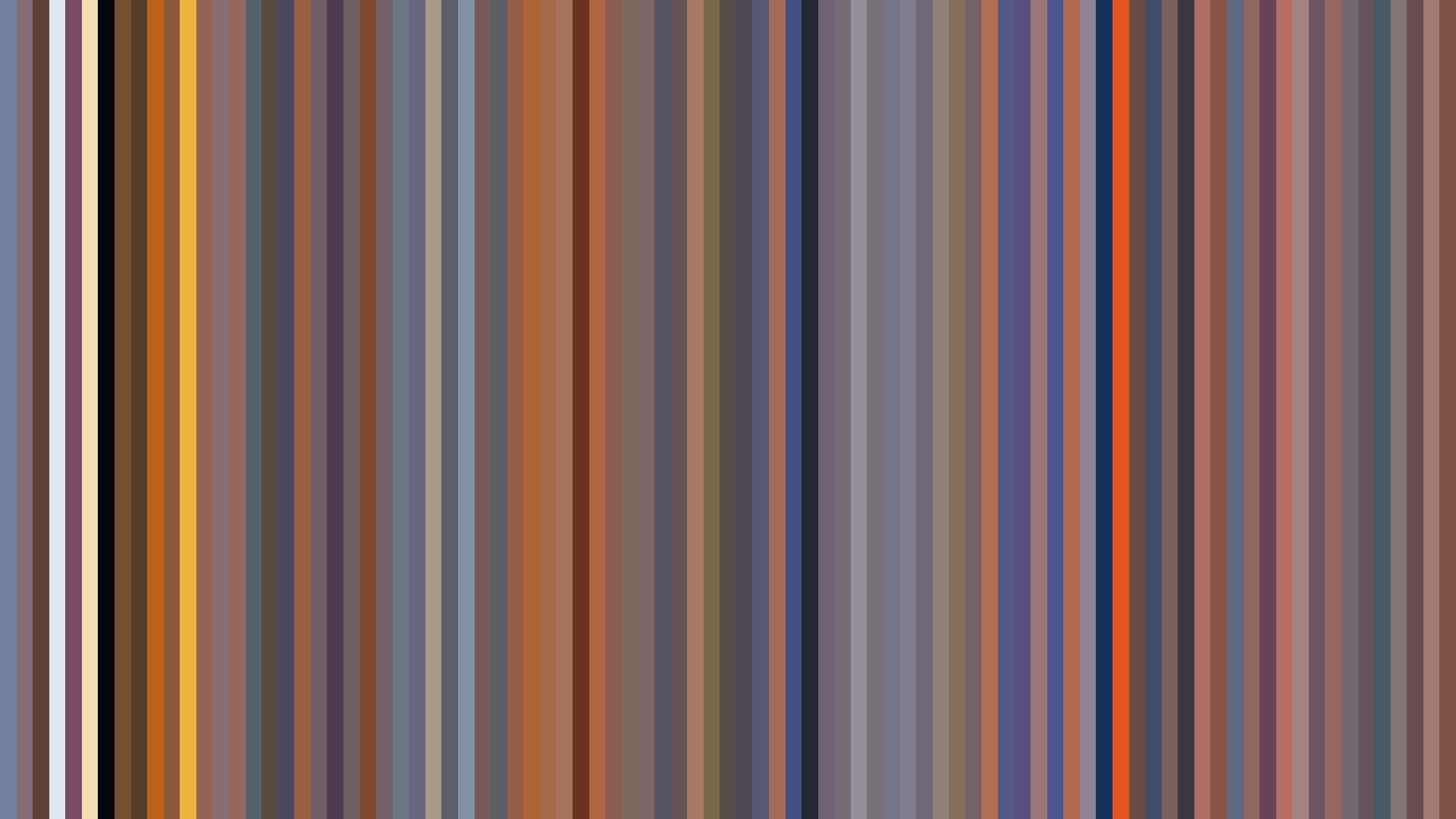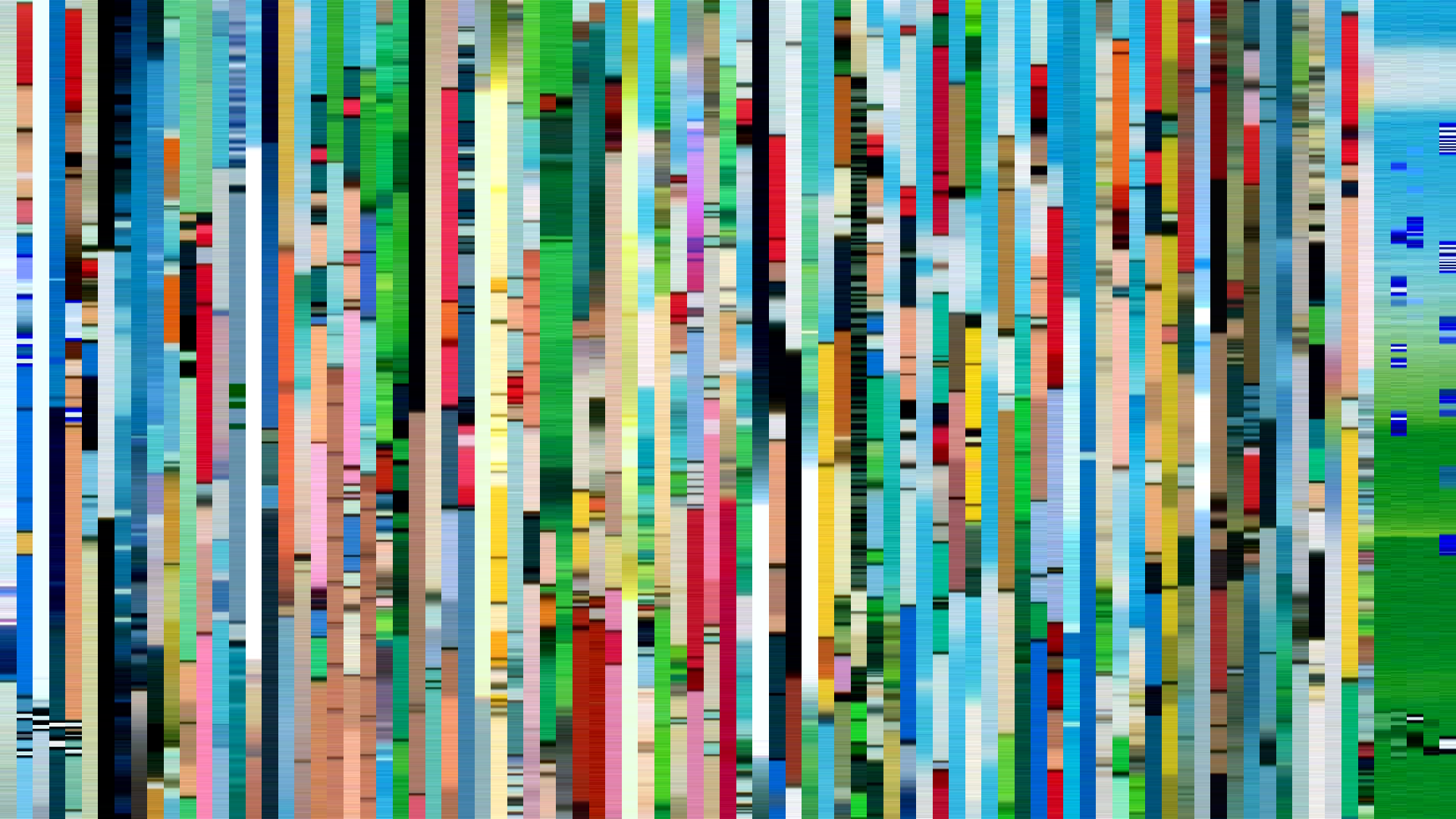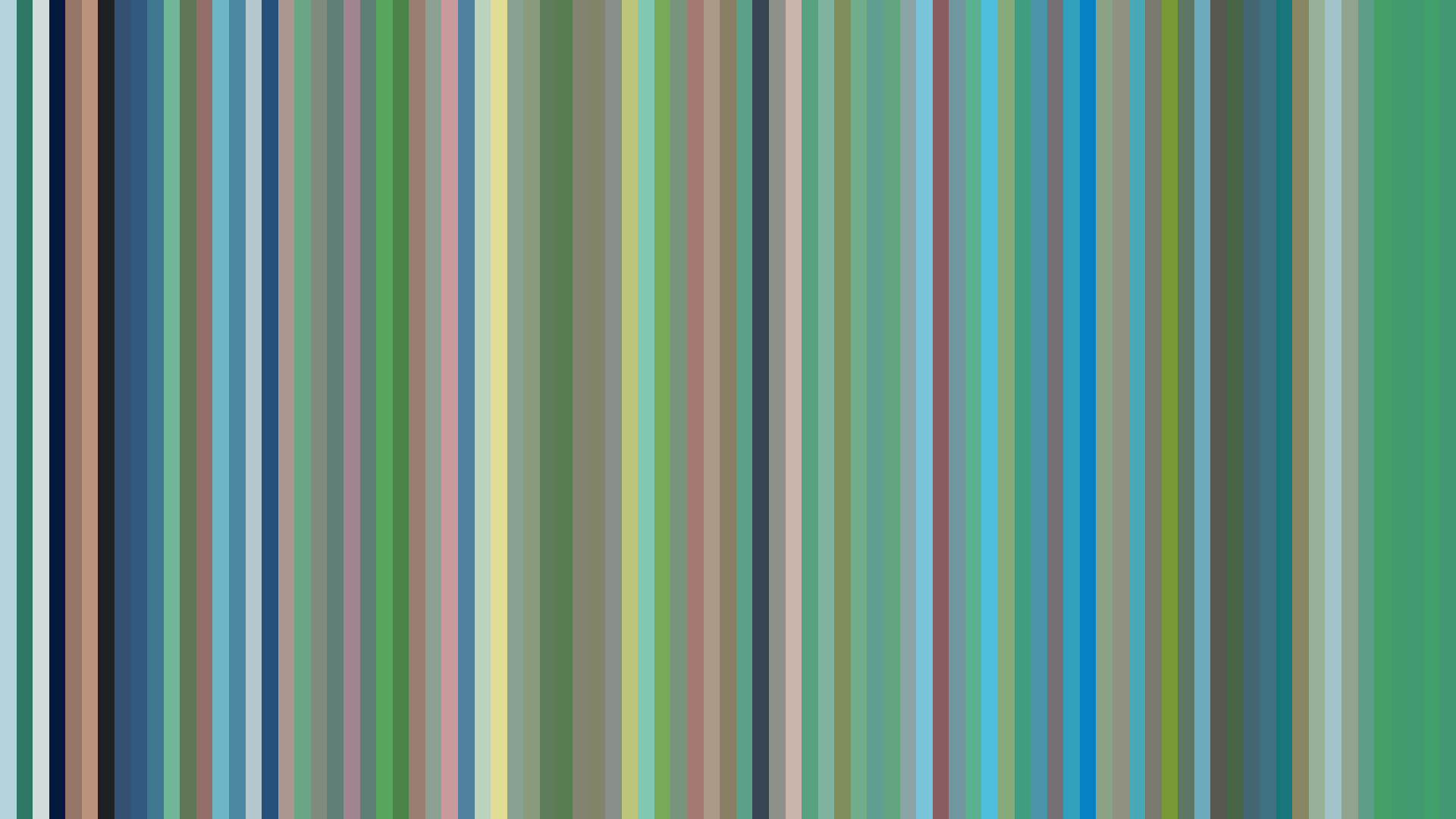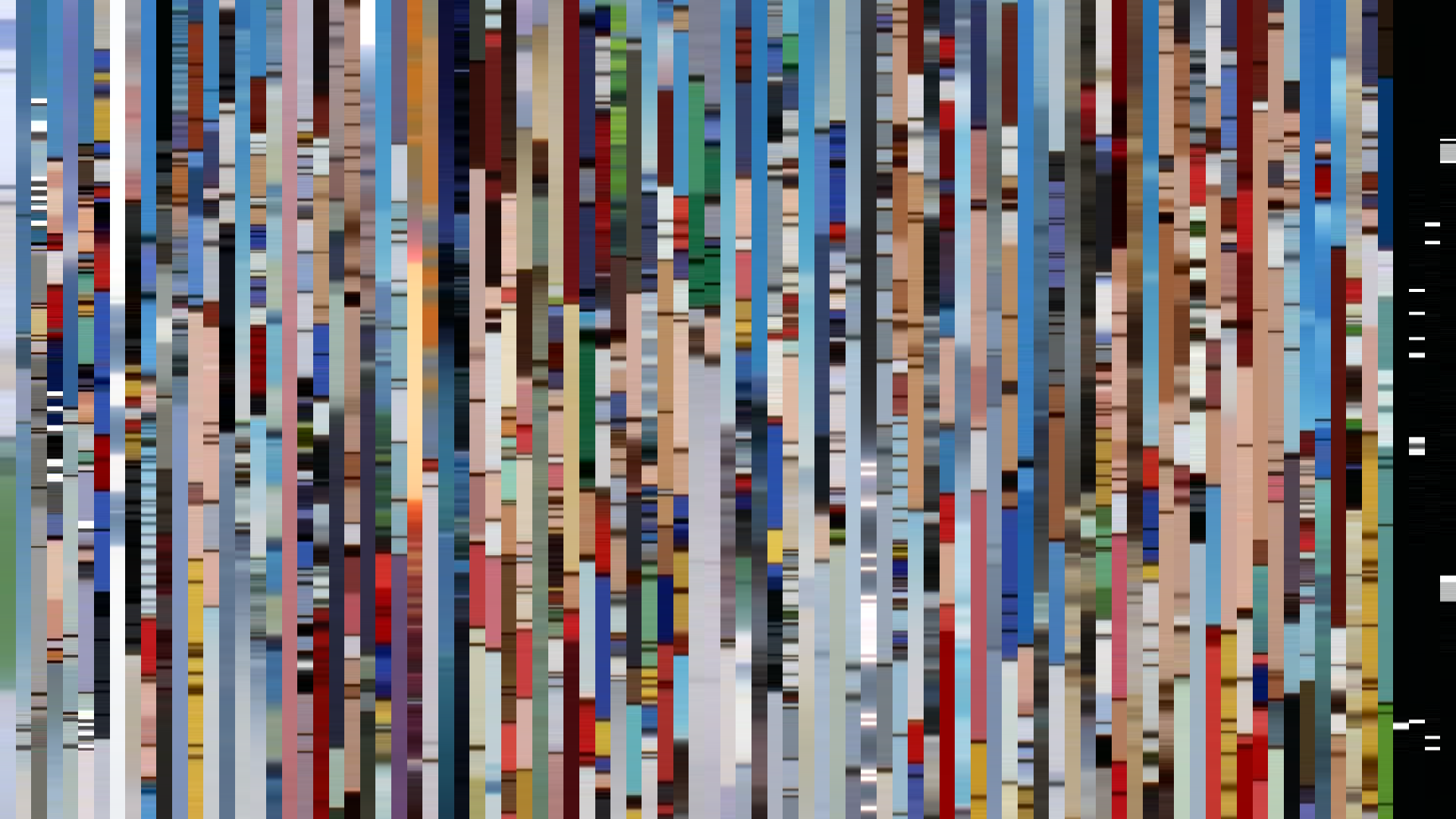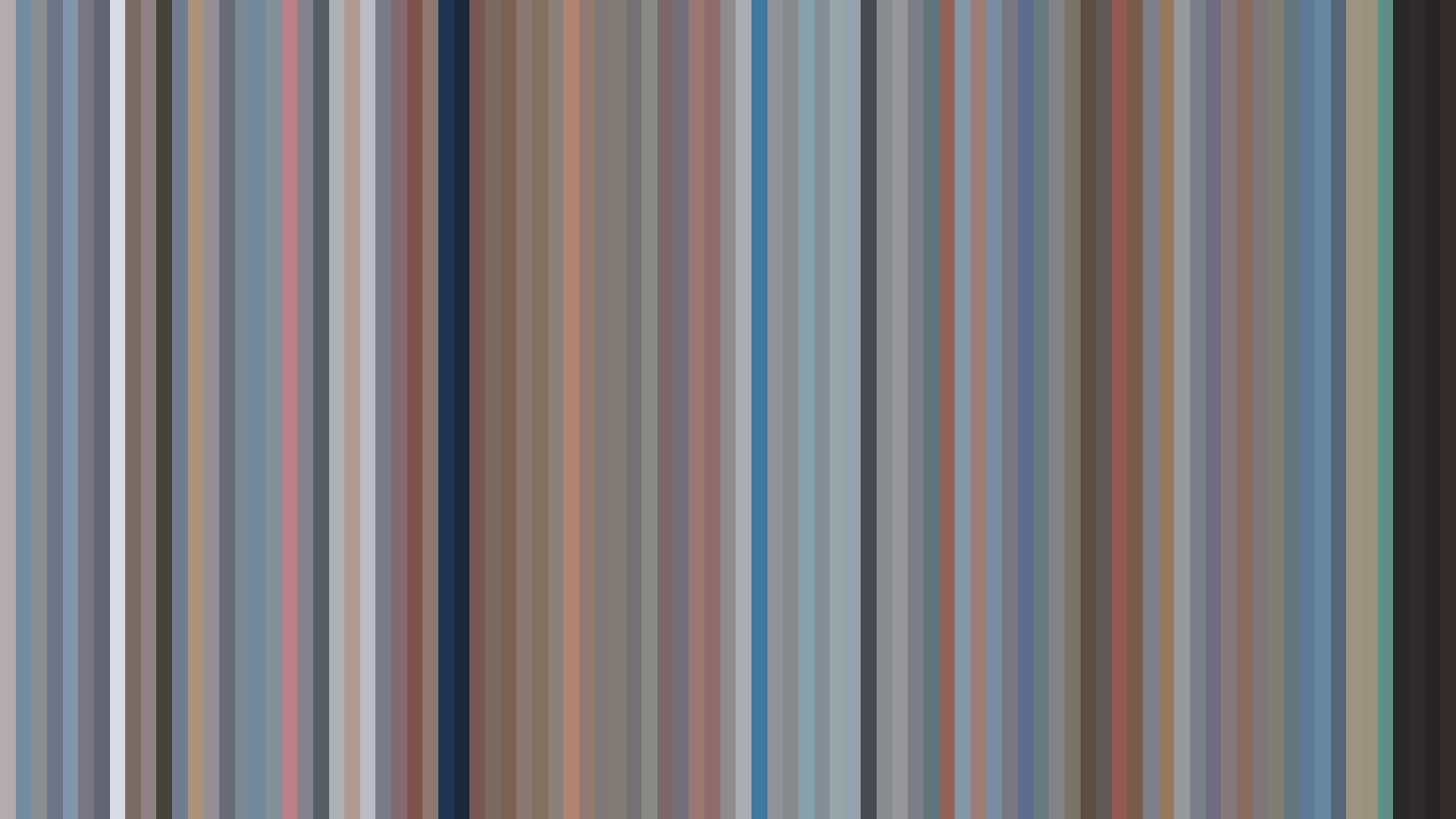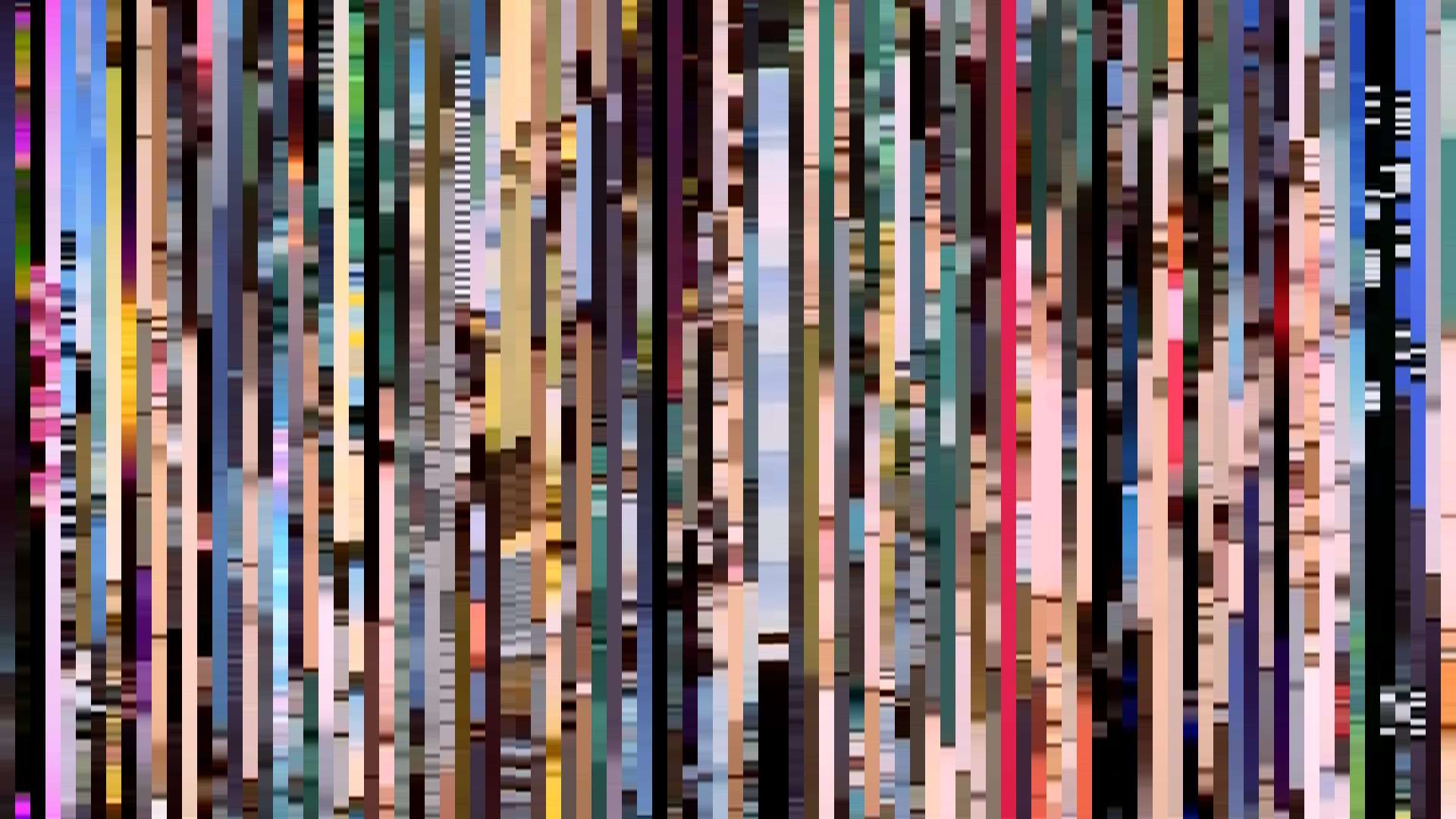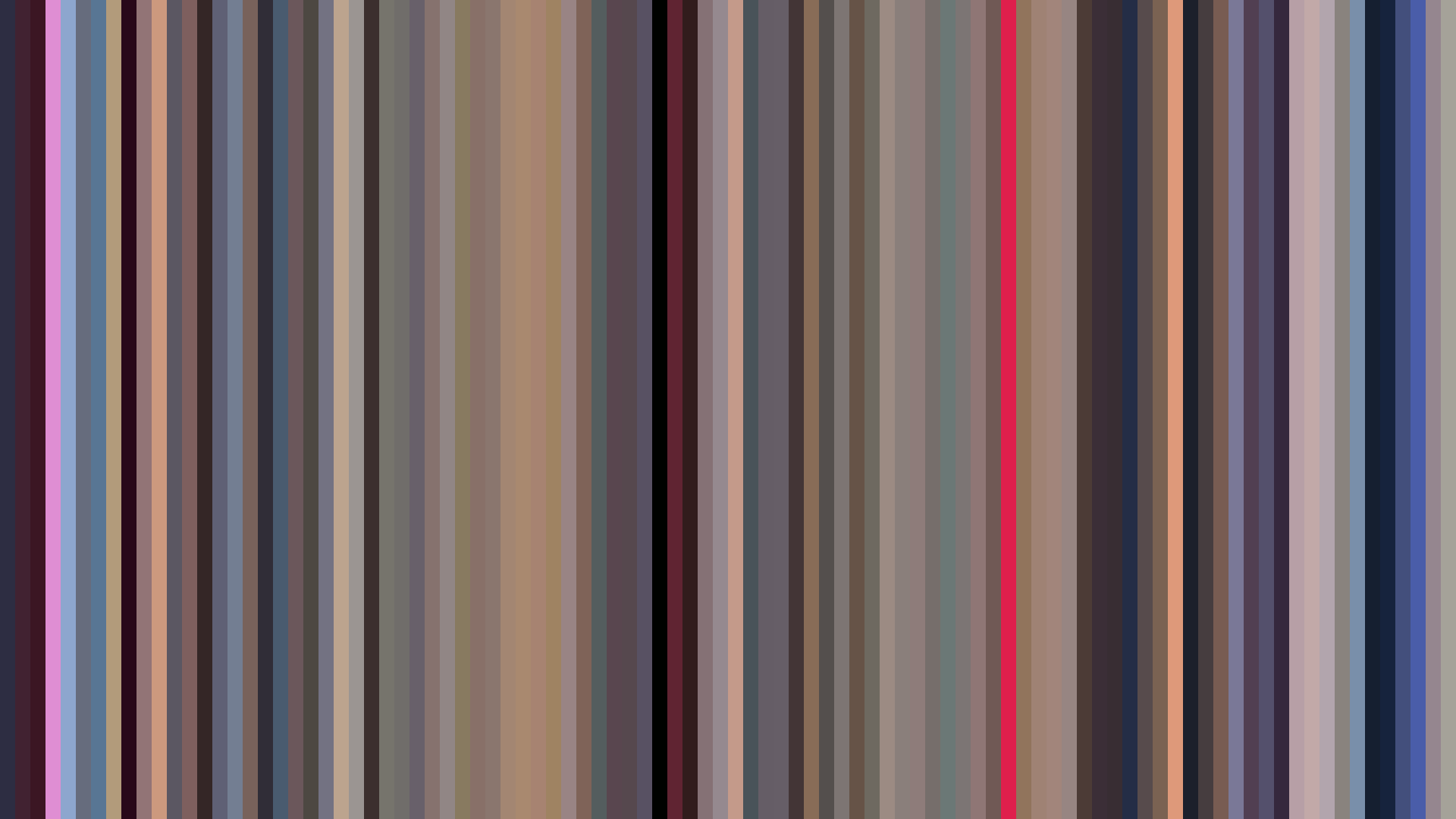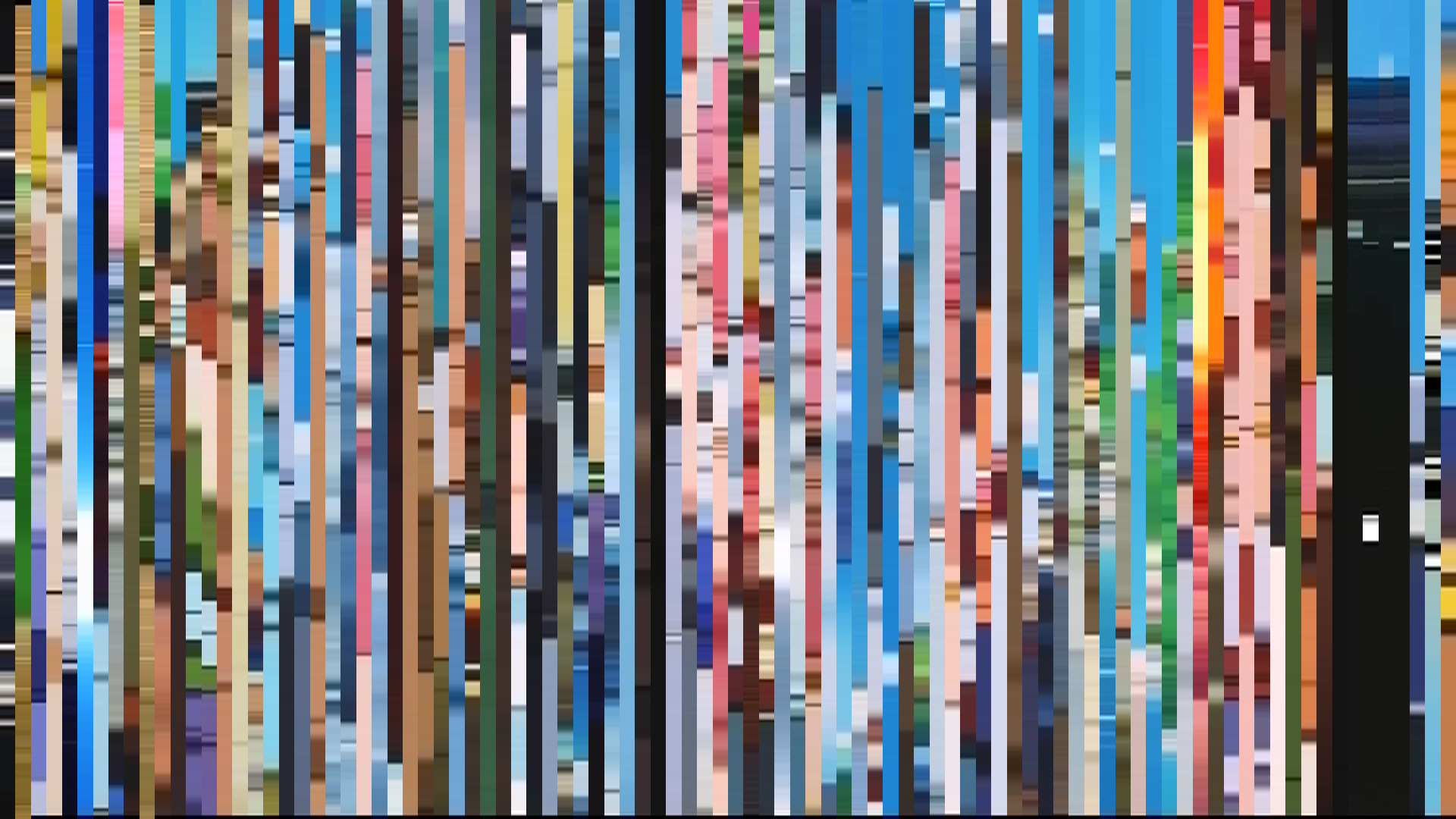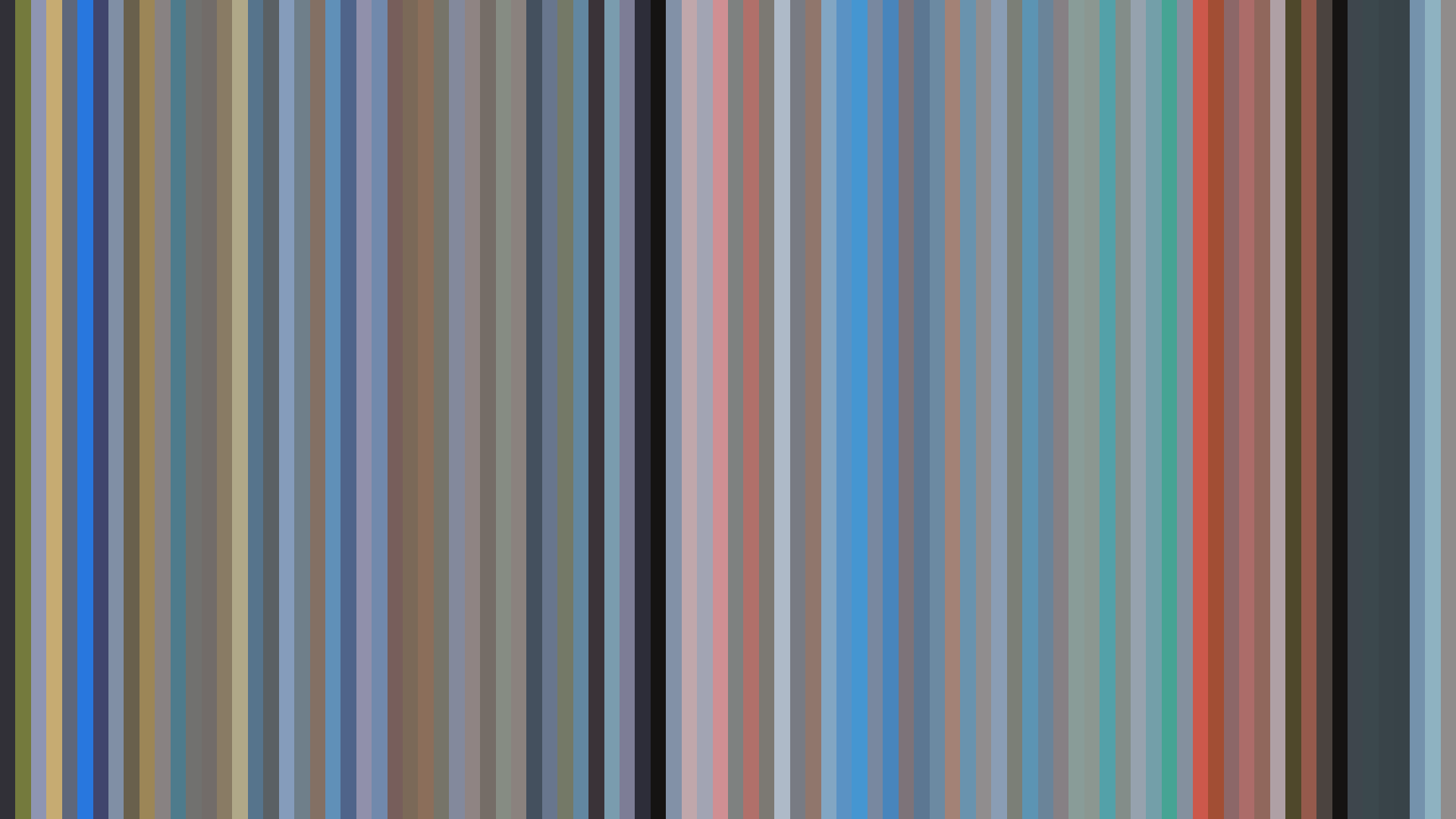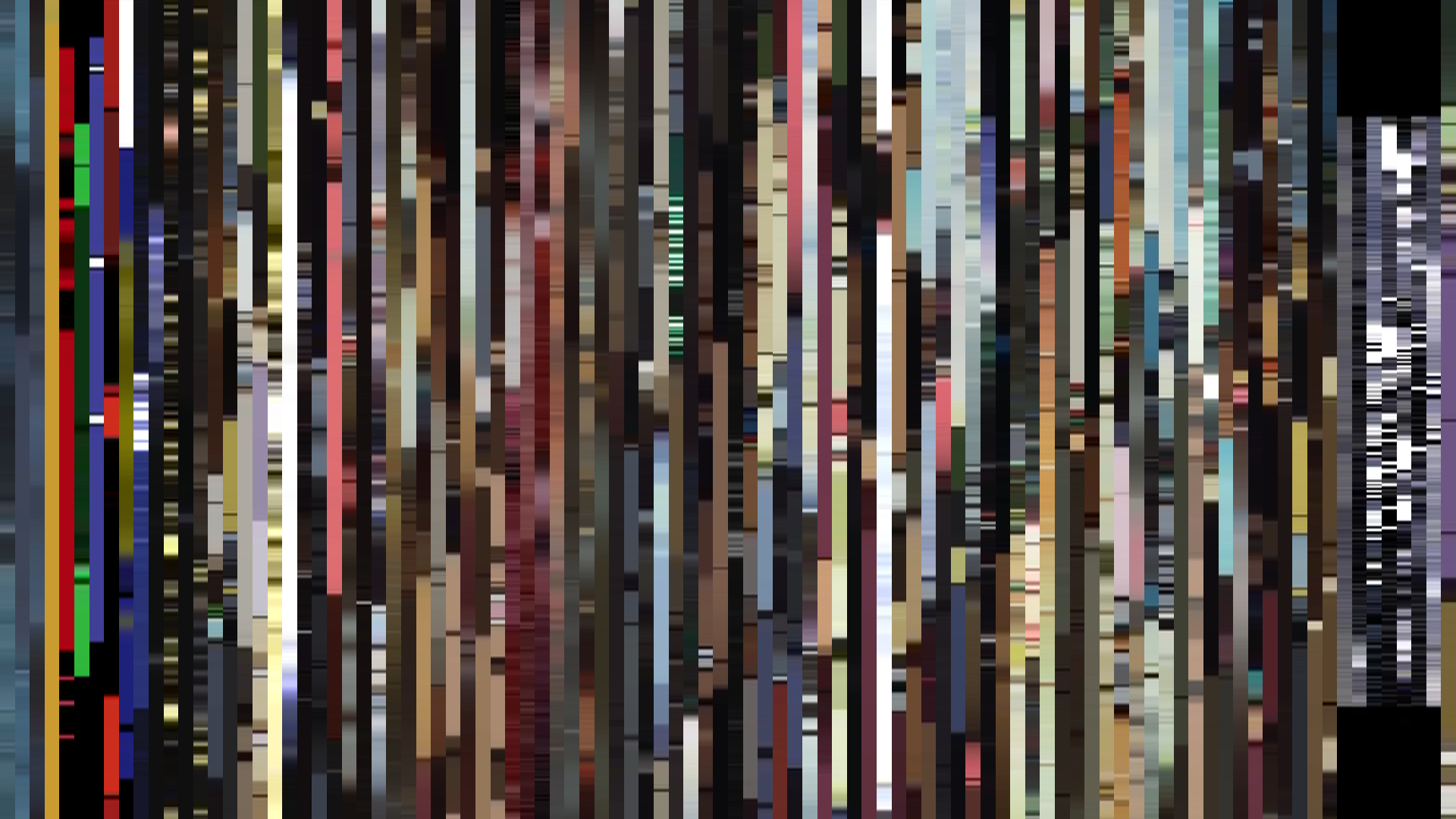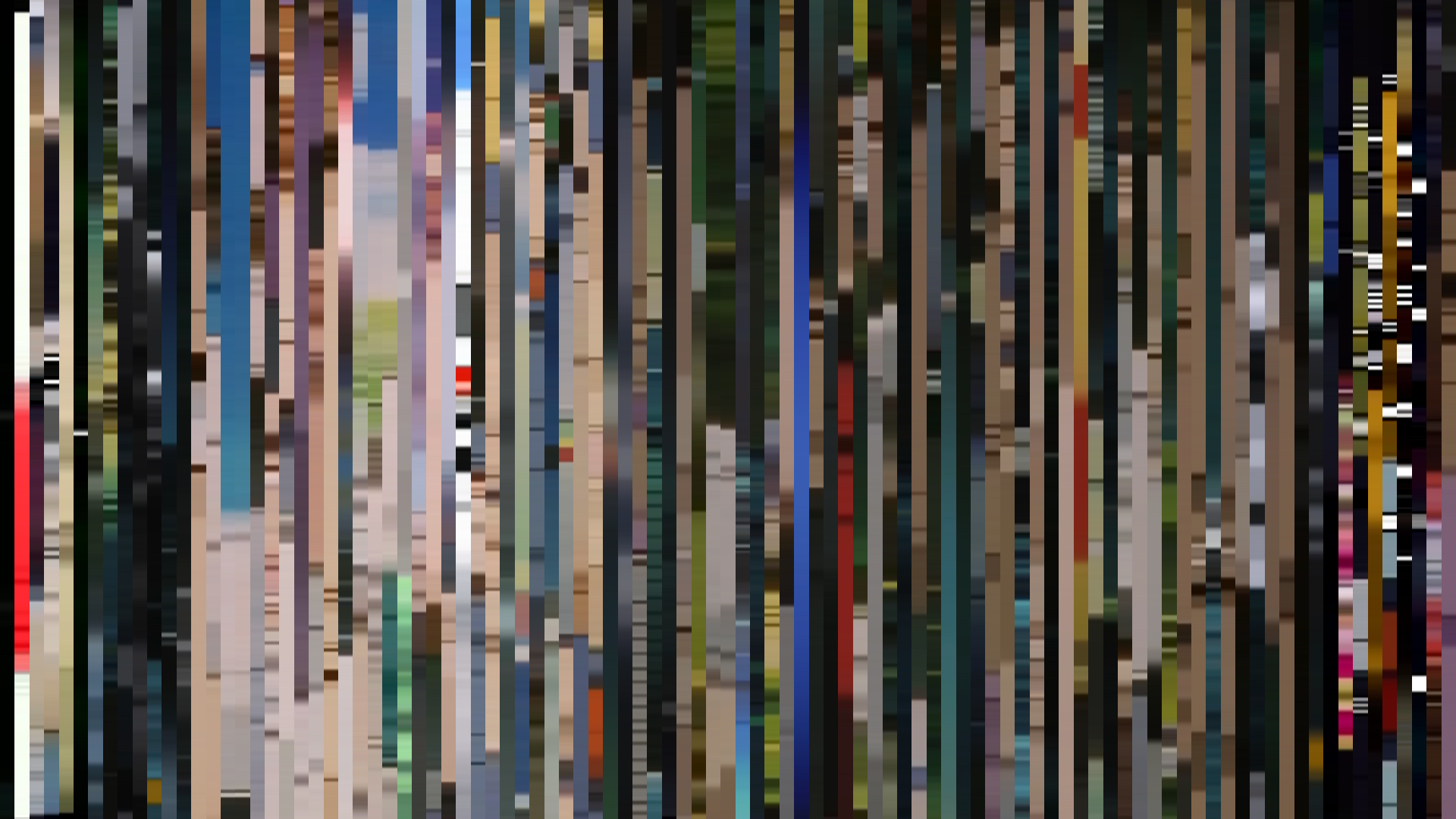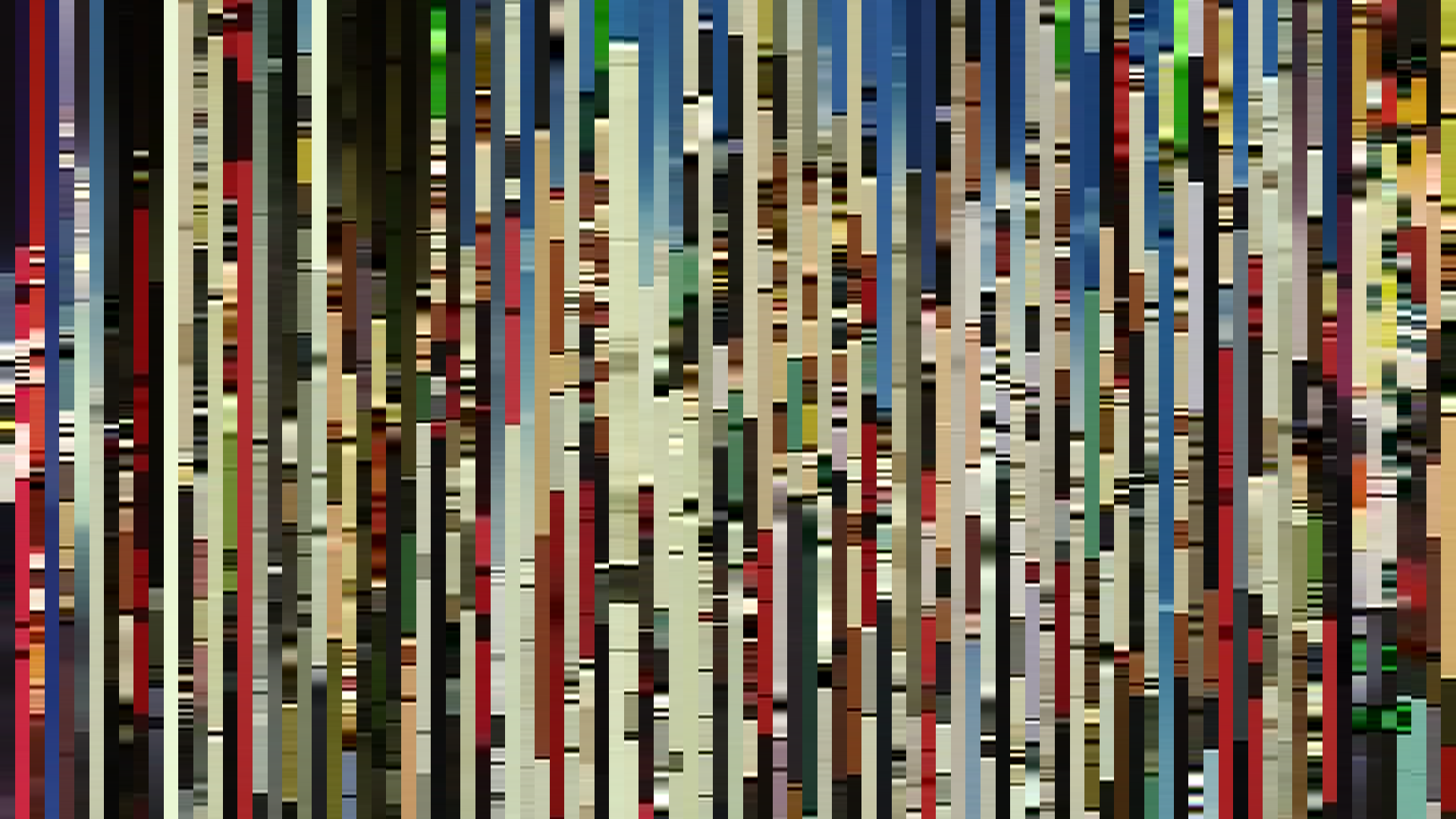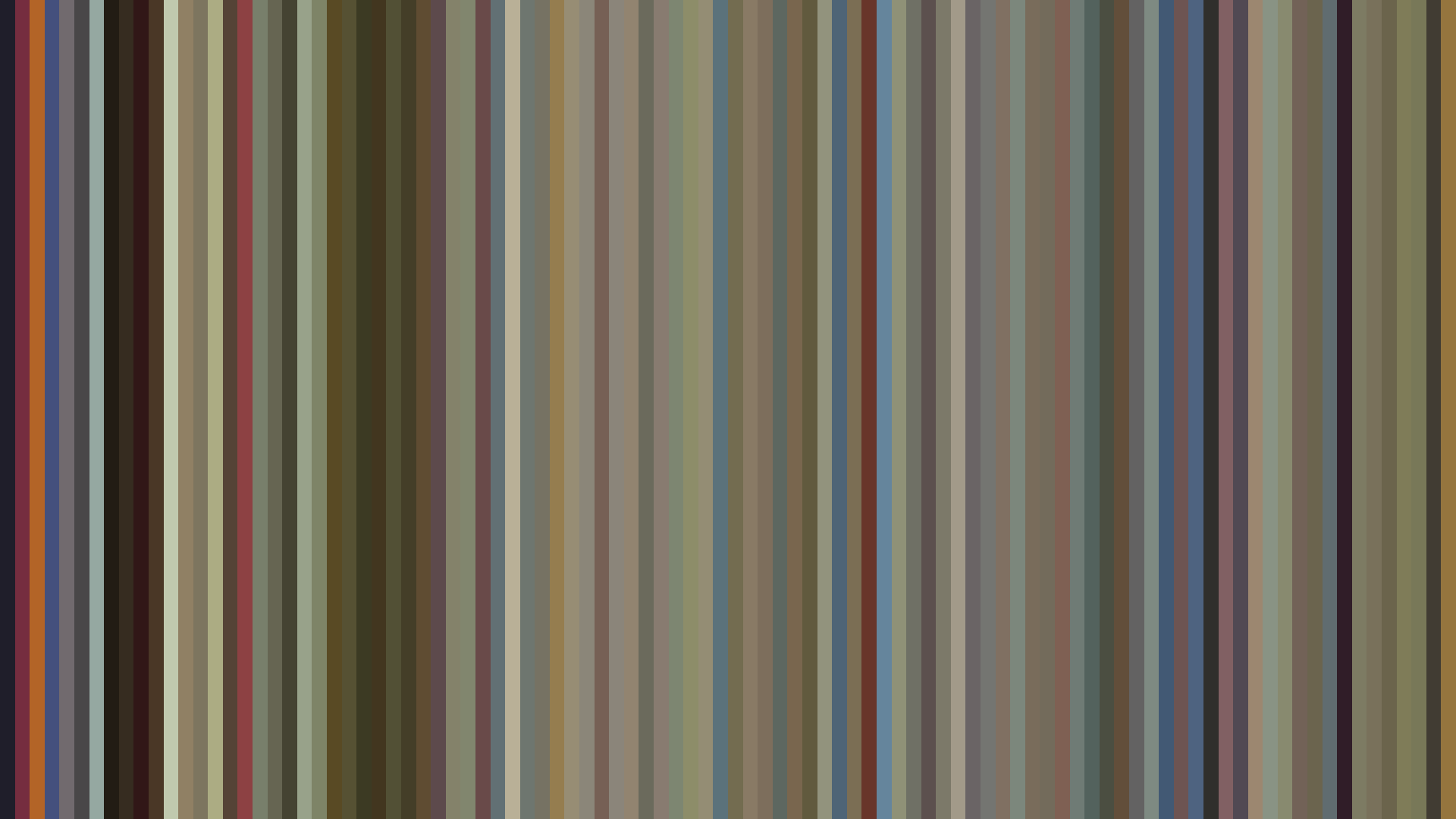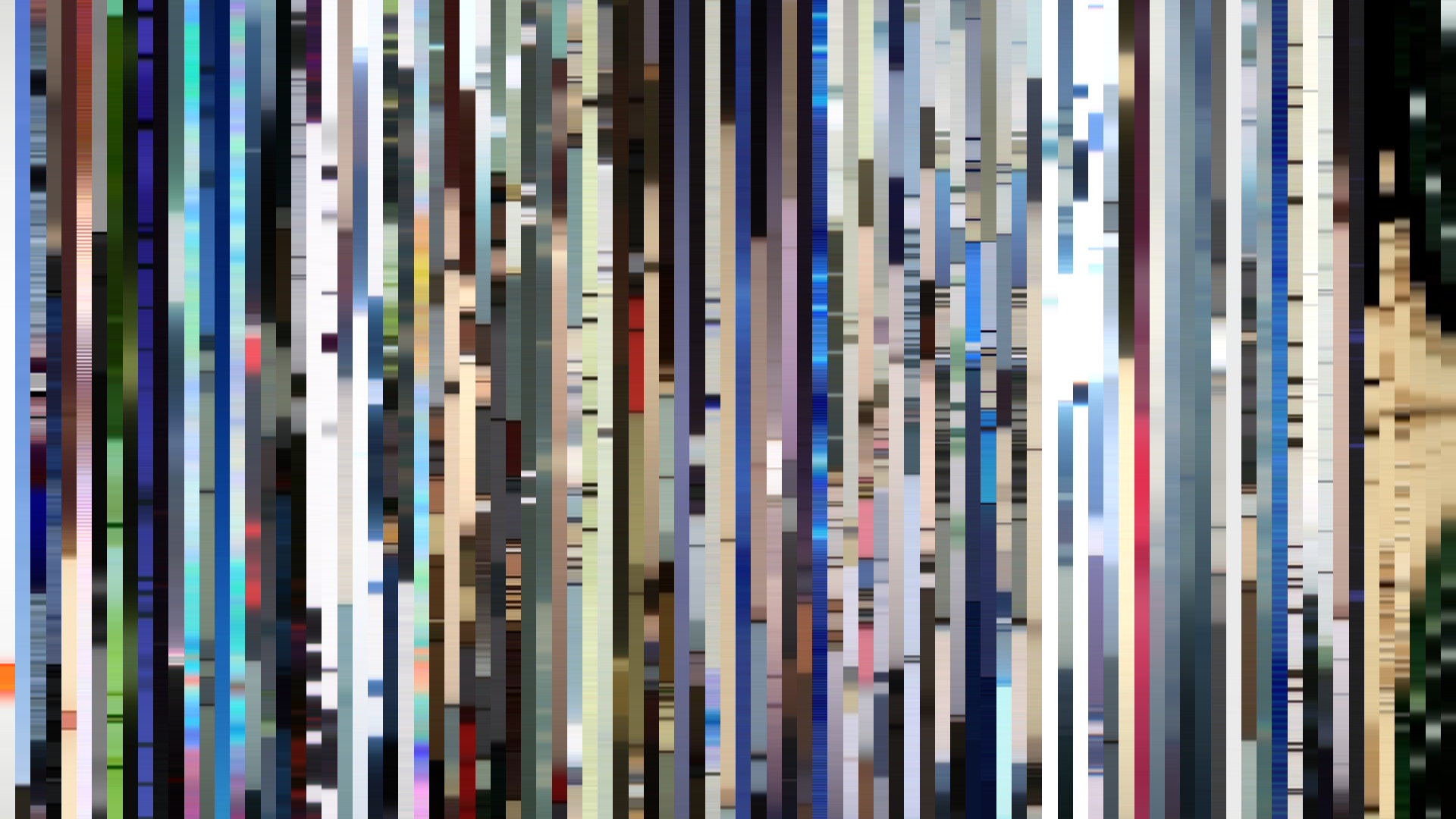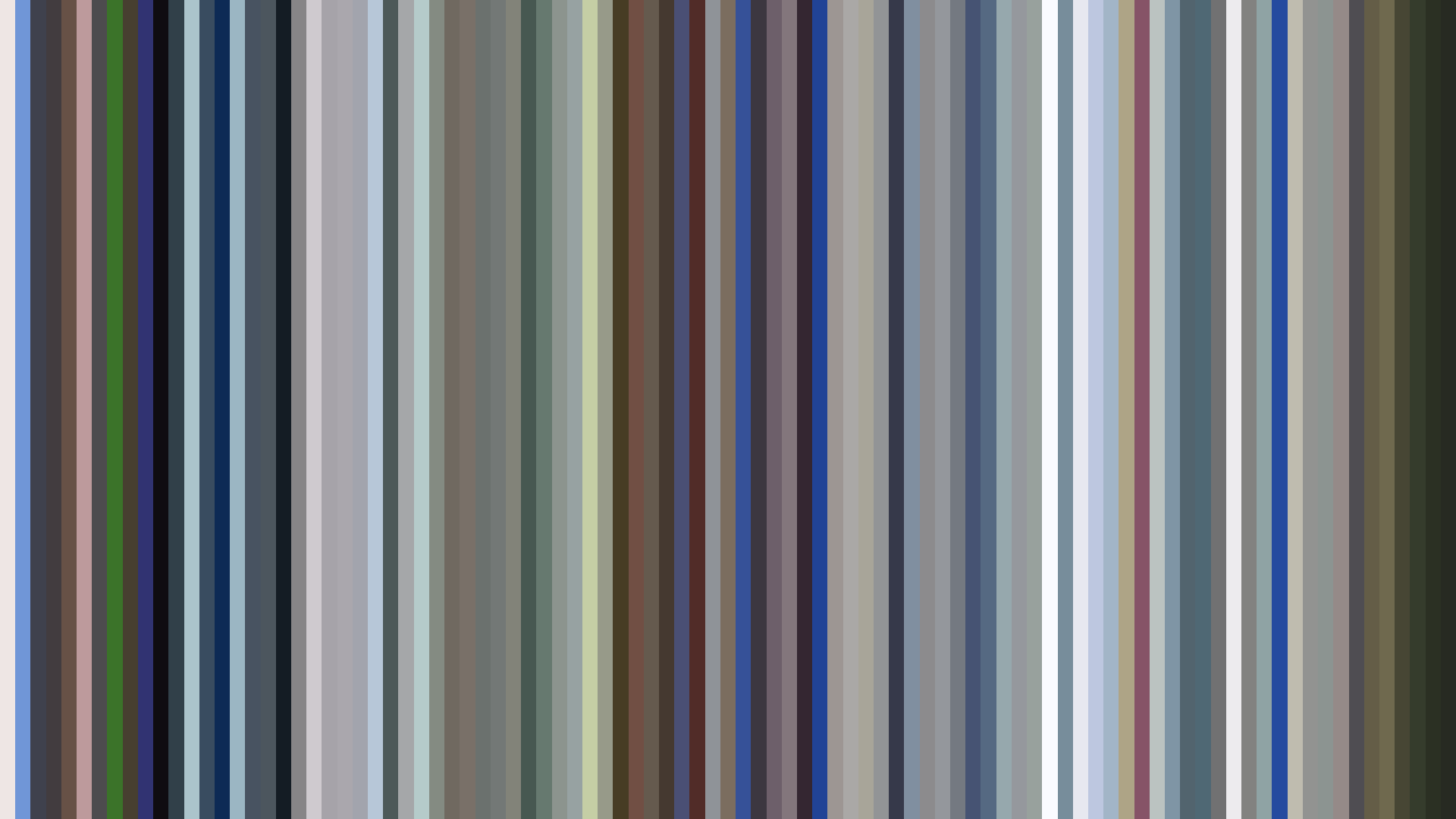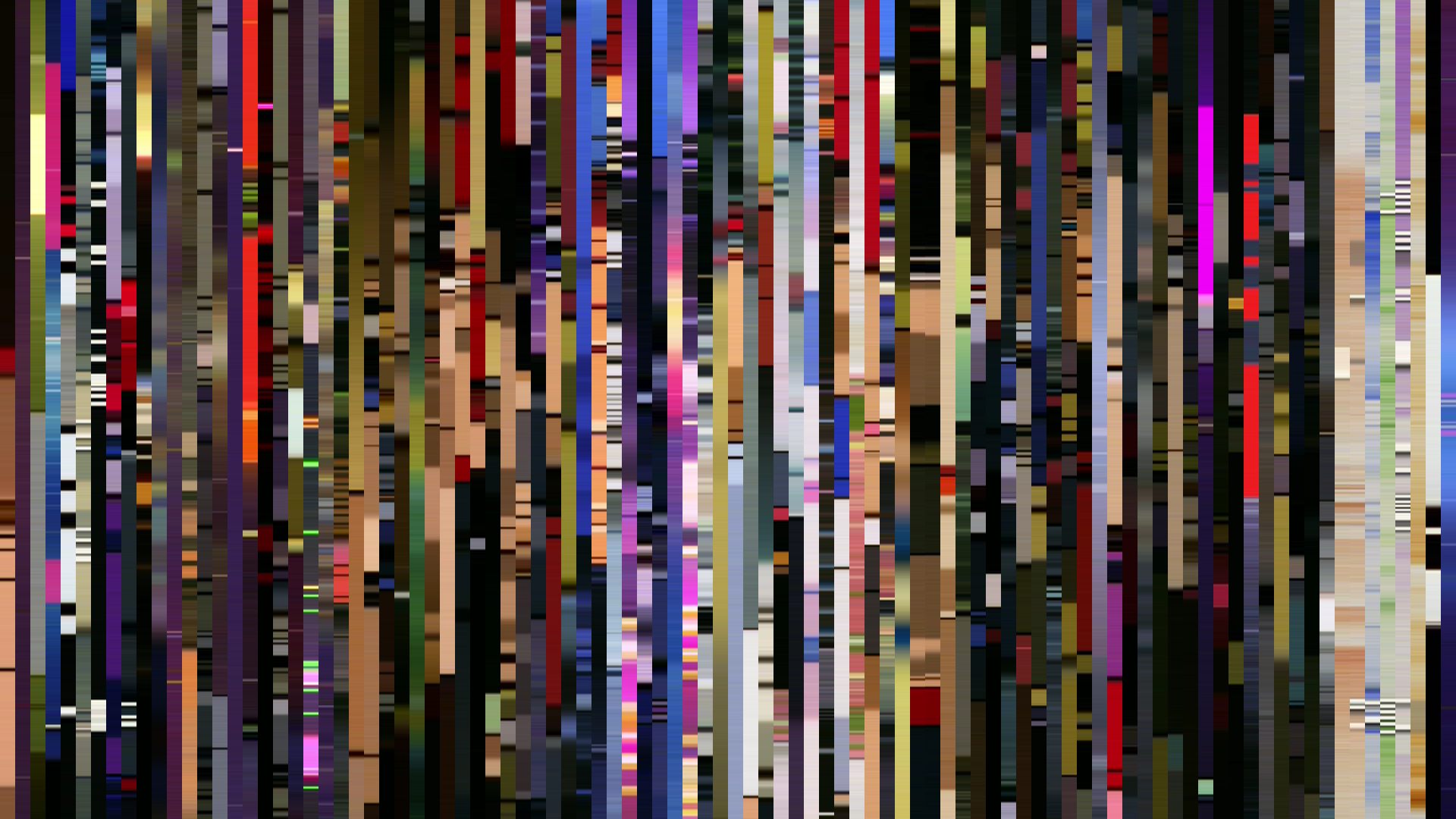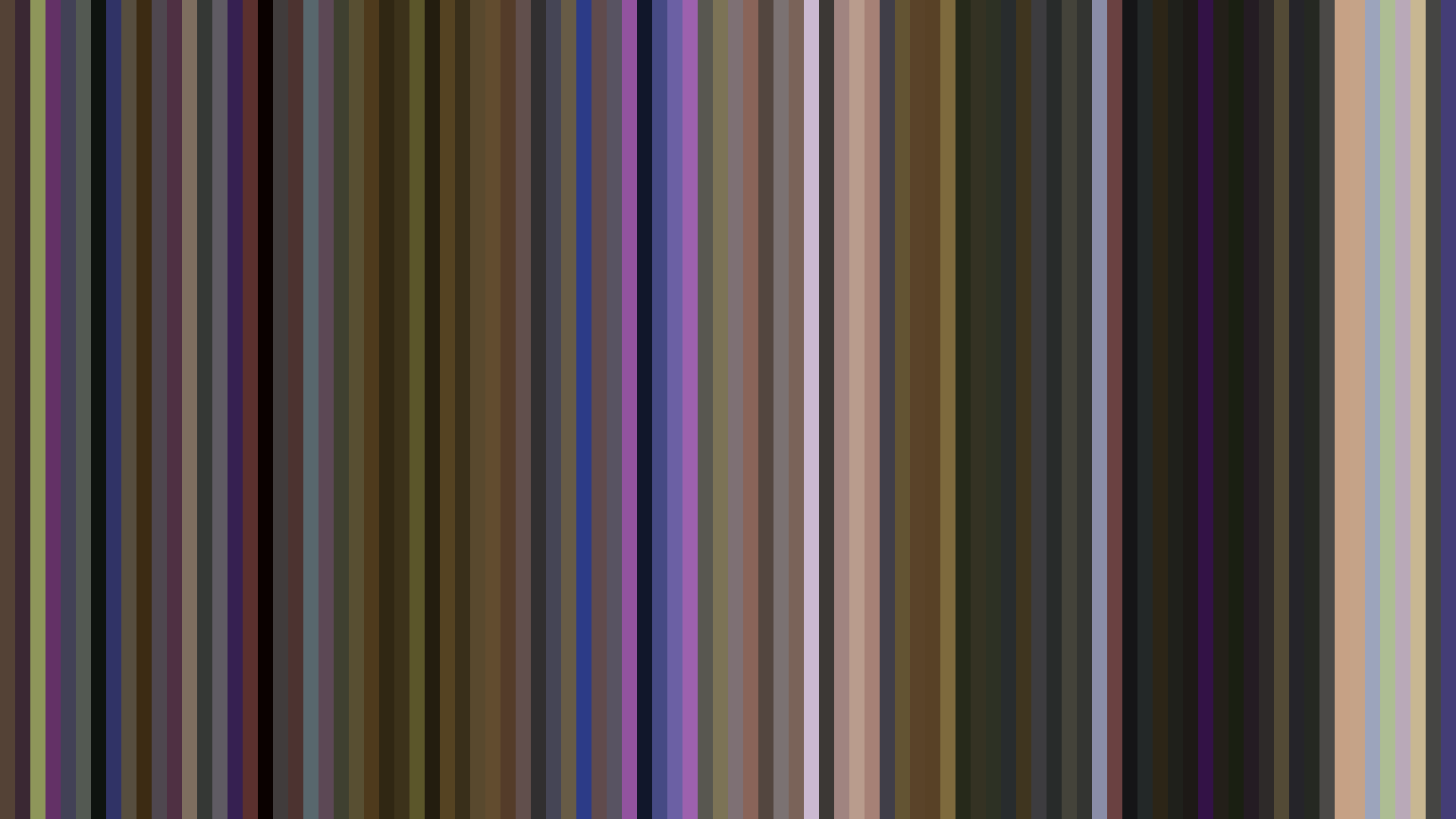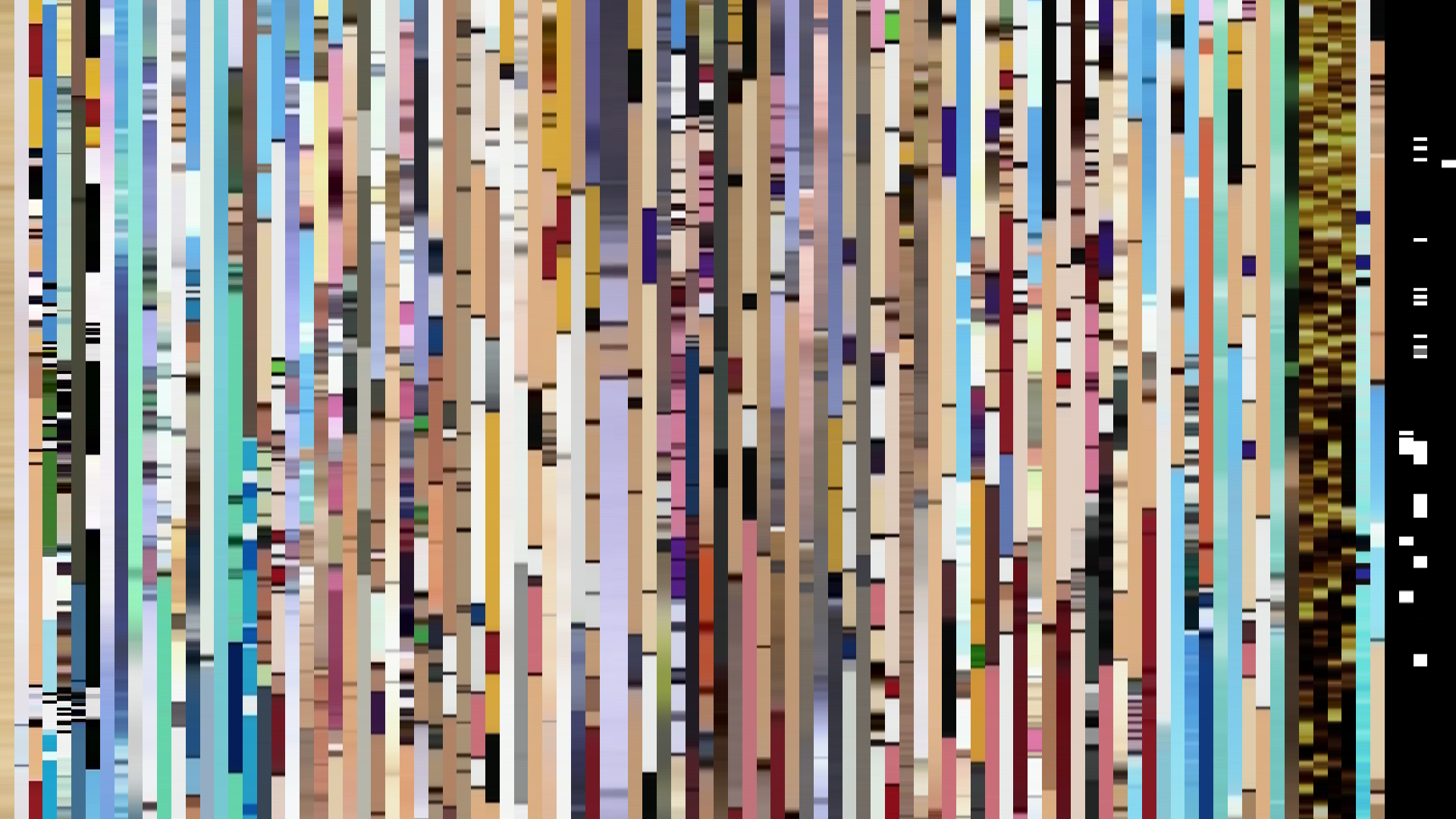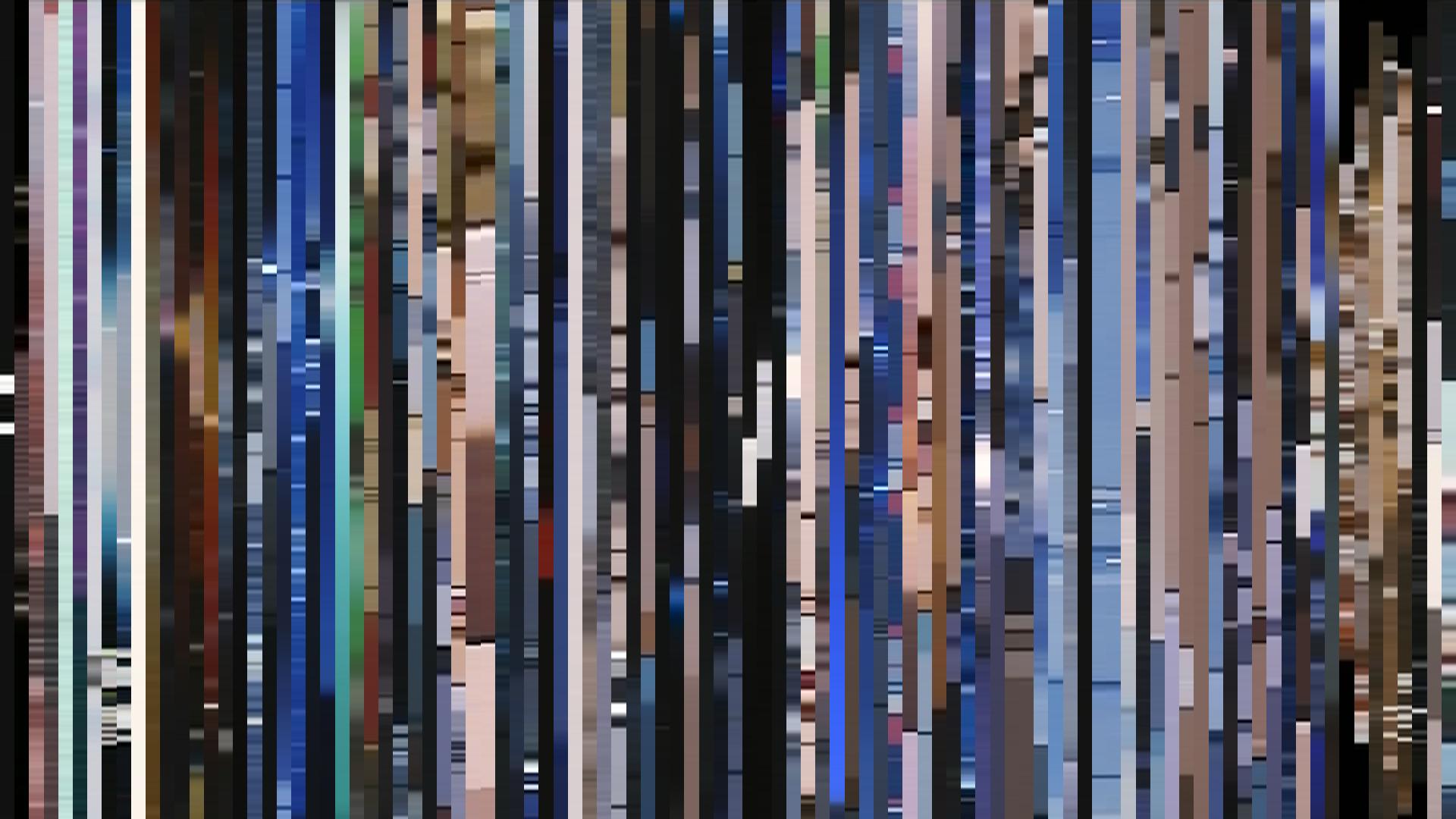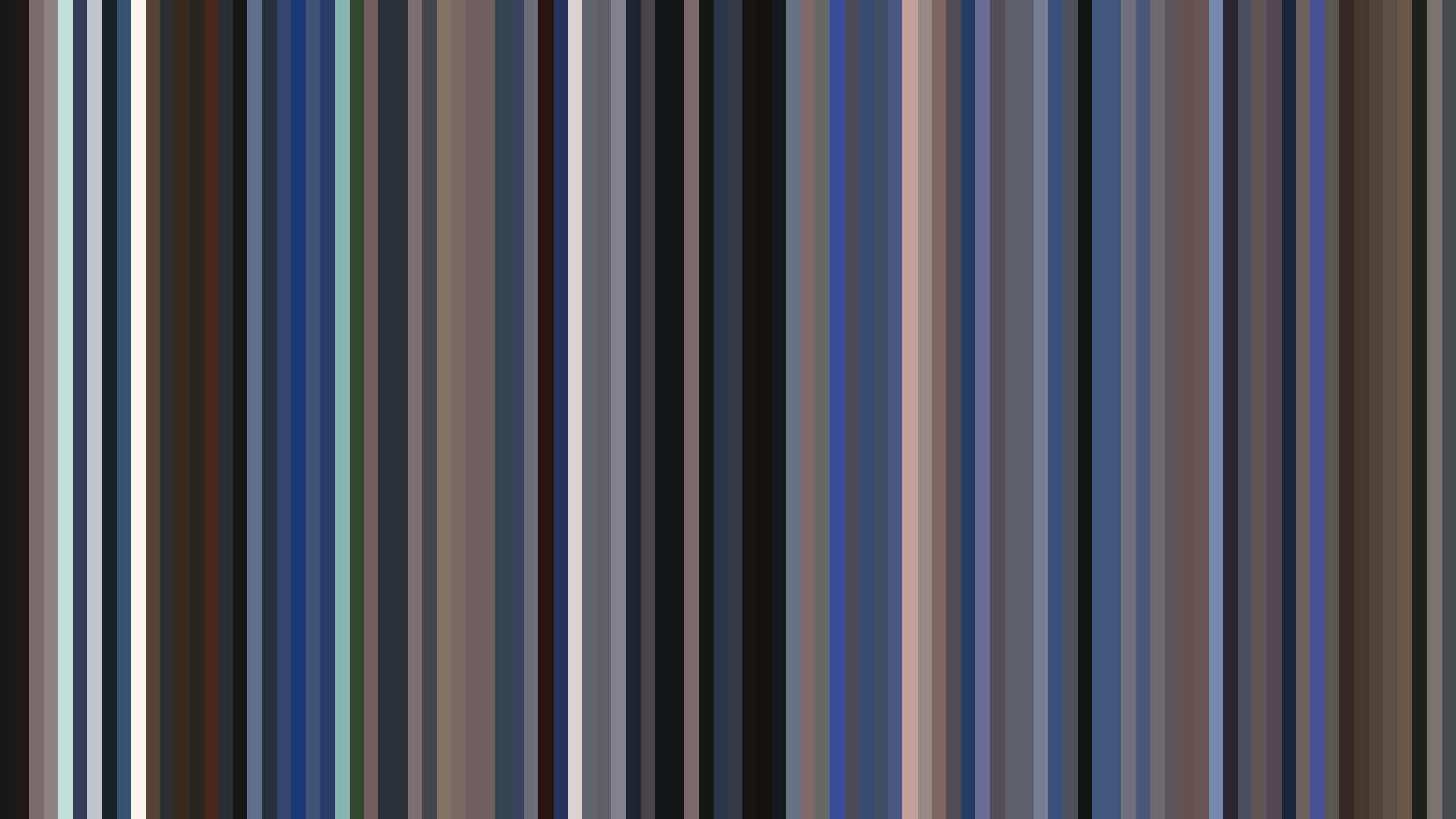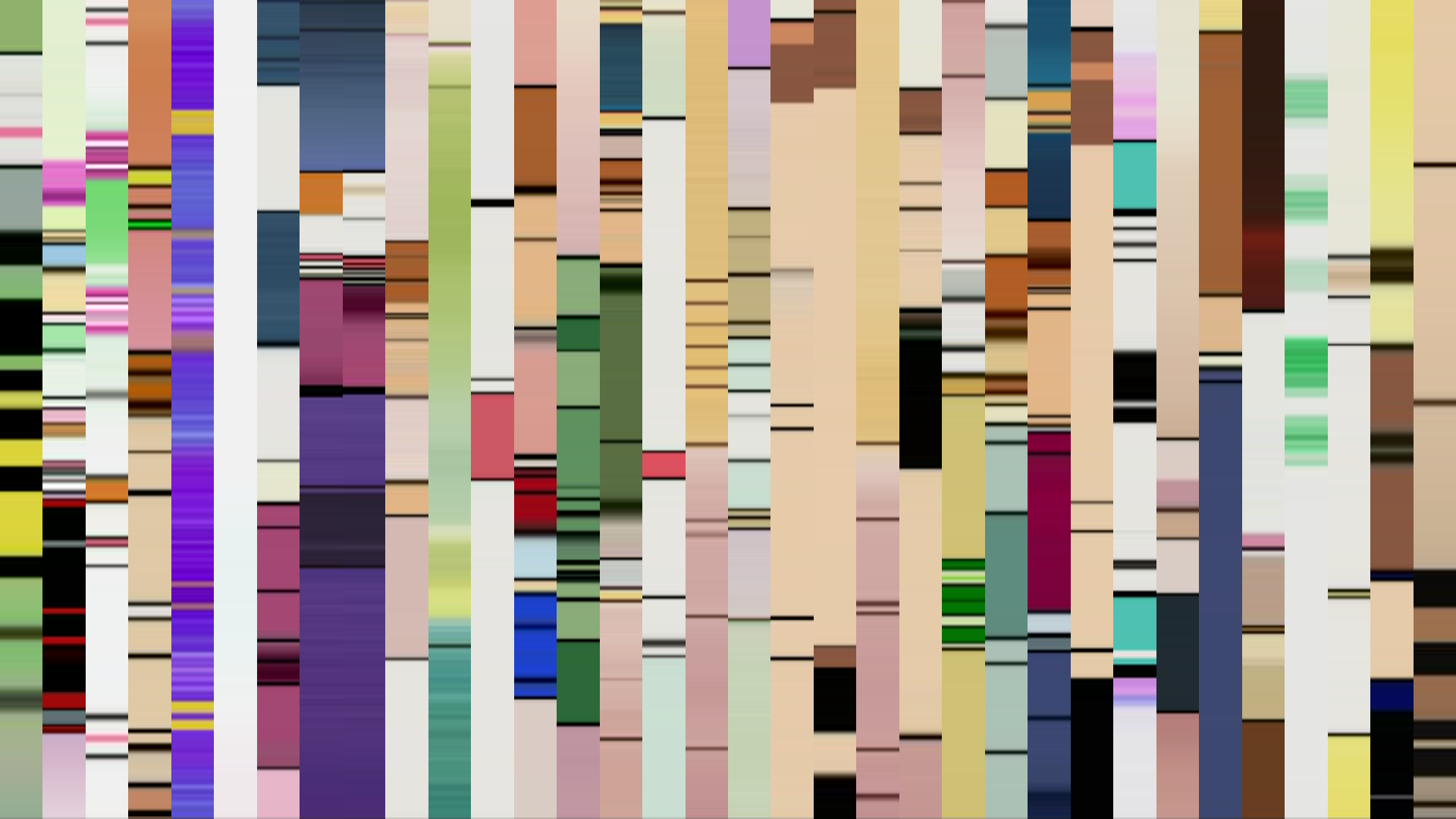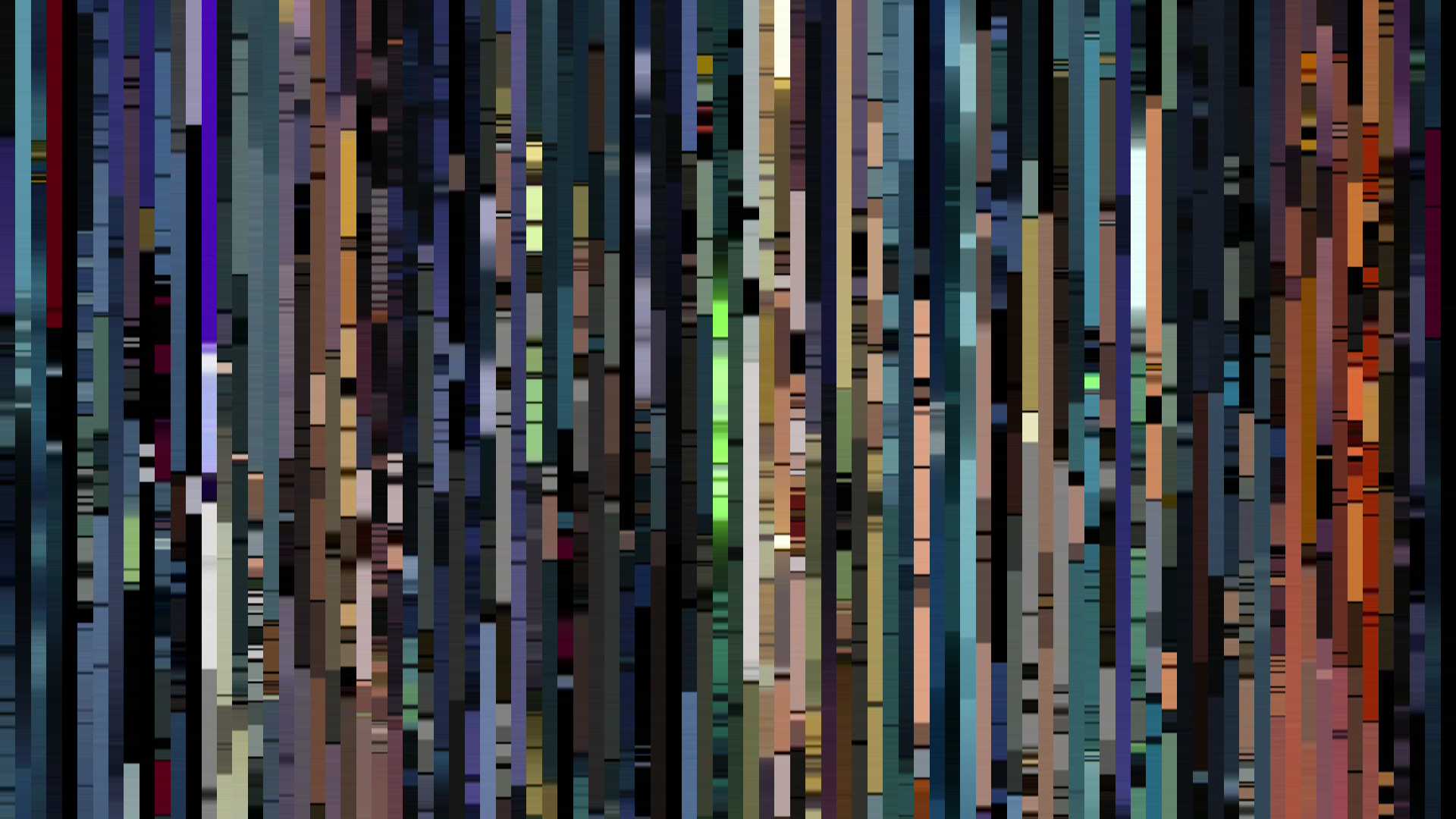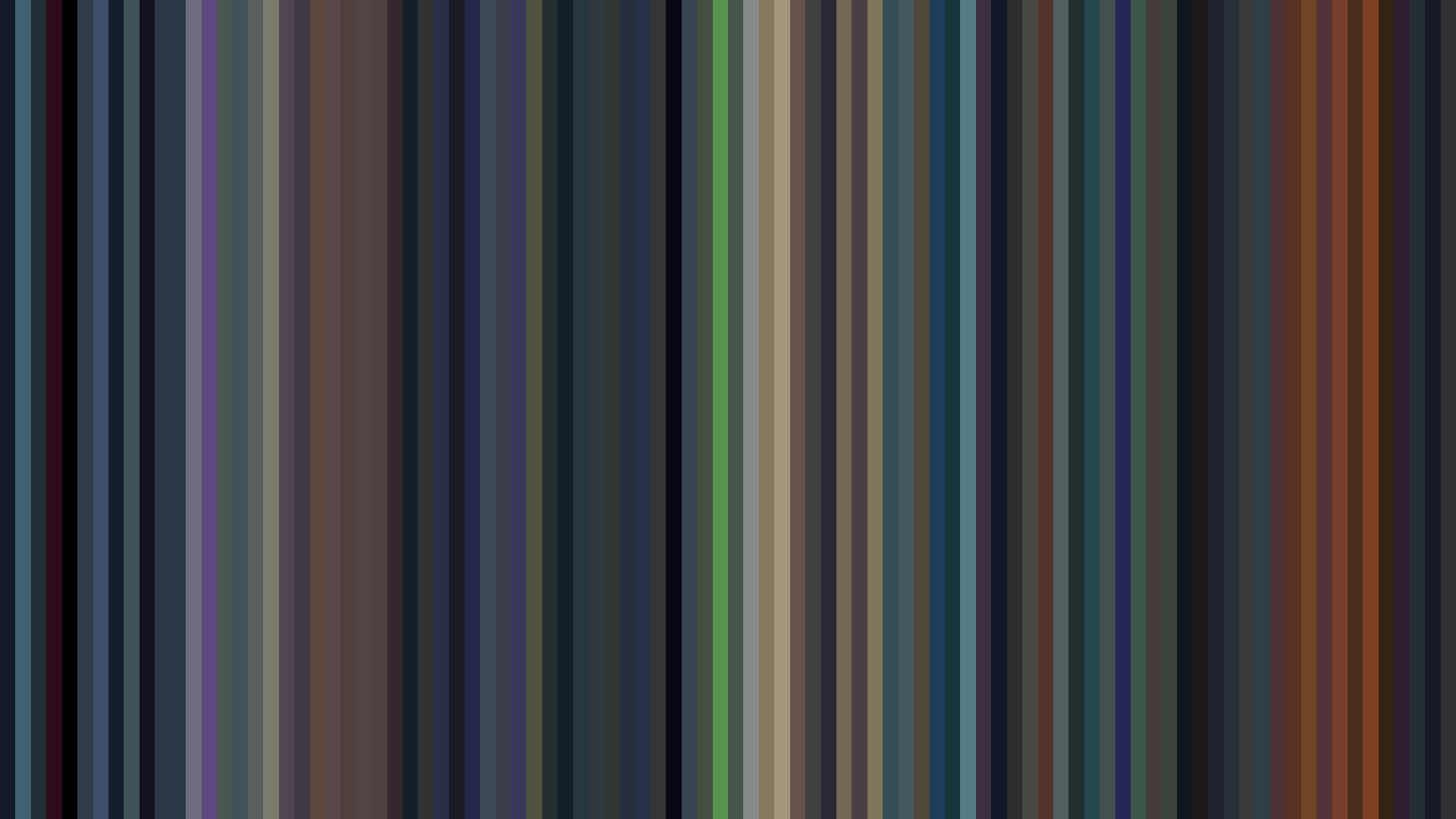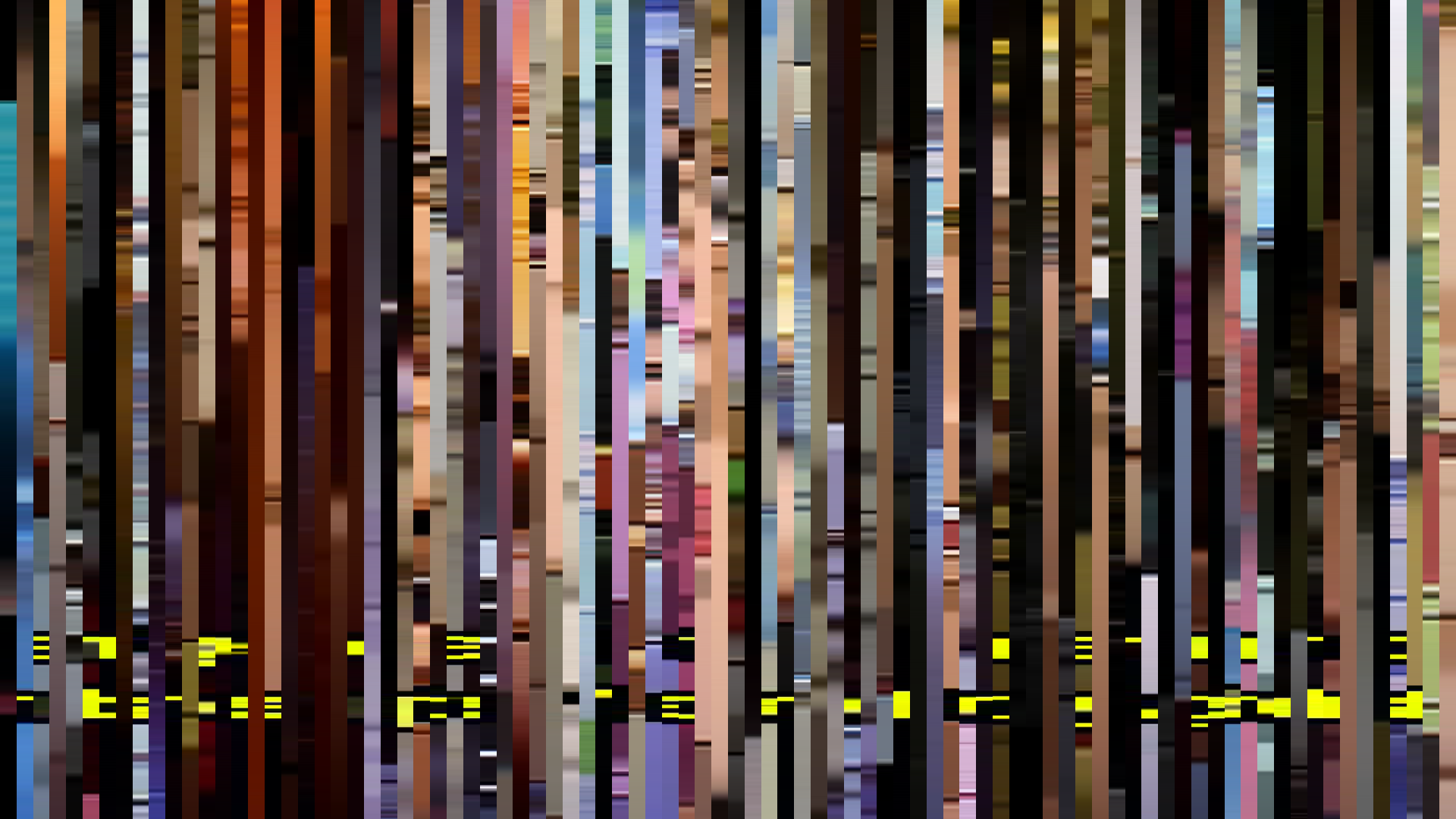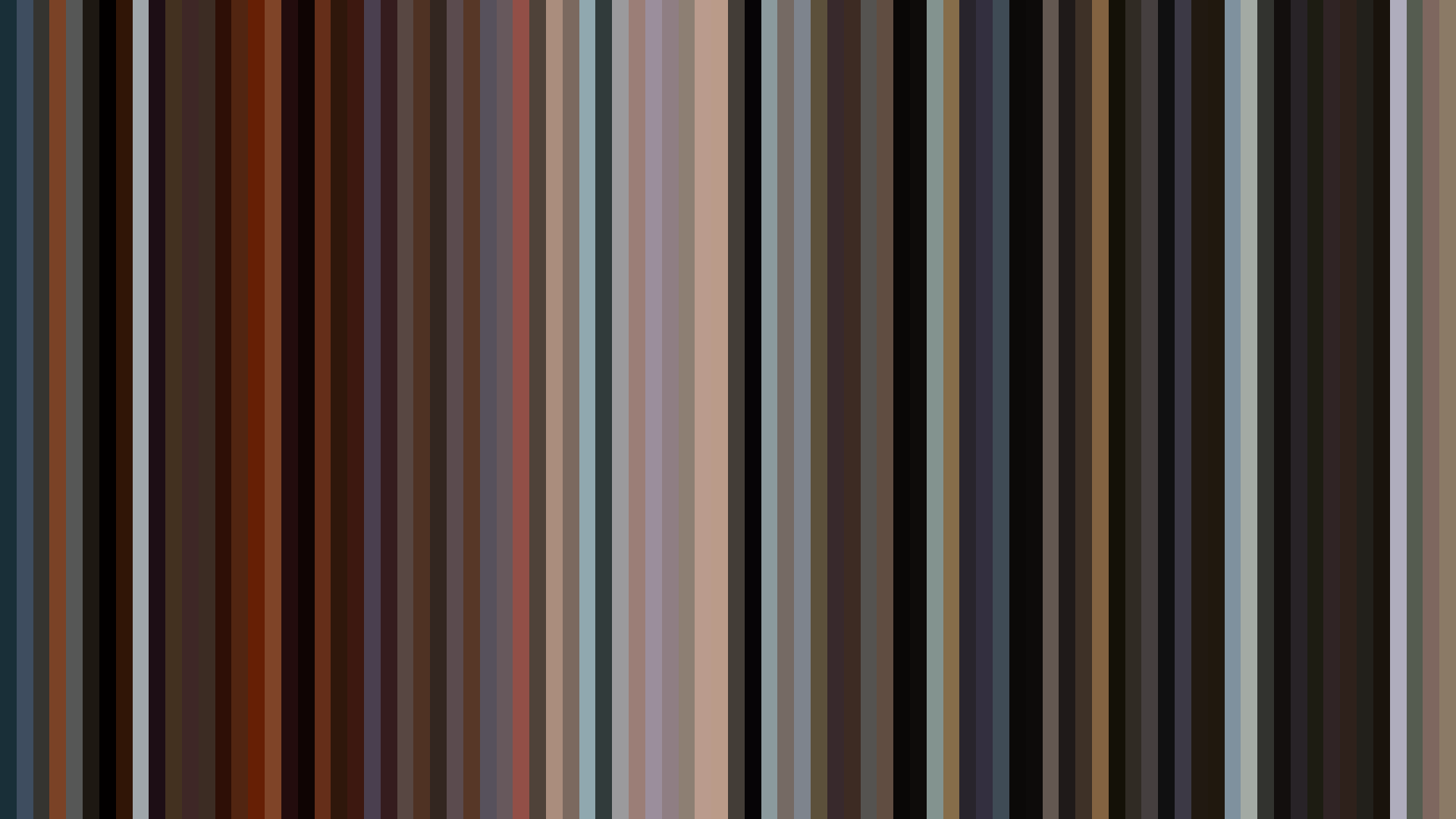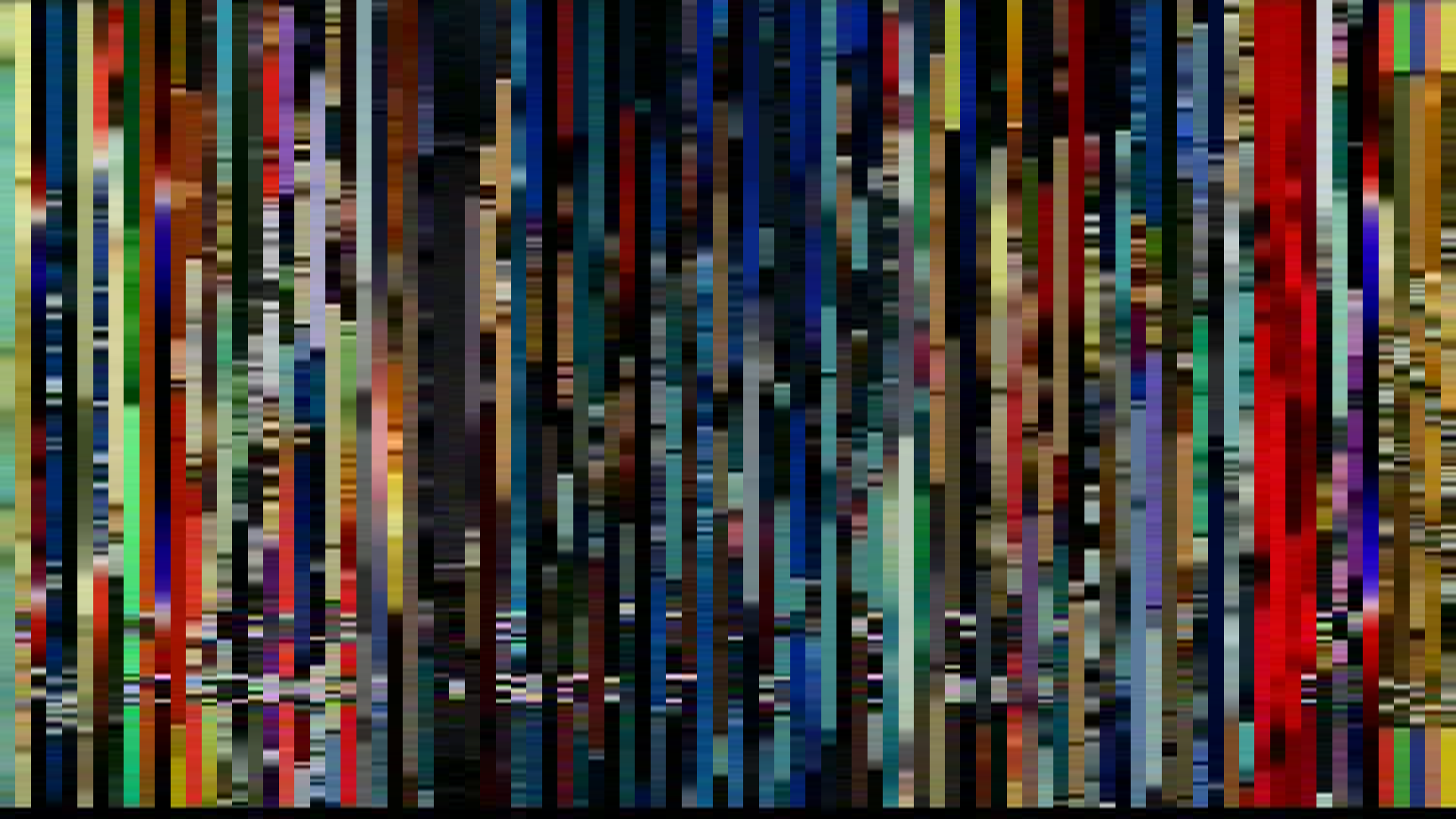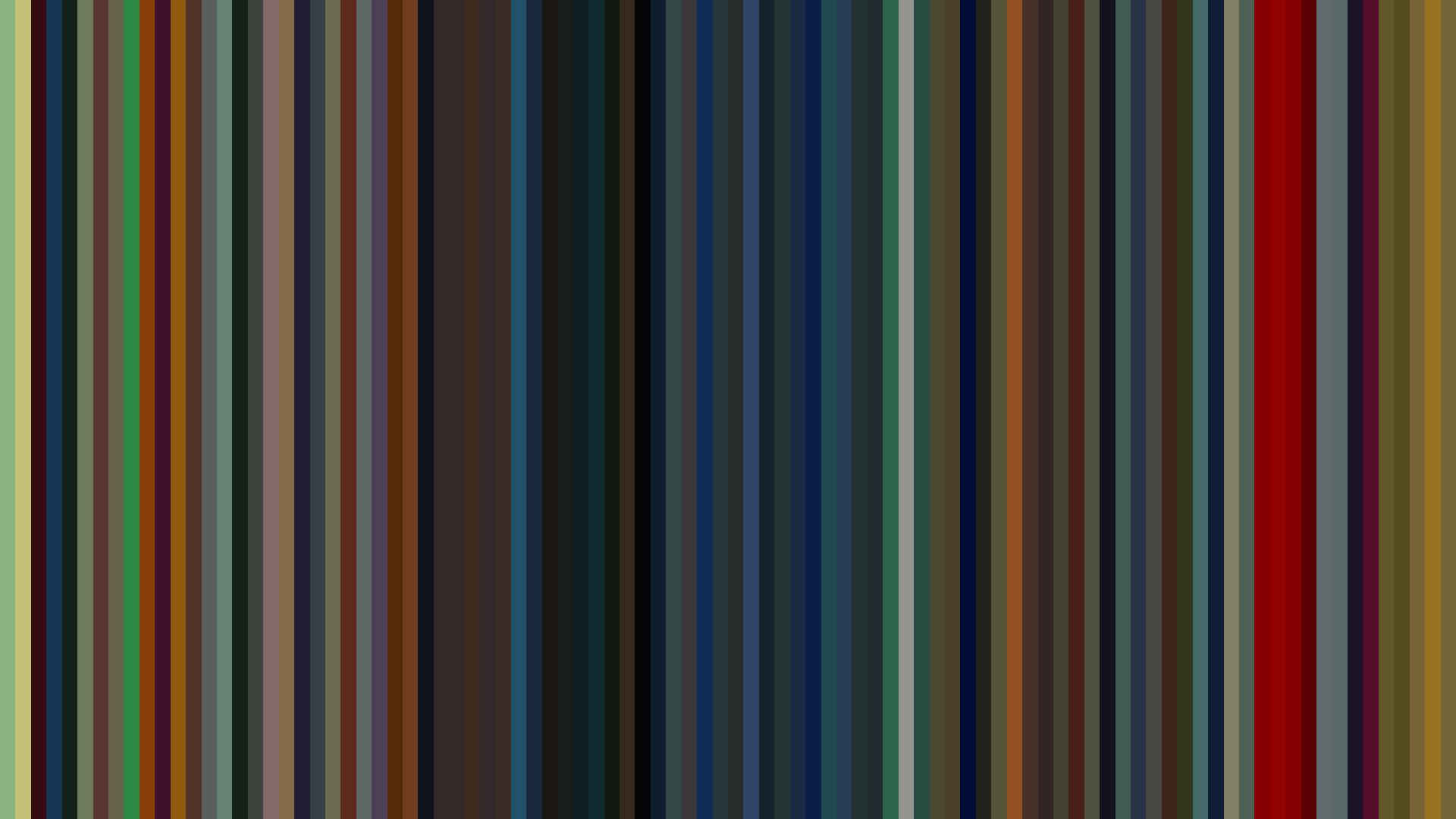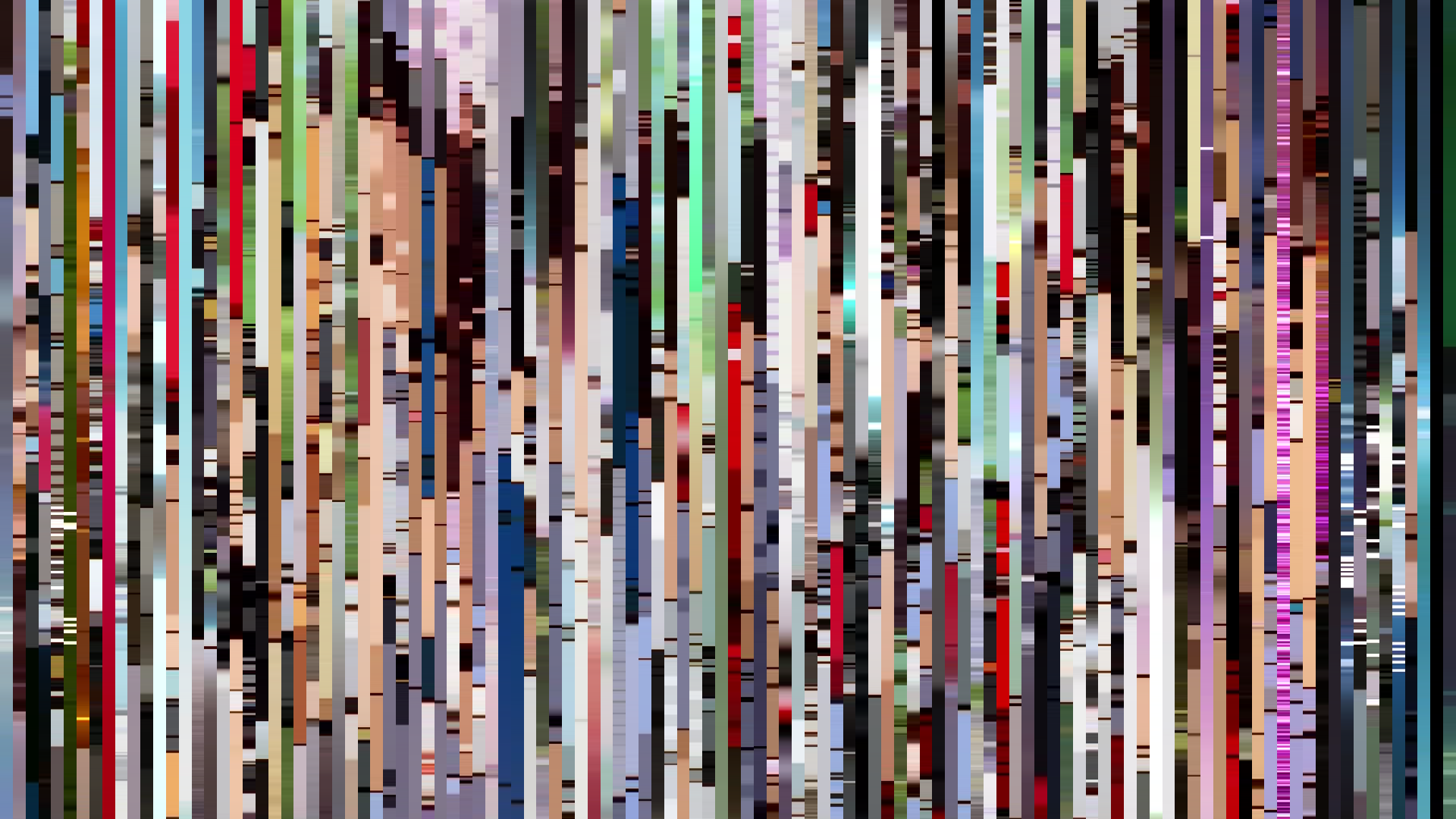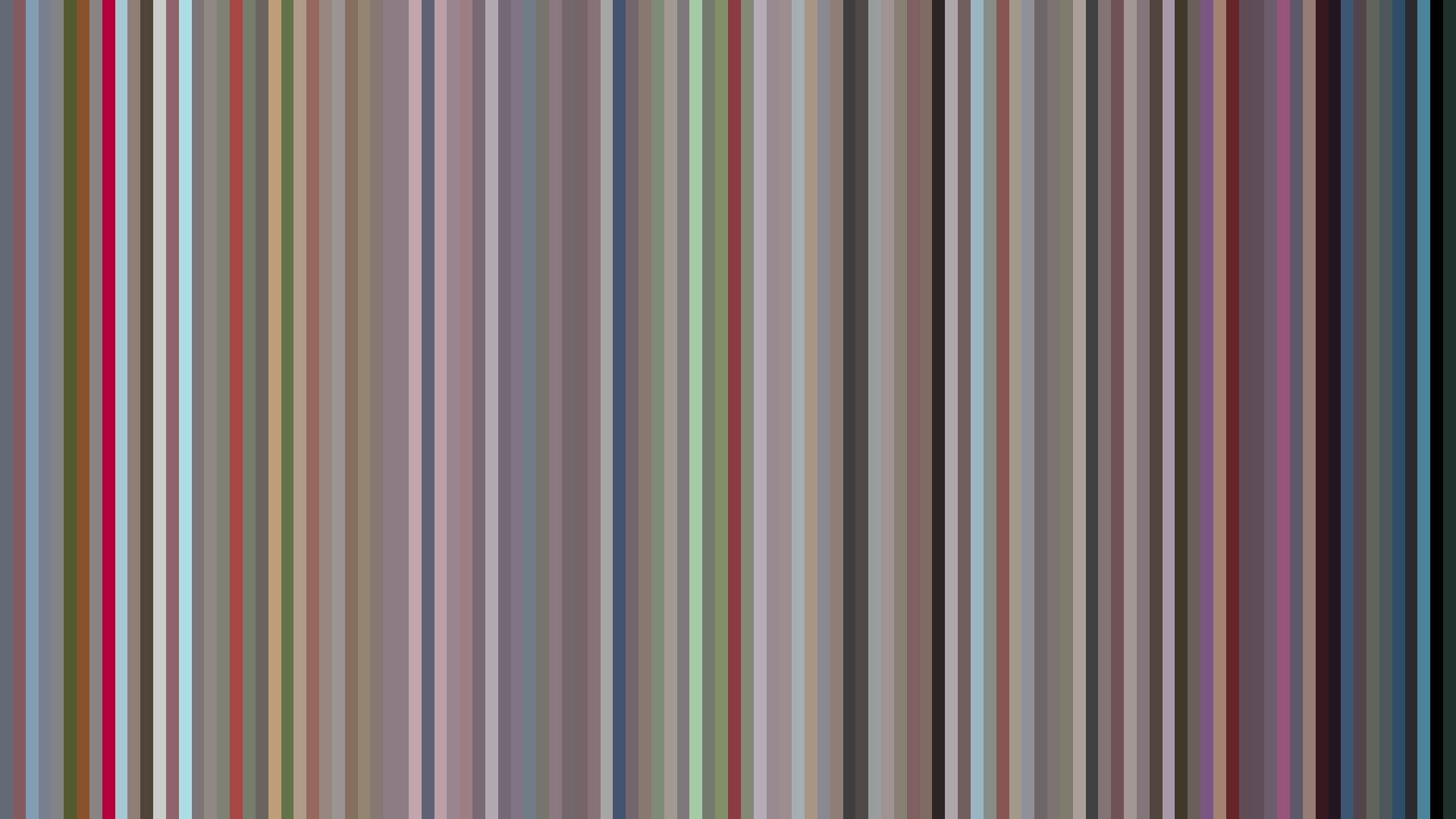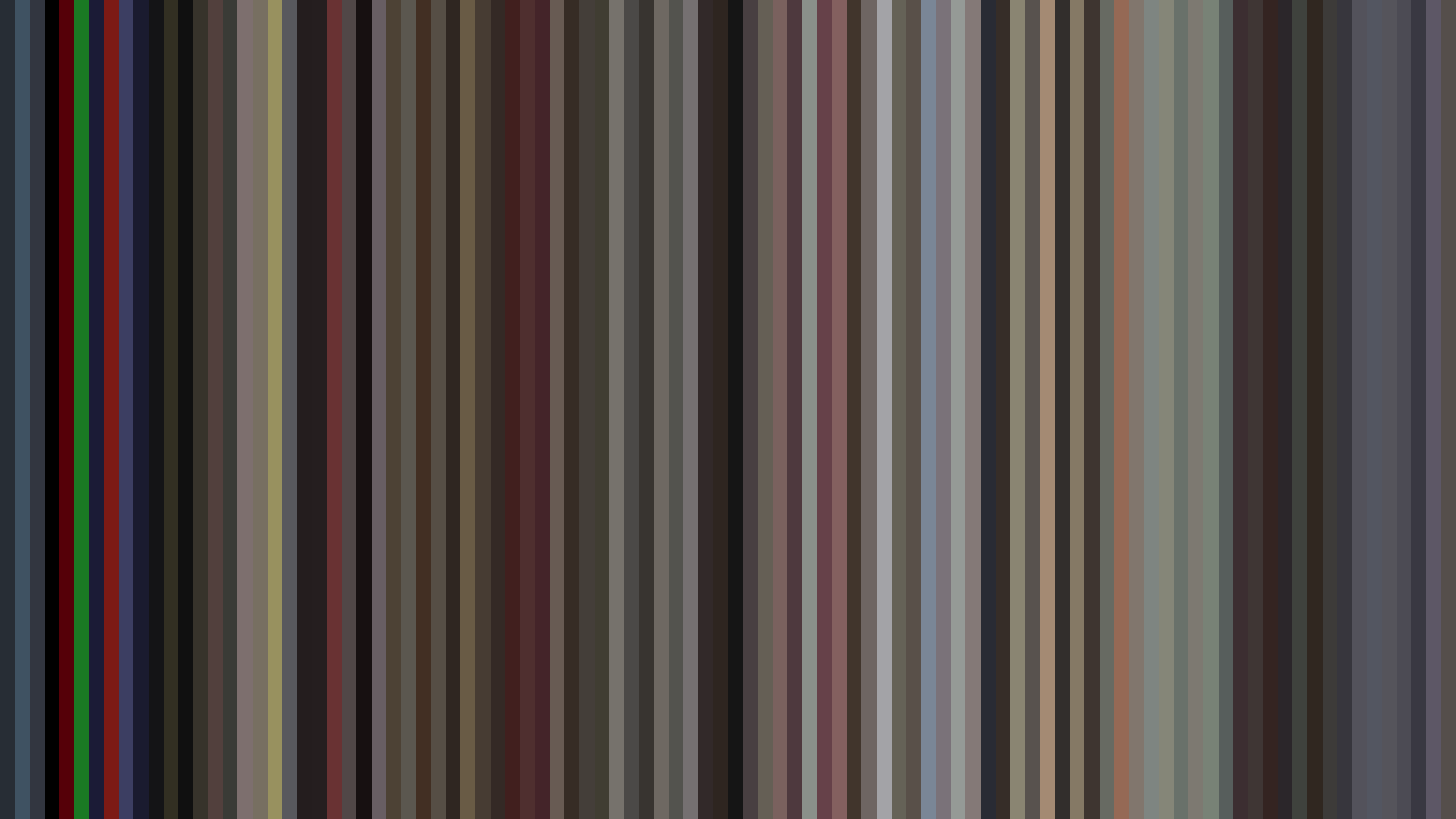
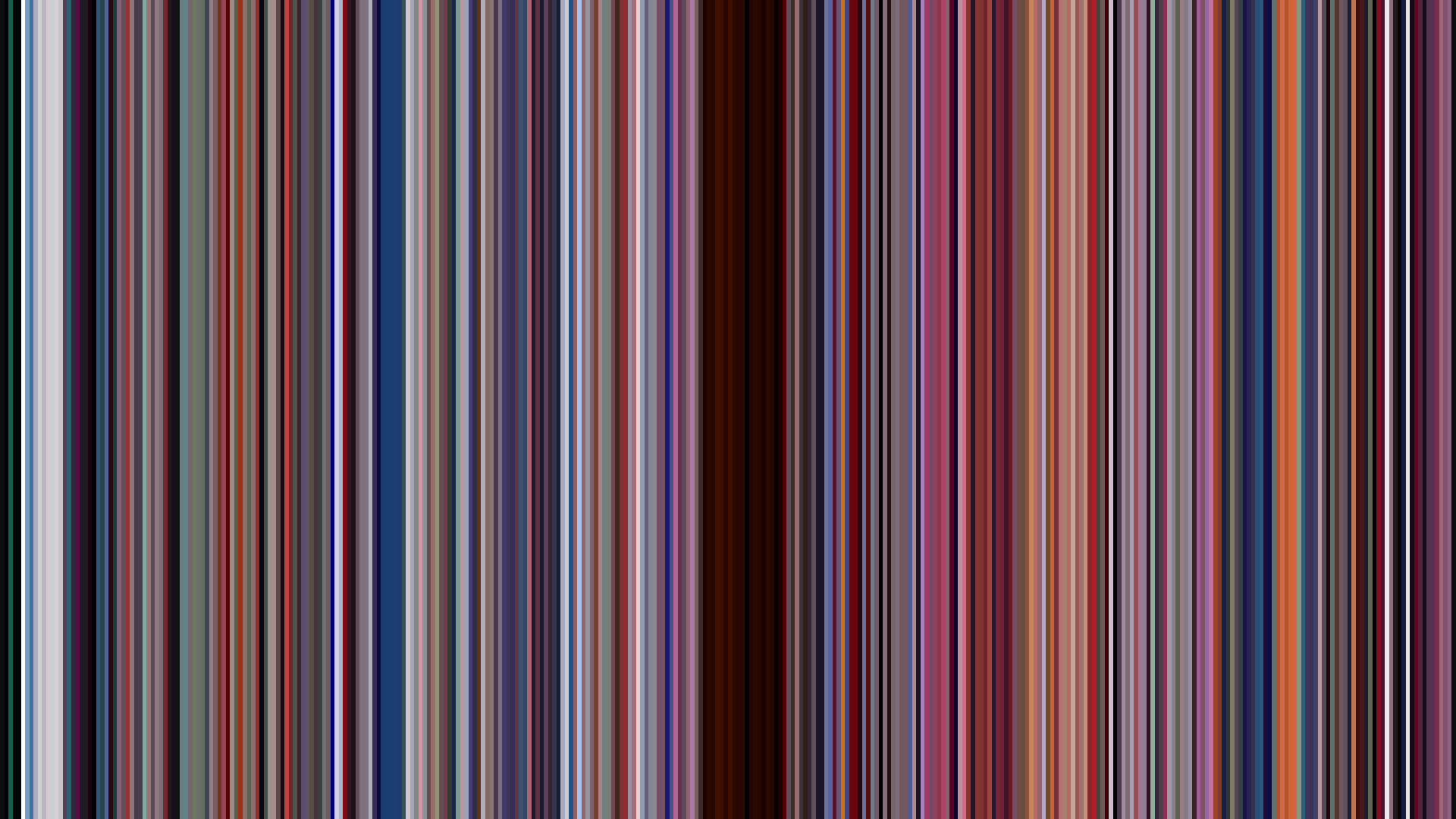
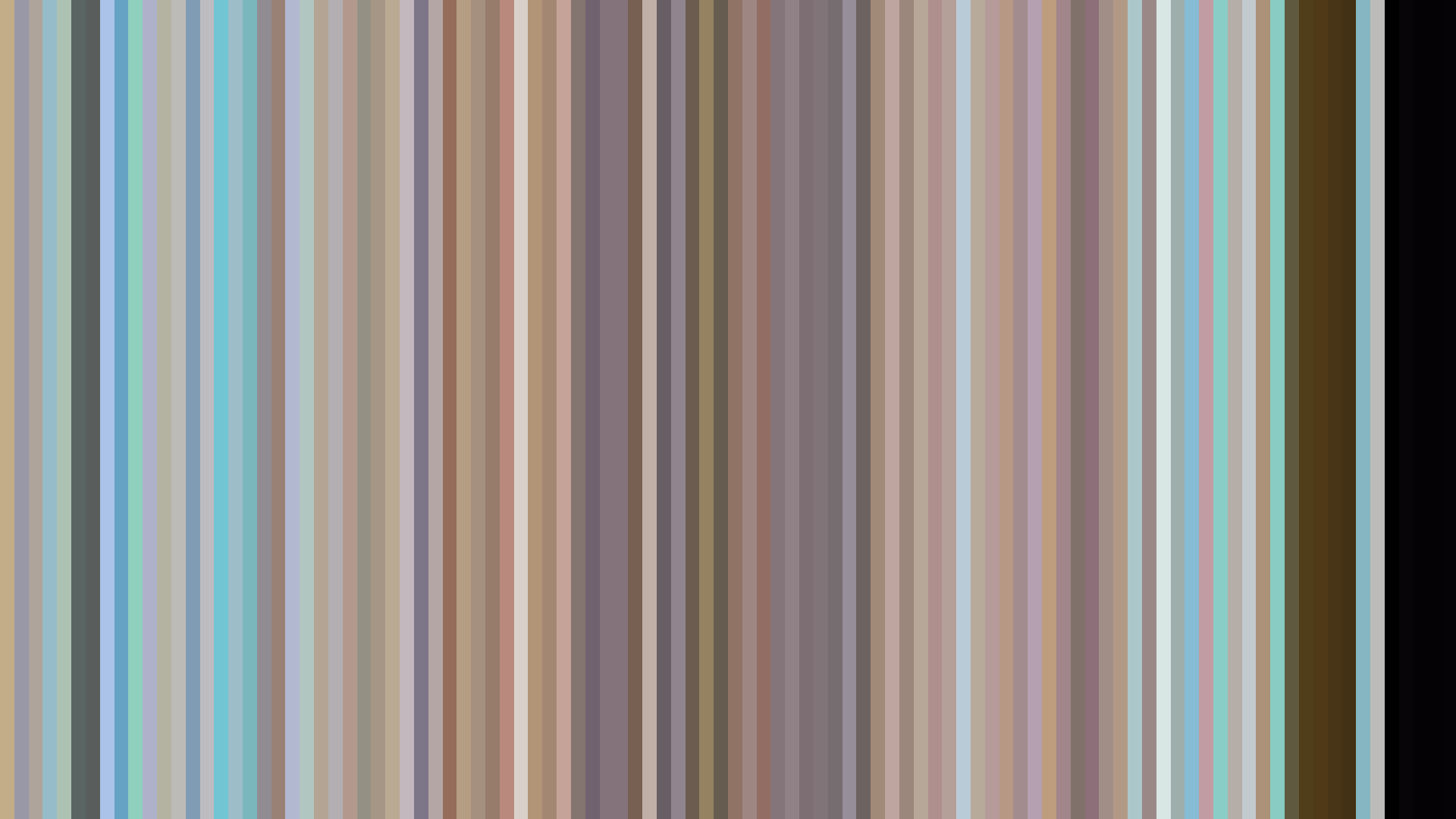
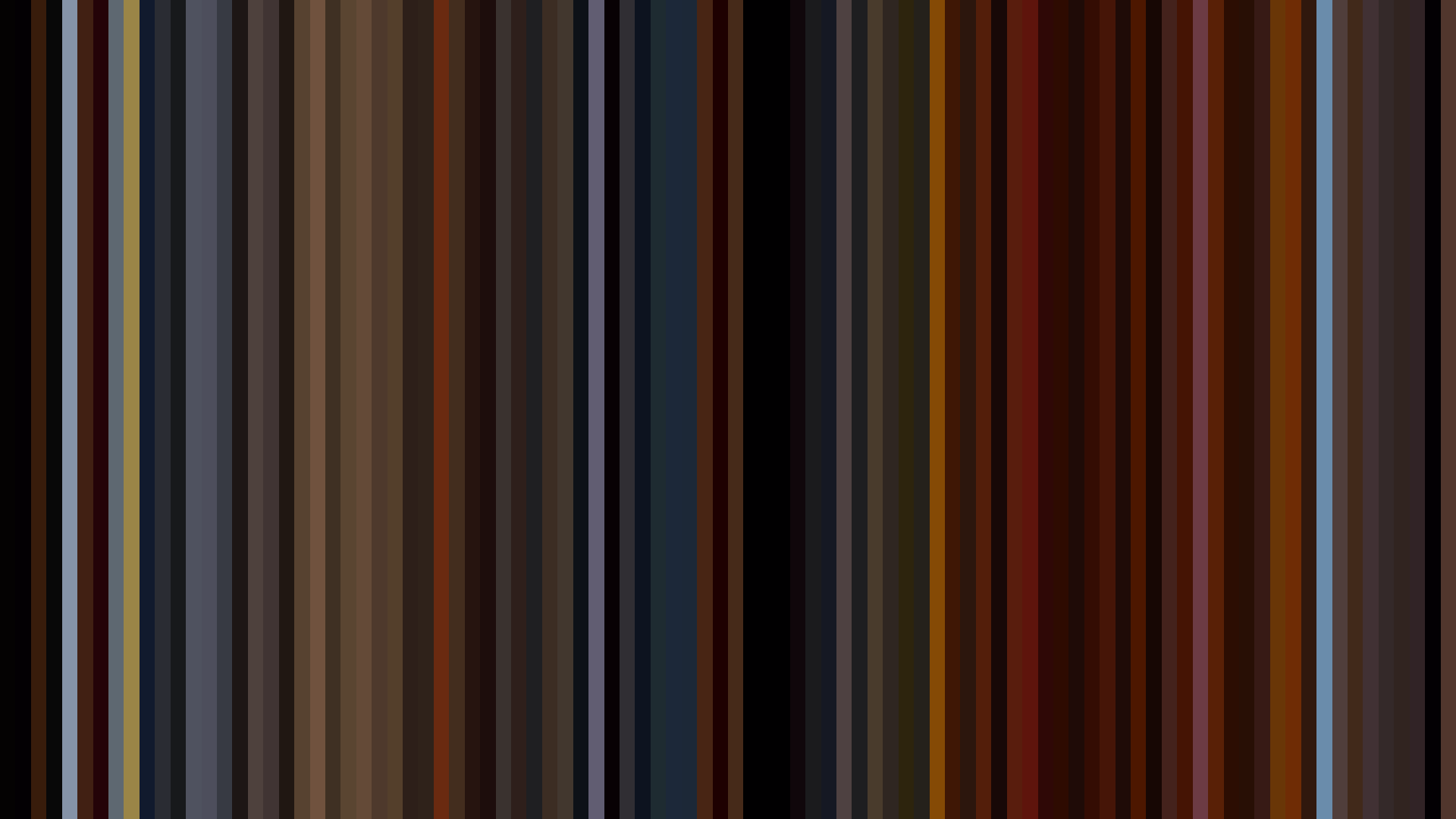
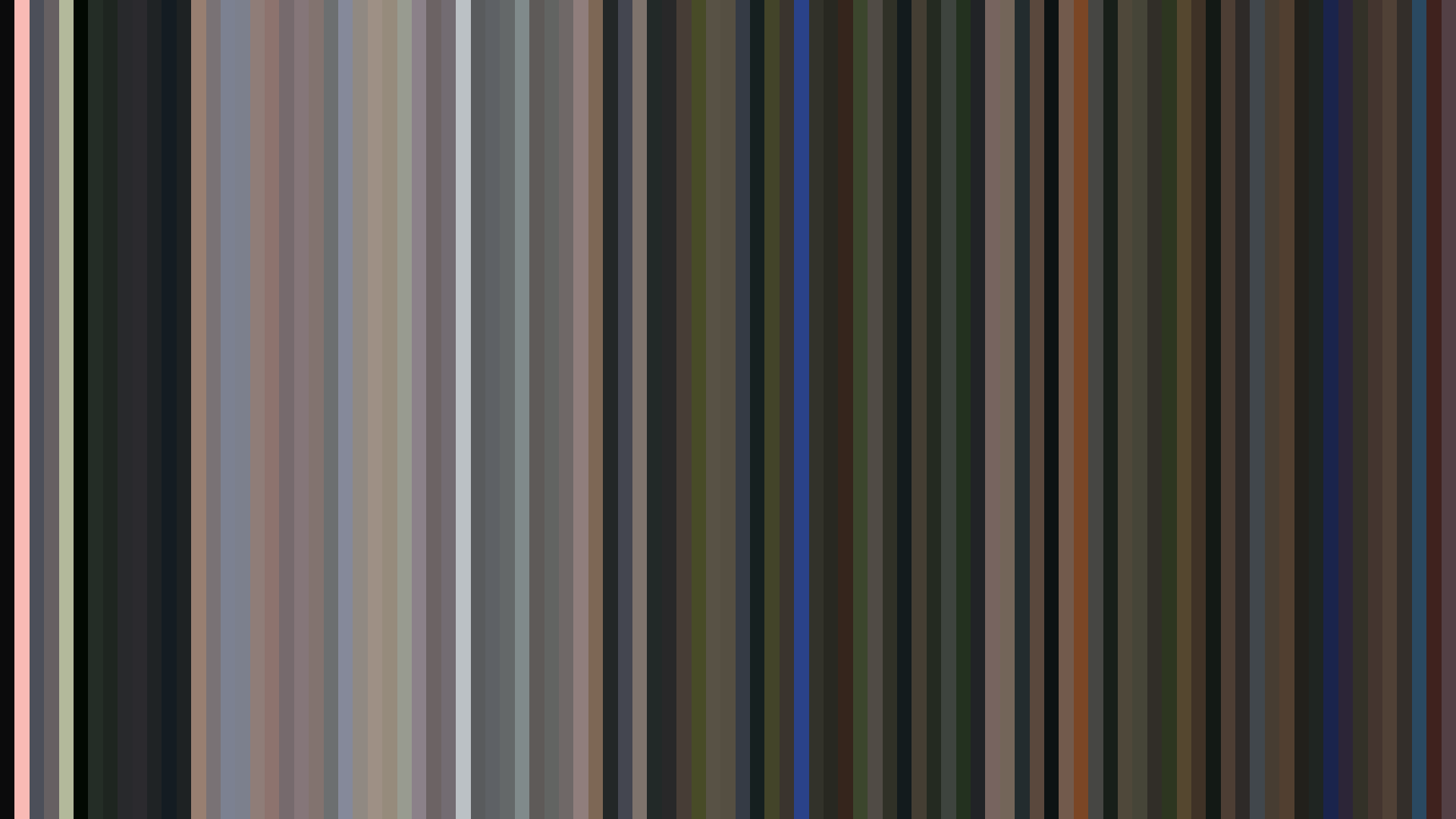
The four years between 1996 and 1999 produced anime's most chromatically committed body of work — a corpus that, taken together, looks less like a decade of television than a single sustained mood piece. The numbers say it plainly. Across the twenty-seven titles in this dataset, average brightness lands at 0.400 and average saturation at 0.307: a palette that is not only dark but desaturated, the visual register of ember rather than flame. Eight of the twenty-seven shows resolve their brightness arcs into explicit dark endings — the single most common structural choice in the set. The era did not drift into shadow. It walked there on purpose.
Ember, Not Flame
The first thing to understand about late-nineties anime is that its warmth is a warmth in retreat. Sixteen of the twenty-seven titles read as Red-dominant in their aggregate hue, and another two skew Red-Purple or Red-Orange. Eighteen warm-coded shows out of twenty-seven would, in a different decade, suggest sunlit optimism. Here it produces the opposite effect: cel-painted reds dragged down toward black, ochres burnt to rust, the saturated golds of an analog production process running out of daylight. This is the visual signature of paint-on-acetate cinematography in its terminal phase — a medium that is about to be displaced by digital ink-and-paint, and which seems, at some level, to know it.
The numerical evidence sits in the lower-saturation third of every comparable decade. Cowboy Bebop, the period's defining work, registers at 0.235 saturation — the visual equivalent of jazz played in a minor key. Initial D First Stage, a show ostensibly about combustion engines and brake-light reds, sits at 0.267. Even Trigun, whose Red-Orange dominance reads on paper like a desert noon, comes in at only 0.295: a cracked amber rather than a brilliant one. The decade's color isn't suppressed; it's weathered. The exception that proves the rule is Berserk, whose 0.510 saturation is the highest in the set — but that color is concentrated in a single hue, the bruised red of medieval atrocity. Saturation in 1997 buys you blood, not light.
The 1997 Rupture
If the late nineties have a single inflection point, it is 1997, and the evidence is the year's tonal spread. Within a twelve-month window, the dataset records Berserk at 0.181 brightness, End of Evangelion at 0.353, Revolutionary Girl Utena at 0.498, and Pokémon at 0.553. No other year in the corpus stretches this far on the brightness axis. Something fractures in 1997, and what fractures is the assumption that a serialized animated drama owes its audience light.
End of Evangelion is the keystone. The film registers a Red-Purple dominant hue — a category that appears only twice in the entire decade, the other instance being Utena — and a dark-opening arc structure that would have been almost unthinkable on Japanese television five years earlier. Its 0.353 brightness sits below the decadal average. More telling is the saturation: 0.419, the second-highest figure in the corpus after Berserk itself. End of Evangelion is not dark in the sense of being washed out. It is dark in the sense of being fully colored, with the color drained of light. That is a different claim. It says that the image can be present and weighted and still refuse the comfort of brightness. After 1997, every prestige production in the dataset operates inside the door that Anno's film kicked open.
Berserk, screened the same year, takes the argument further. Its brightness is the lowest non-comedic figure in the set. The Group TAC production, directed by Naohito Takahashi, runs through its season with a sustained nocturnal palette — #170E0C, #592412, #644C2C — that reads on the barcode as a single dark plate broken only by the briefest flares of warm color, always followed by collapse. The arc-down structure means the show is darker at its midpoint than at either end: a deliberate burial of the eye in the Eclipse-bound center of the Golden Age. No other 1997 production commits to this degree of sustained shadow. Slayers Try, also from 1997, sits at 0.451 brightness with a dark-ending arc — the conventional structural choice. Berserk is the radical case.
The decade's color isn't suppressed; it's weathered. Eighteen warm-coded shows out of twenty-seven, and the prestige tier makes them all look like ember rather than flame.
Utena complicates the year. Director Kunihiko Ikuhara built the J.C.Staff production around an arc-down brightness structure that begins in the sun-drenched optimism of Ohtori Academy's rose gardens before descending, in the middle act, into the shadow play of the dueling arena. The opening is the lie; the dark middle is the truth. At 0.498 average brightness, Utena is the brightest of 1997's serious productions, but its barcode encodes the same suspicion of light that runs through Eva and Berserk. The warmth is staged. The shadow is the point. What 1997 produces, across these three works, is a decade-defining grammar: brightness as misdirection.
1998 and the Cool Frontier
If 1997 is the rupture, 1998 is the consolidation — and it is also the year that the warm-cel consensus first cracks. Cowboy Bebop, Initial D First Stage, Trigun, Outlaw Star, and Serial Experiments Lain were all broadcast within the same twelve months, and their brightness figures plot the entire emotional range of the form: 0.305, 0.315, 0.322, 0.415, 0.494. Every other year in the corpus works inside a narrower band. The most consequential title in this run is also the most chromatically aberrant.
Serial Experiments Lain, directed by Ryutaro Nakamura at Triangle Staff, registers as the dataset's most visually striking outlier. Its dominant hue is Blue-Green — the cold, clinical wavelength of cathode-ray tubes and fluorescent corridors — and its arc rises into a bright ending, a structural choice that runs counter to every prestige drama around it. Lain's palette anchors on #212C5A and #1A1919, the dark navy and near-black that define the Wired's interior, broken by the fluorescent #E6E7E5 of an overlit suburban Japan. There is nothing else in the 1996-1998 range that looks like this. Lain inaugurates a counter-tradition that the dataset registers explicitly: the Blue-Green-dominant column.
That column then expands. In 1999, three of the year's seven entries — Crest of the Stars, Cybersix, Shin Hakkenden — log Blue-Green as their dominant hue. None of them existed in this register two years earlier. Crest of the Stars, a Sunrise production, sits at 0.353 brightness with a bright-ending arc that mirrors Lain's structure exactly. Cybersix, at 0.246 brightness, is the second-darkest title in the entire decade. Shin Hakkenden's 0.454 saturation places it in the corpus's top tier of color intensity — but the color is the cool blue of #102857, not the warm reds that defined 1996. The four Blue-Green entries cluster together on the back end of the decade and they are categorically distinct from the earlier "Green" tags on Pokémon or Those Who Hunt Elves, whose greens are the warm forest-and-sky greens of children's adventure animation. Lain's Blue-Green is something else: it is the color of a screen looking back at you.
This is the late-nineties pivot the dataset records most cleanly. From 1996 through End of Evangelion, anime's prestige register is warm, weathered, and structurally pessimistic. After Lain, a parallel register opens — cooler, digital, suspicious of warmth in a different direction — and the medium acquires a second axis along which seriousness can be expressed. By 1999 the dataset is no longer mono-cultural. The cel-era ember has not yet been replaced, but it now has a competitor: the cathode chill.
Bebop as the Equipoise
Cowboy Bebop sits at the dead center of every argument the data makes. Its brightness of 0.315 is just below the decadal average. Its saturation of 0.235 is just below the decadal average. Its dominant hue is Red — the most common in the set — but cooler and more desaturated than every other Red-coded production around it. Its arc is flat: no opening flare, no third-act descent, no structural gimmick. The barcode looks like a long quiet held note.
This is not unremarkable. It is the visual argument of the show. Shinichirō Watanabe and art director Junichi Higashi built Bebop as a collage of stolen aesthetics — film noir black, kung-fu warm, space-western dust — and the data confirms what the eye reports: each column reads like a frame from a different kind of movie, but the aggregate registers as quiet because no single style dominates. Bebop's barcode is the only one in the decade that actively refuses a structural arc. It is a show composed entirely of moods, and the brightness graph captures that the way a transcript of a jazz set captures the silences. In a corpus full of dark endings and falling arcs, Bebop's flat line is the more radical formal choice. It says: this material is not building toward anything. The mood is the form.
The Bright Counter-Argument
An honest reading of the decade has to address what the data also shows: the bright outliers are real. Oruchuban Ebichu logs 0.622 brightness. One Piece debuts in 1999 at 0.559. Pokémon, in 1997, sits at 0.553 with a bright-opening arc. These figures are not noise; they're the kids' tier and the gag-comedy tier of the same medium, running on a different visual contract. What the dataset records is not a uniformly dark decade but a bifurcation: the prestige productions cluster below 0.500 brightness — Bebop, Initial D, Trigun, Lain, Berserk, End of Evangelion, Outlaw Star, Crest of the Stars, Cybersix, Pet Shop of Horrors, Shin Hakkenden all sit there — while the children's franchises and broad comedies hold the upper register.
That bifurcation is itself the decade's signature. Earlier eras did not make this distinction so cleanly, and later eras would dissolve it from the other direction, as digital tooling made every show brighter by default. The late nineties are the moment when "serious" and "dark" became visually synonymous in Japanese animation, and when "bright" and "for children" got welded to one another. We are still living inside that vocabulary. Every prestige drama after 2010 that reaches for shadow and desaturation as evidence of seriousness — and there are many — is reading from a script written between 1997 and 1998 by Anno, Takahashi, Watanabe, and Nakamura.
The Cel Era's Last Gesture
What the barcodes of these twenty-seven shows ultimately record is a craft ending in good order. Average brightness 0.400, average saturation 0.307, hue distribution sixteen Red against four Blue-Green: the warm-cel consensus held the field through 1997 and surrendered it gradually across 1998 and 1999, ceding ground to a digital aesthetic that would bring its own brightness, its own coolness, and a different relationship to color altogether. The late-nineties palette — that ember-and-rust register, the burned ambers, the bruised reds, the navy verging on black — is the last sustained articulation of an analog medium reaching the limit of what it could do with paint and light. The work knew it was late. The shadows in these barcodes are not despair; they are composure. The decade went out beautifully, with the lights down.