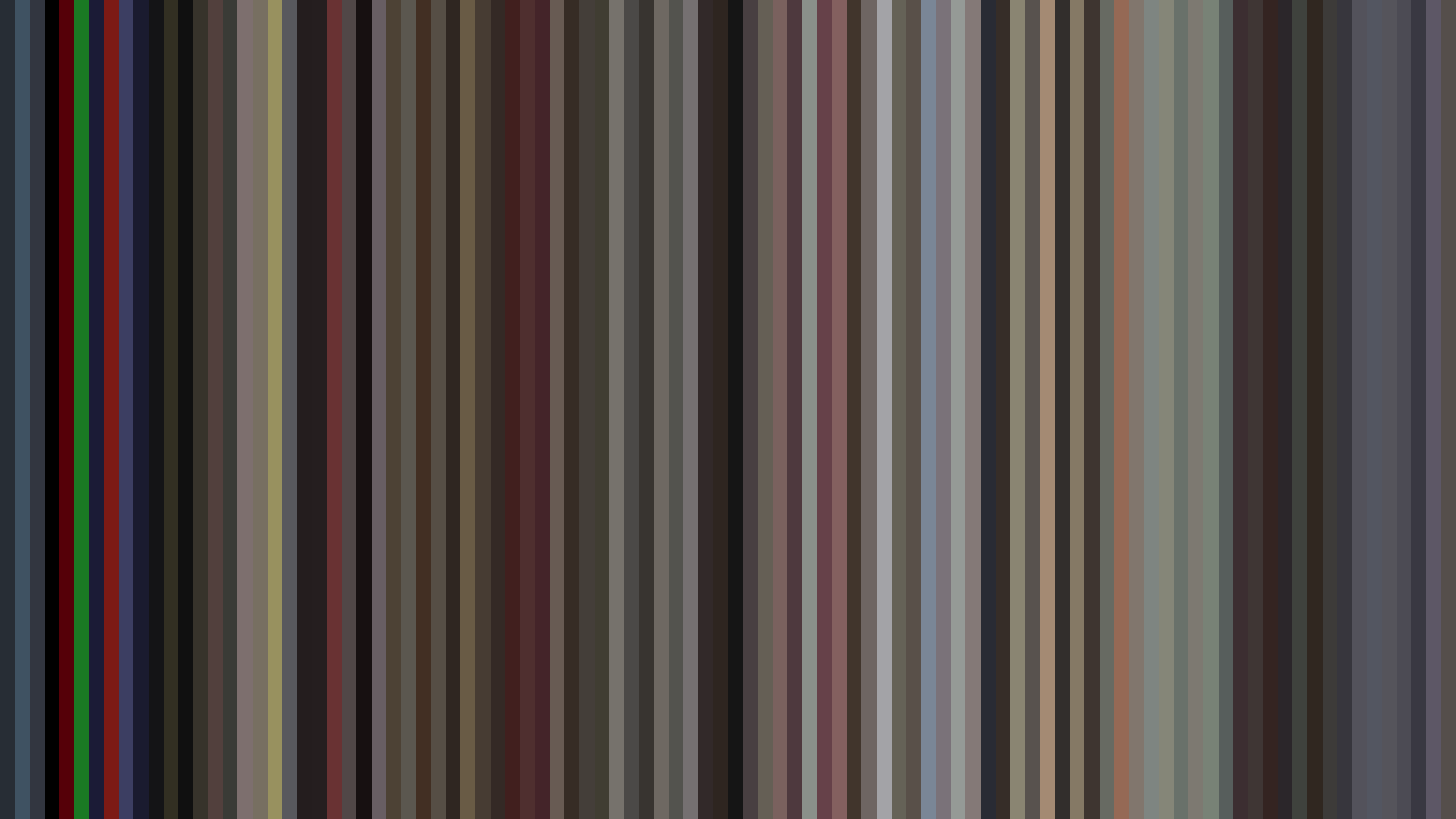
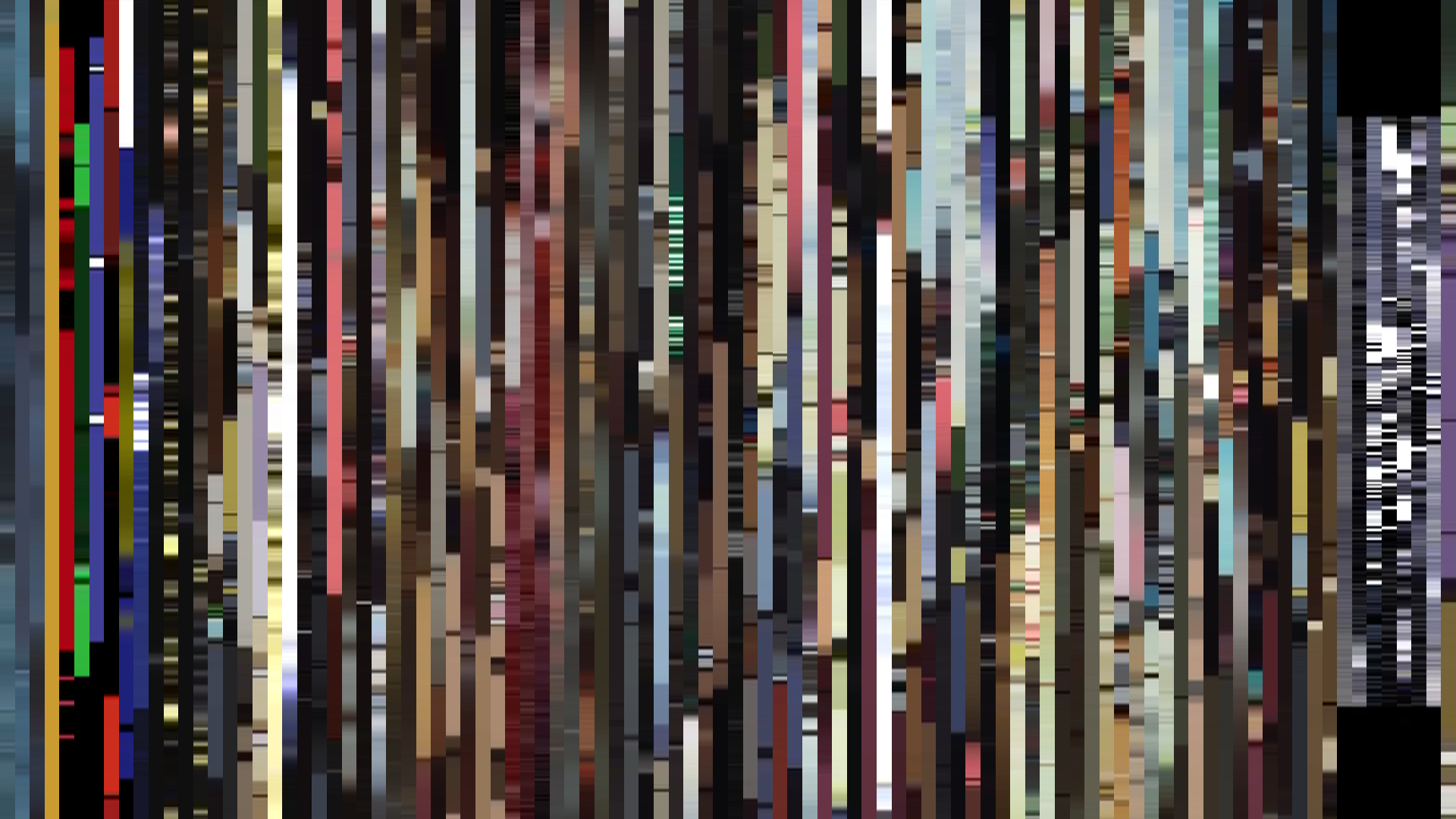
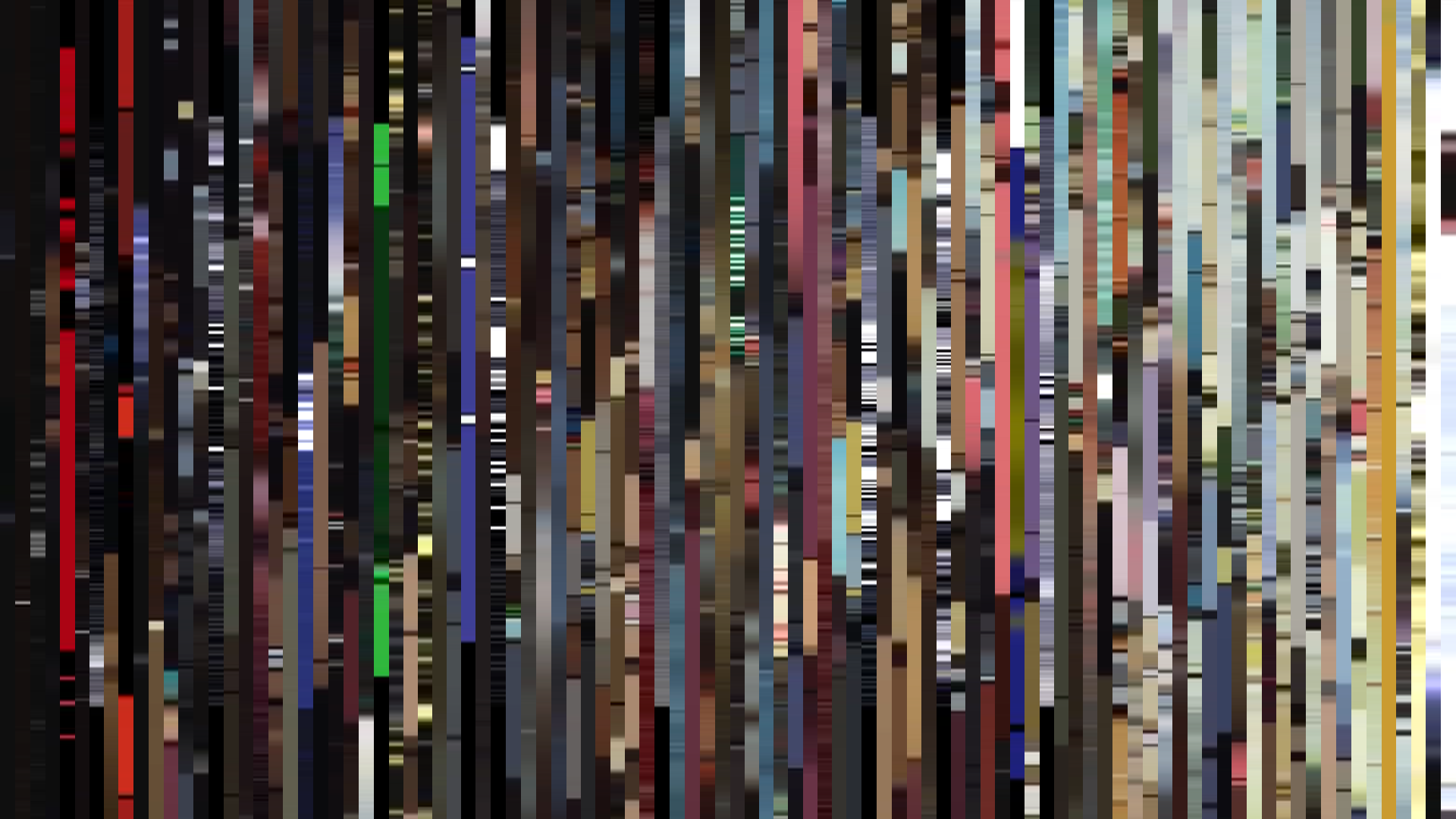
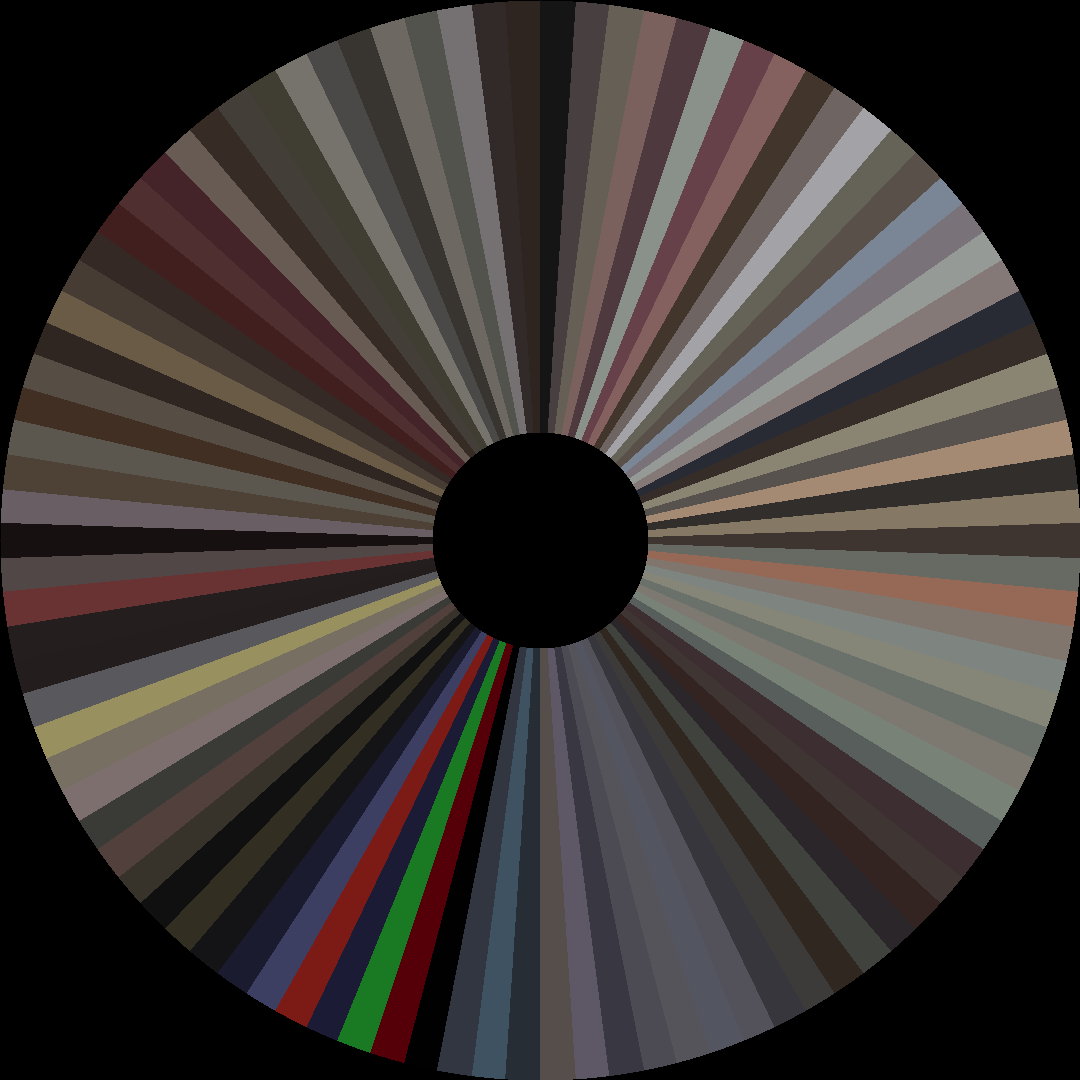
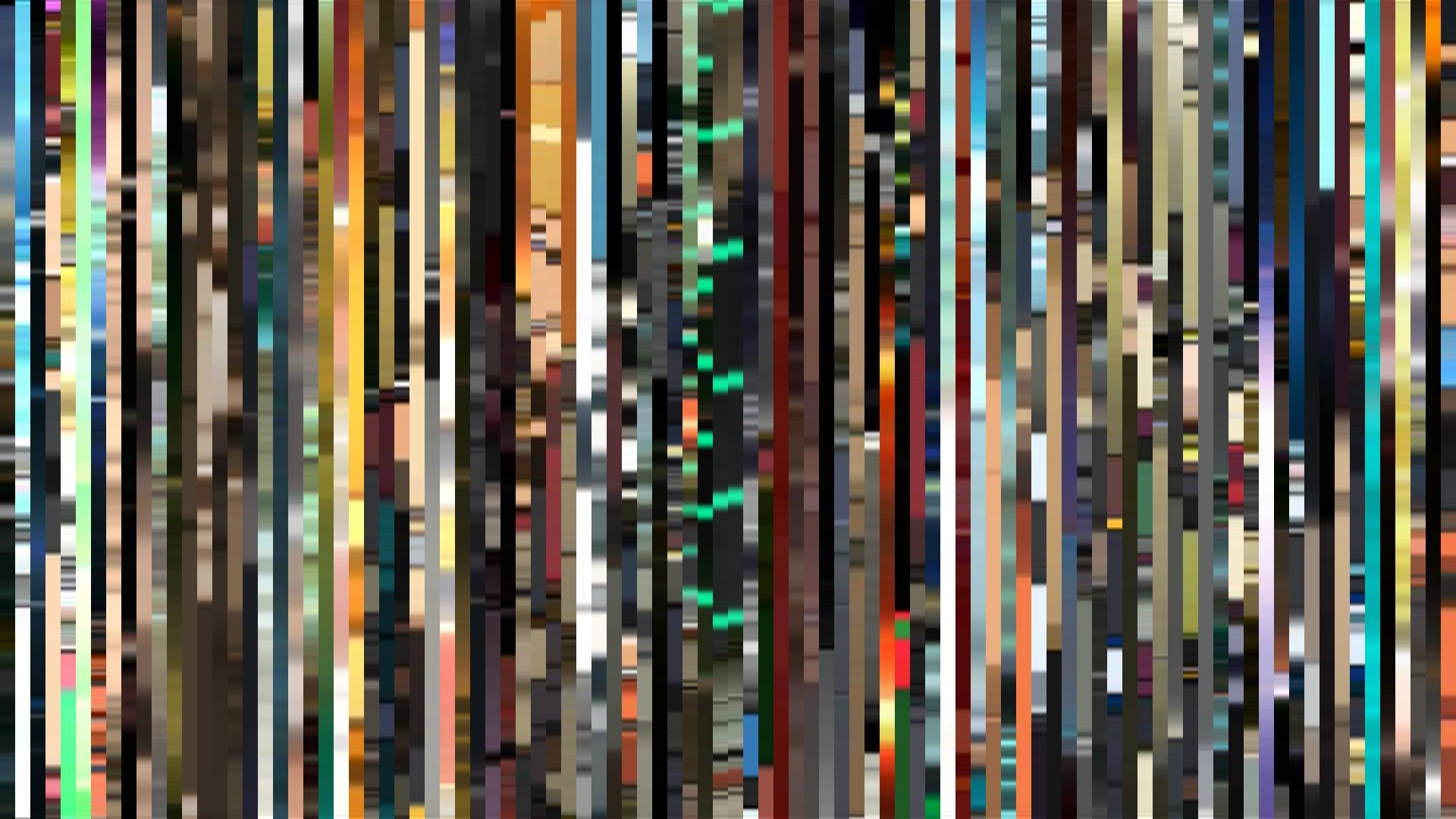
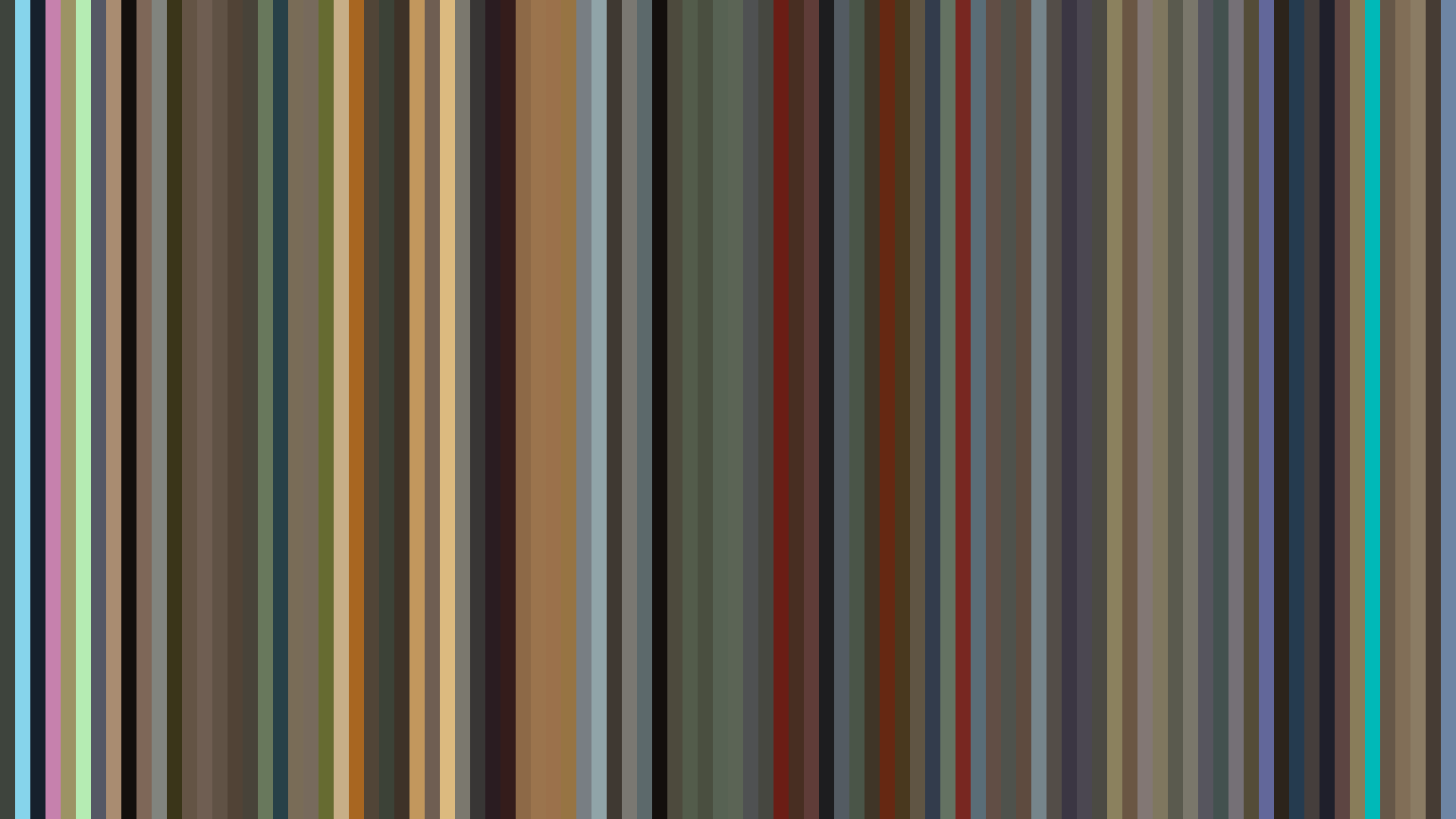
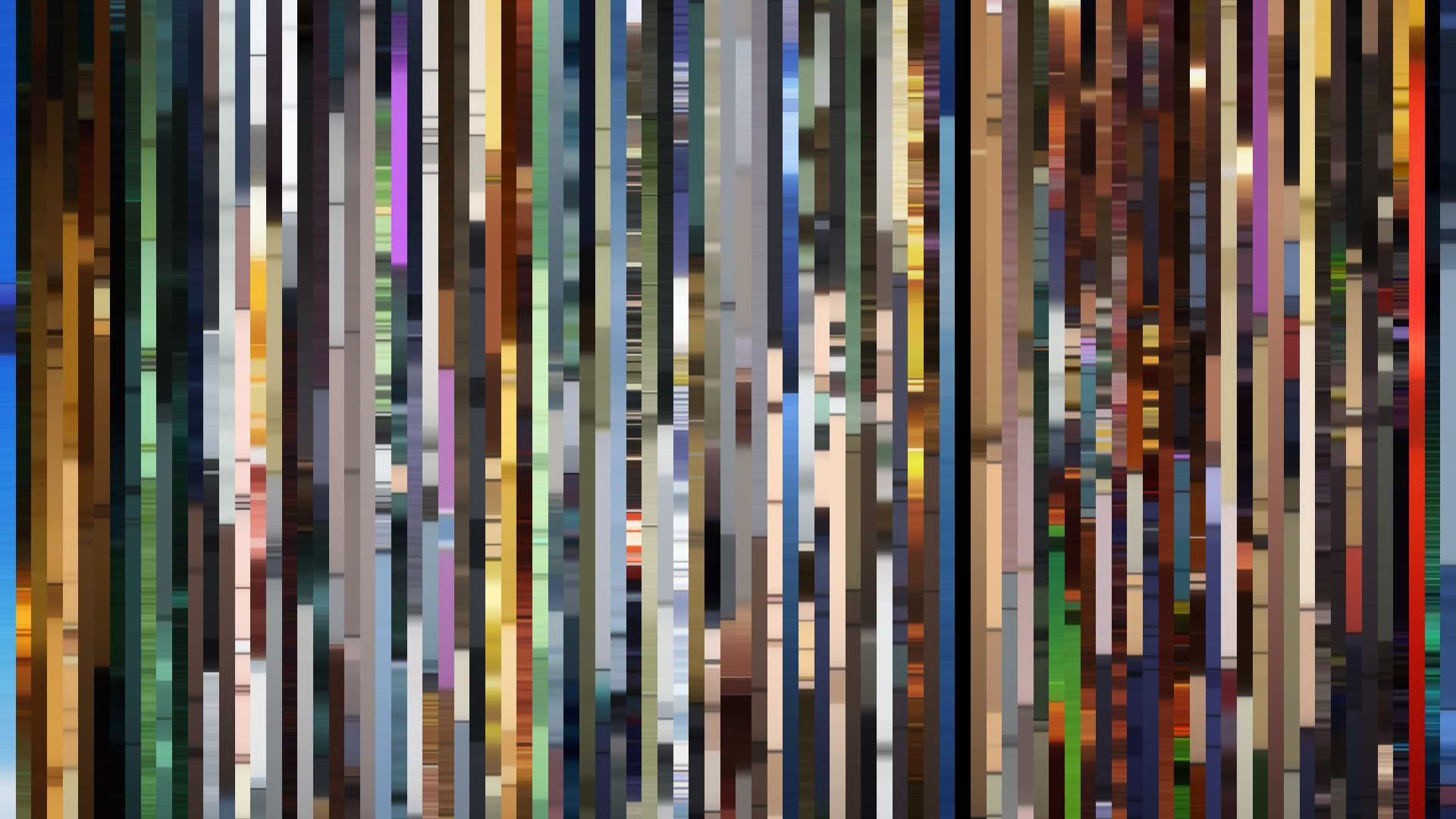
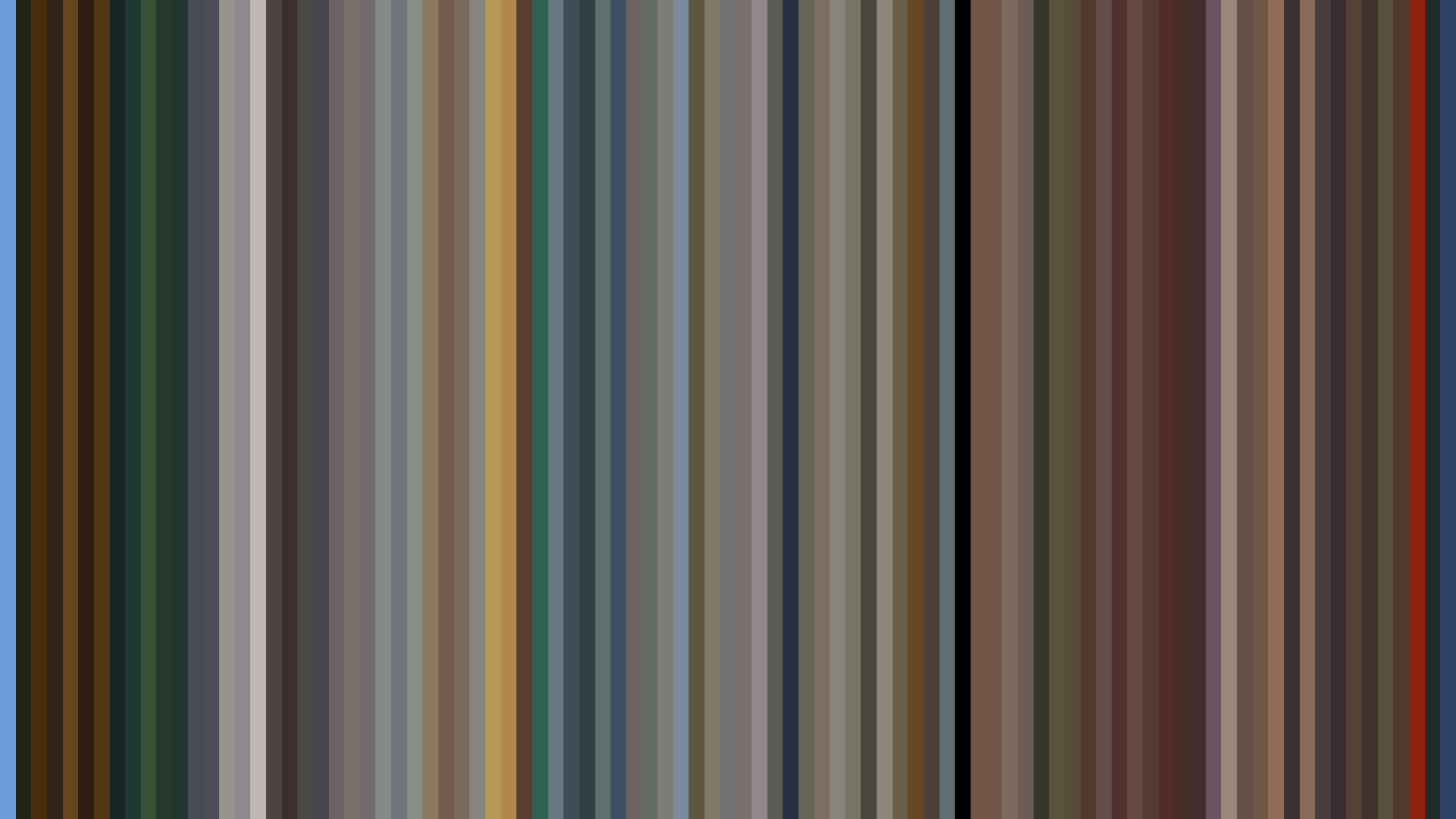
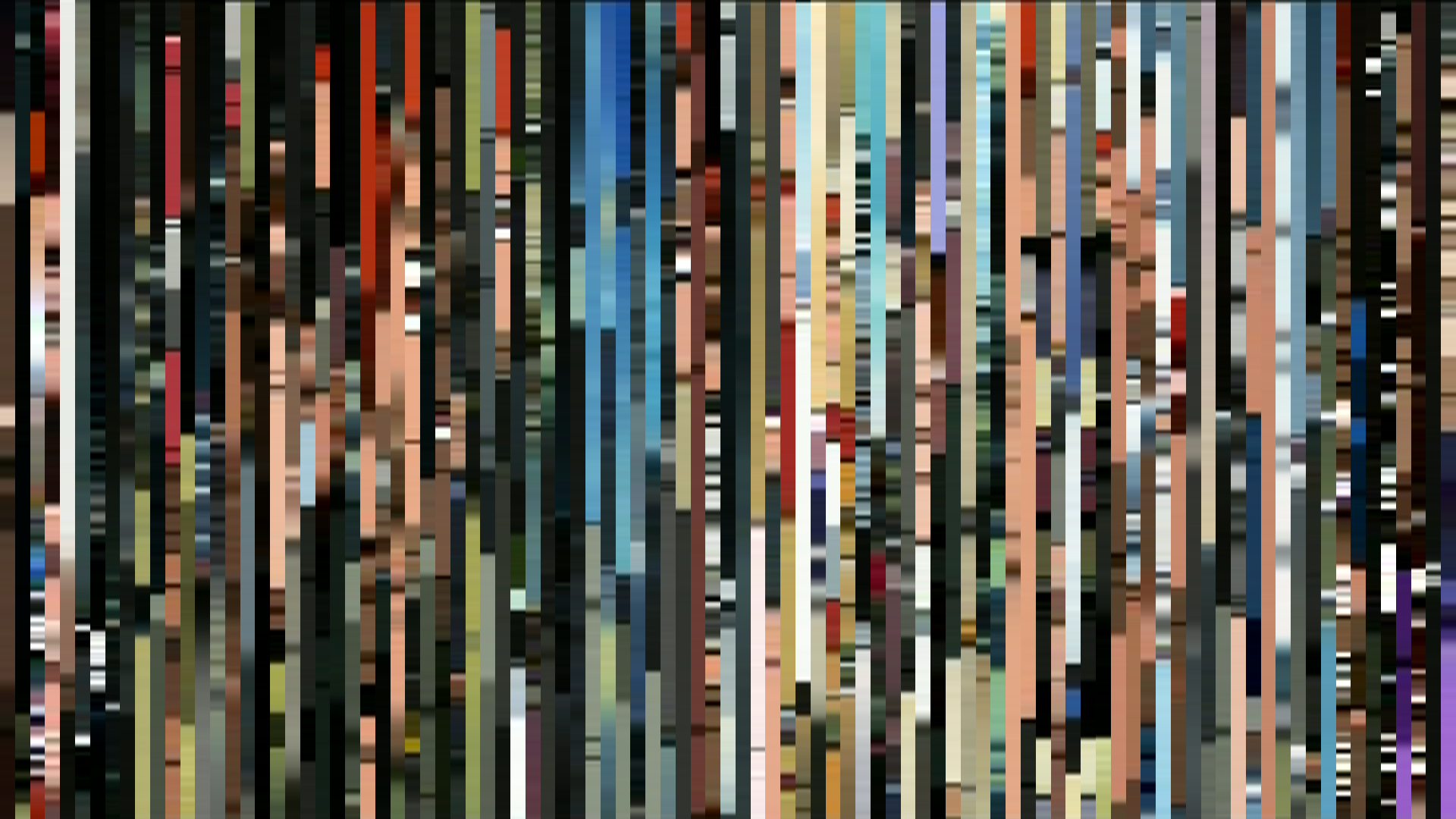
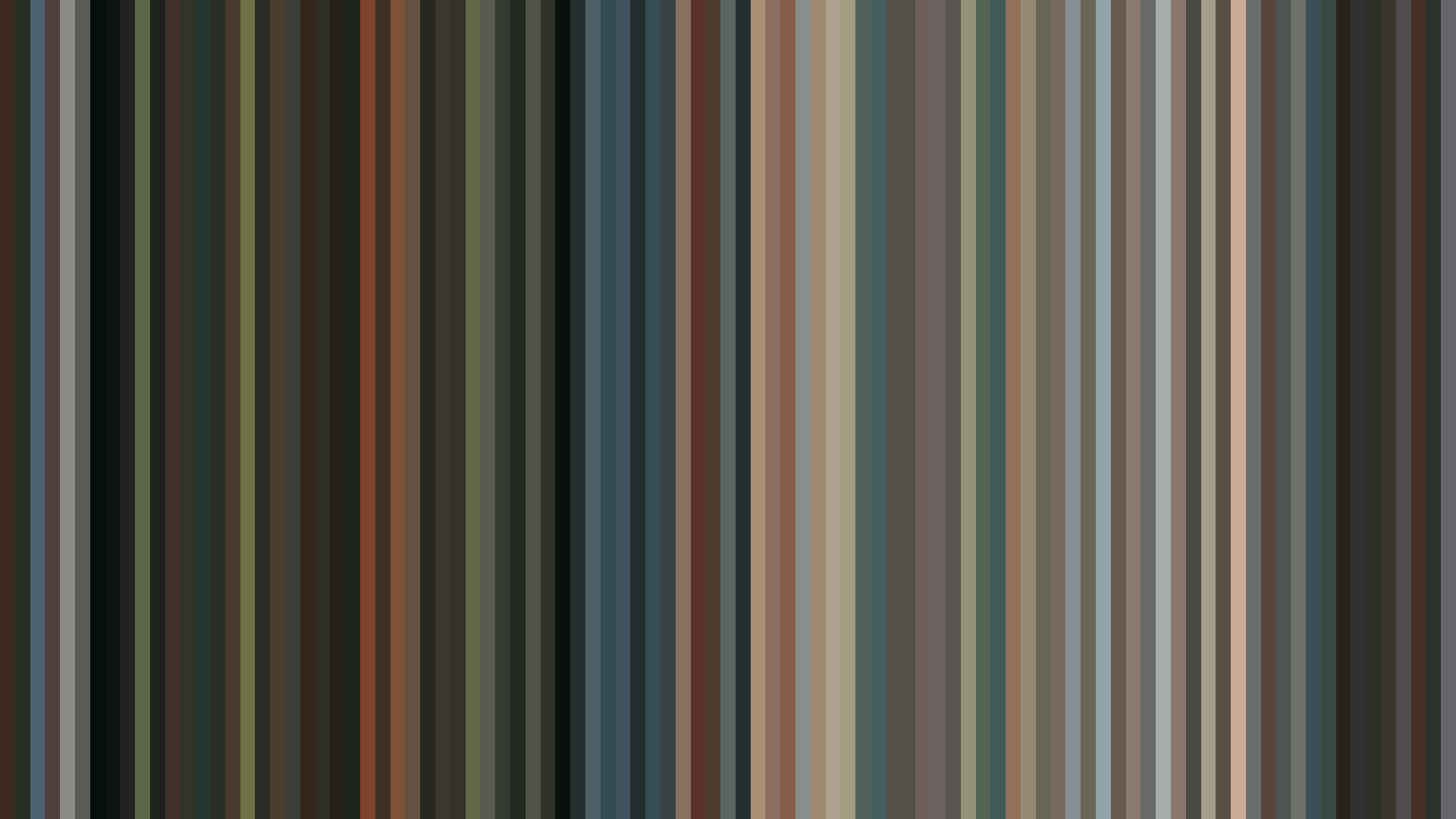
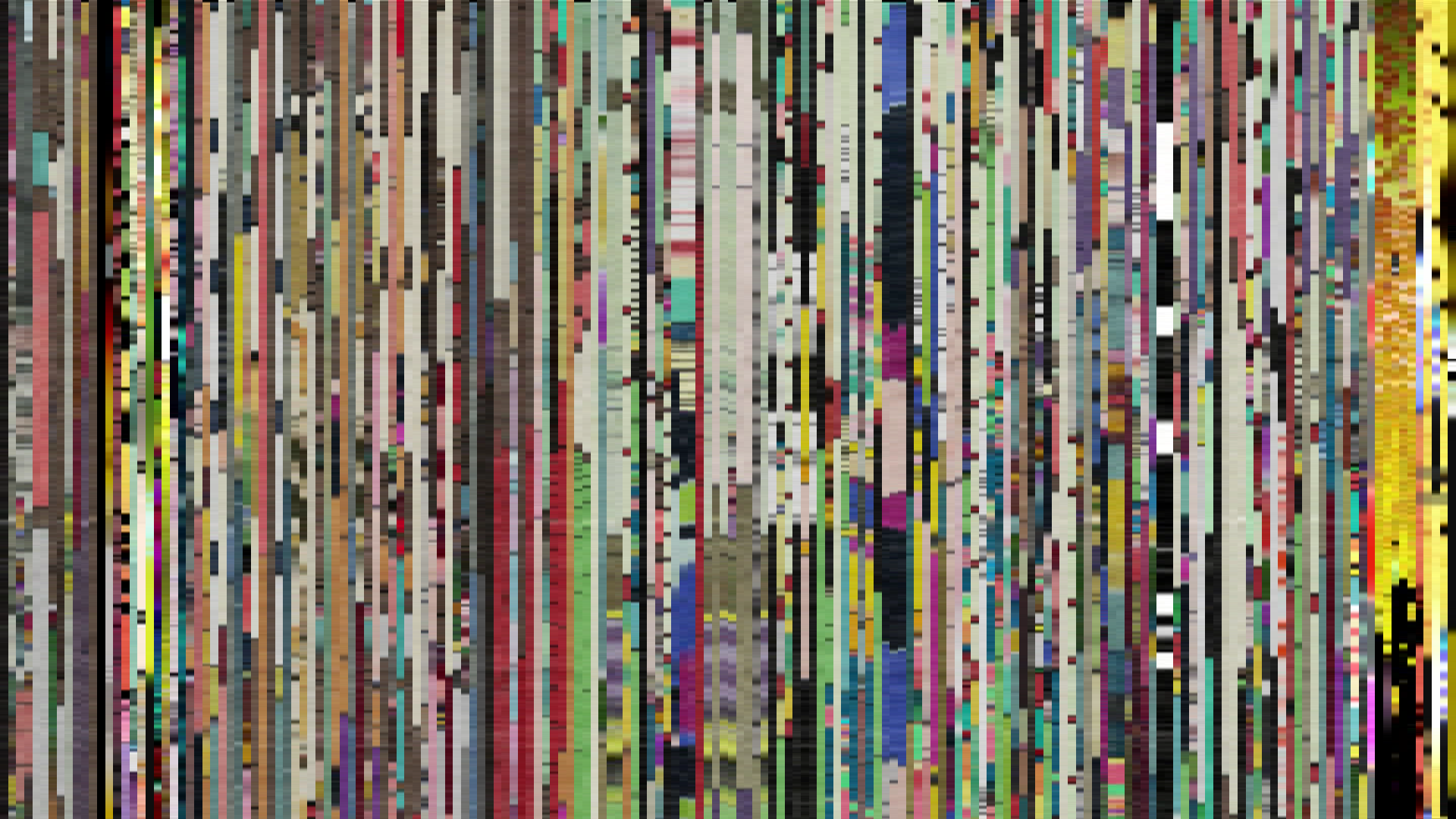
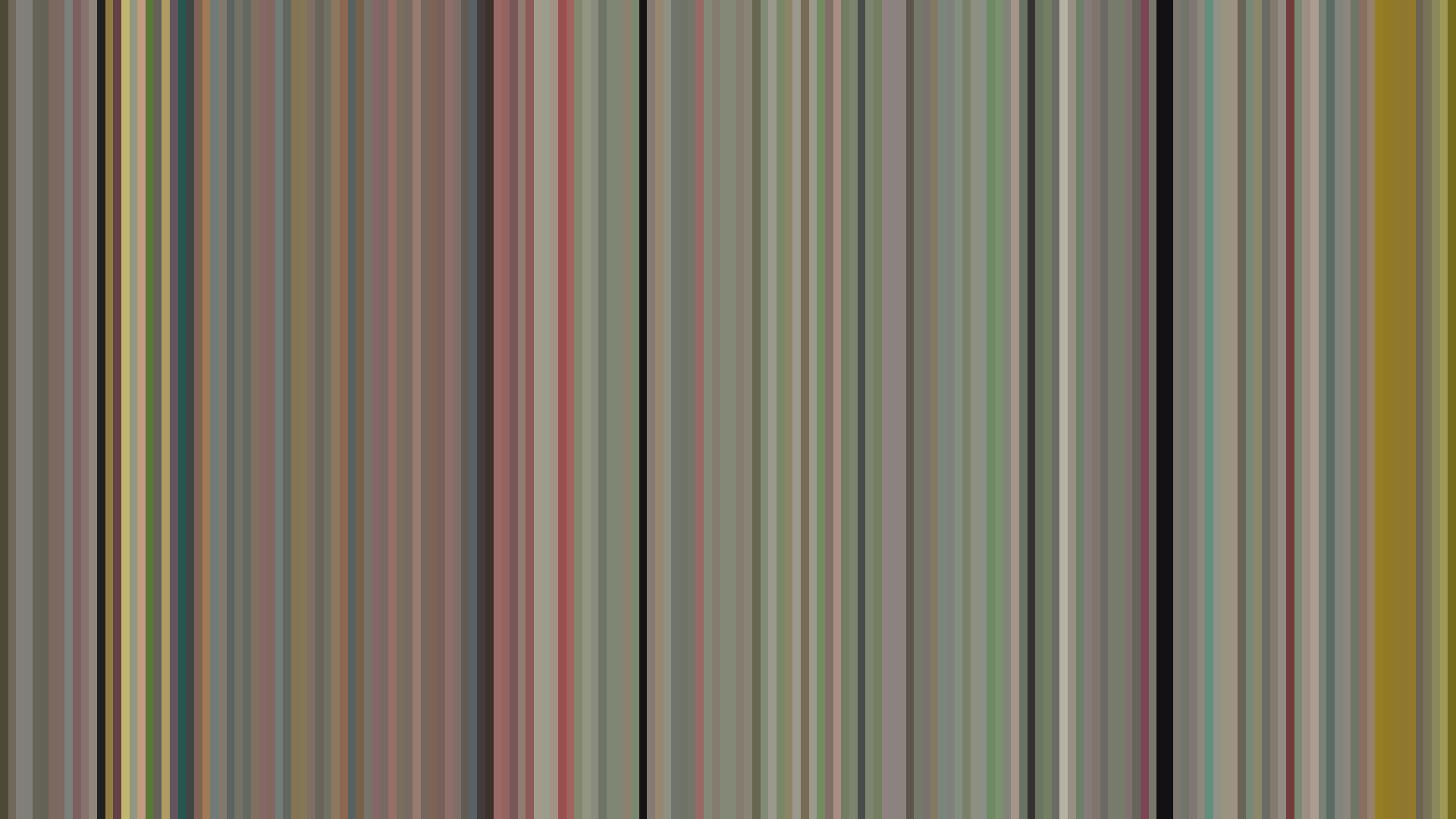
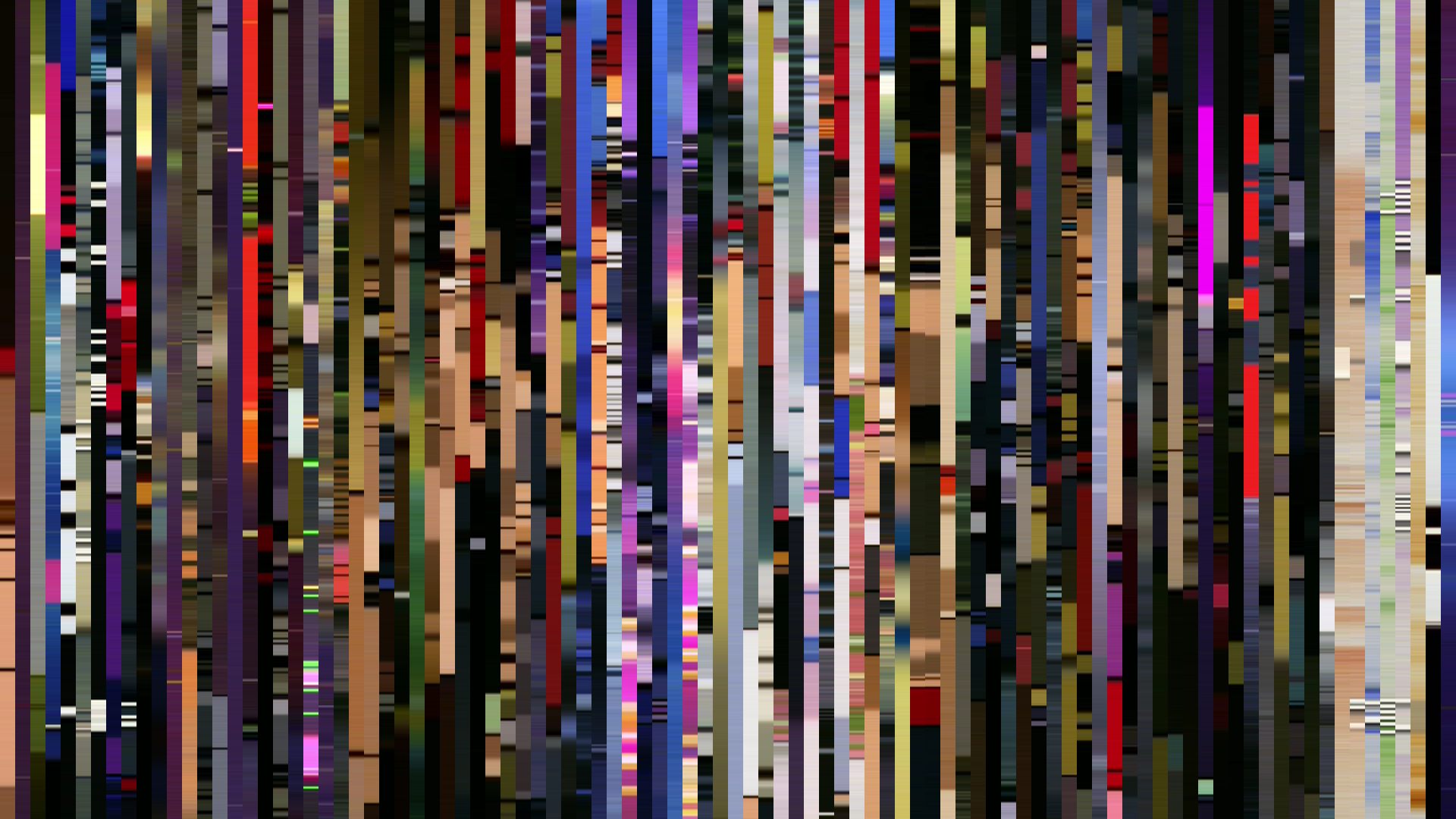
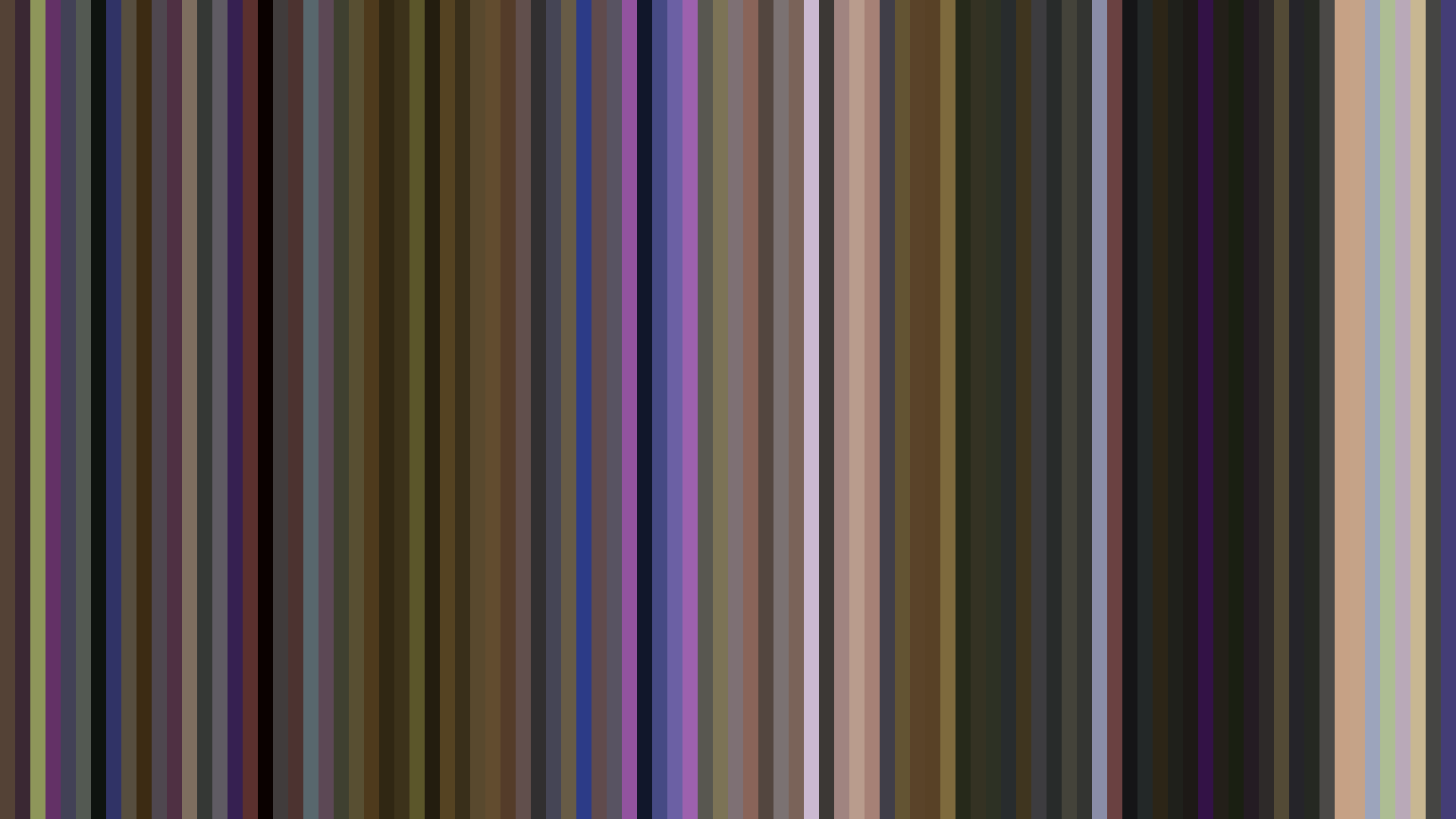
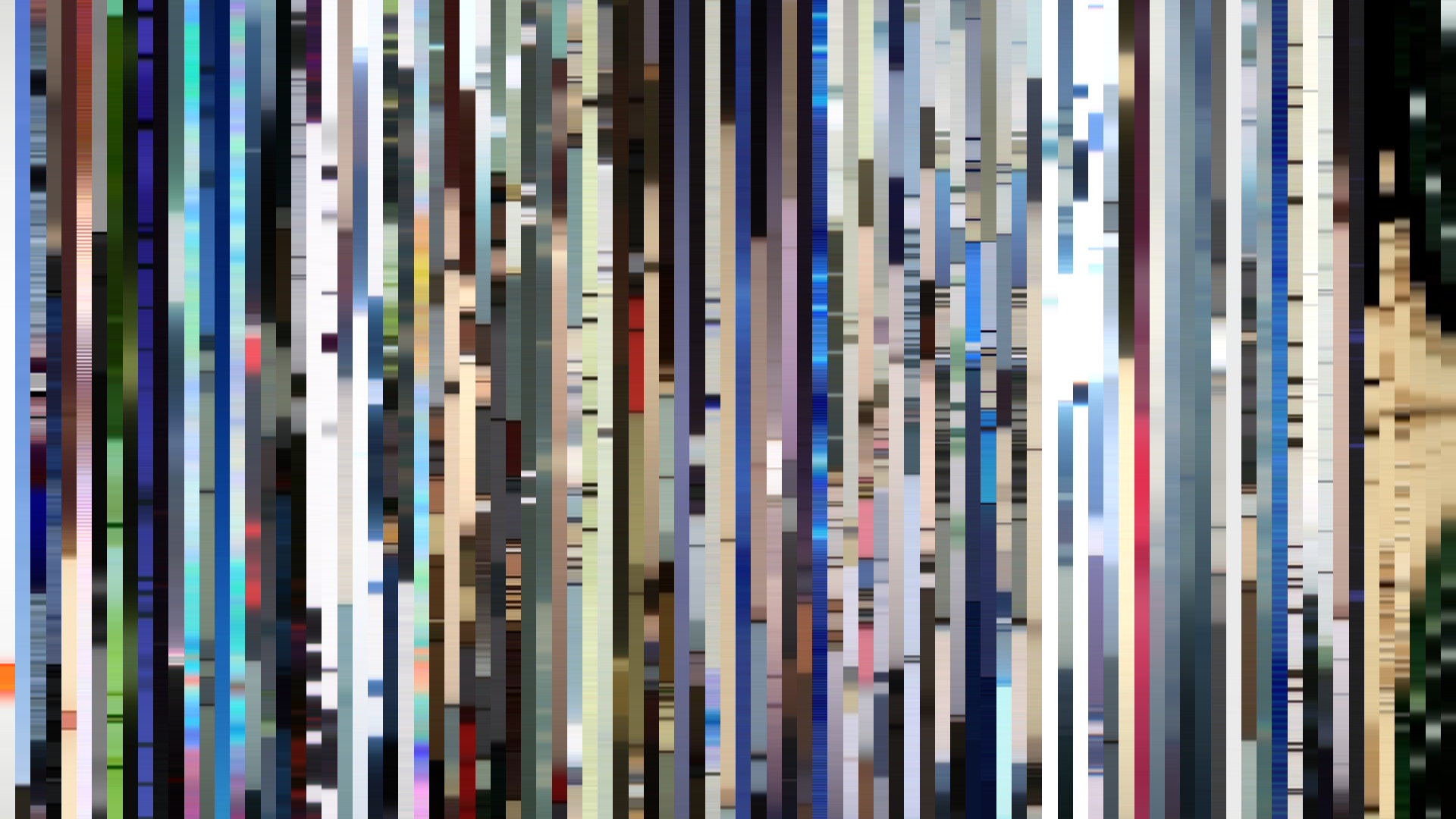
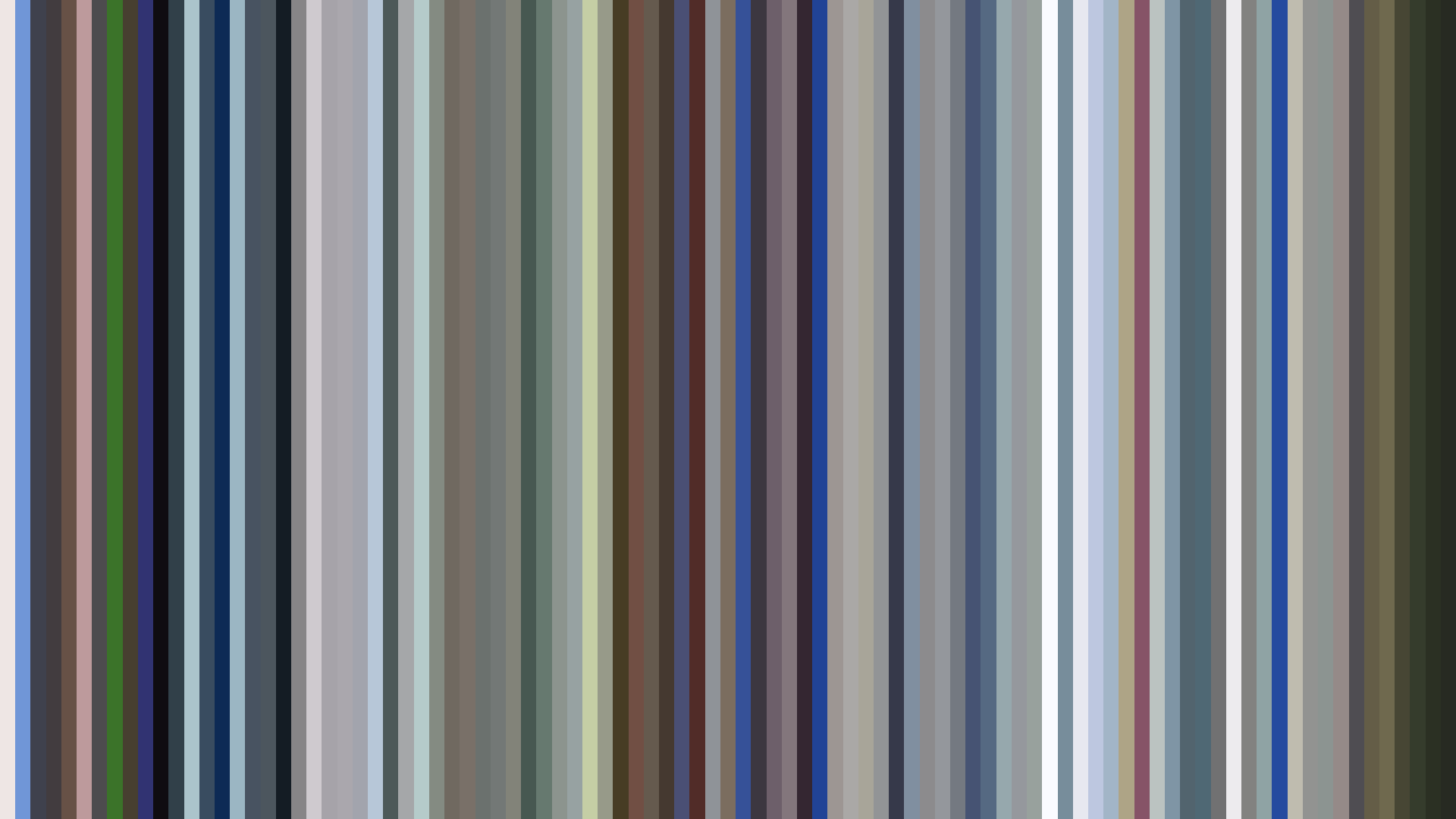
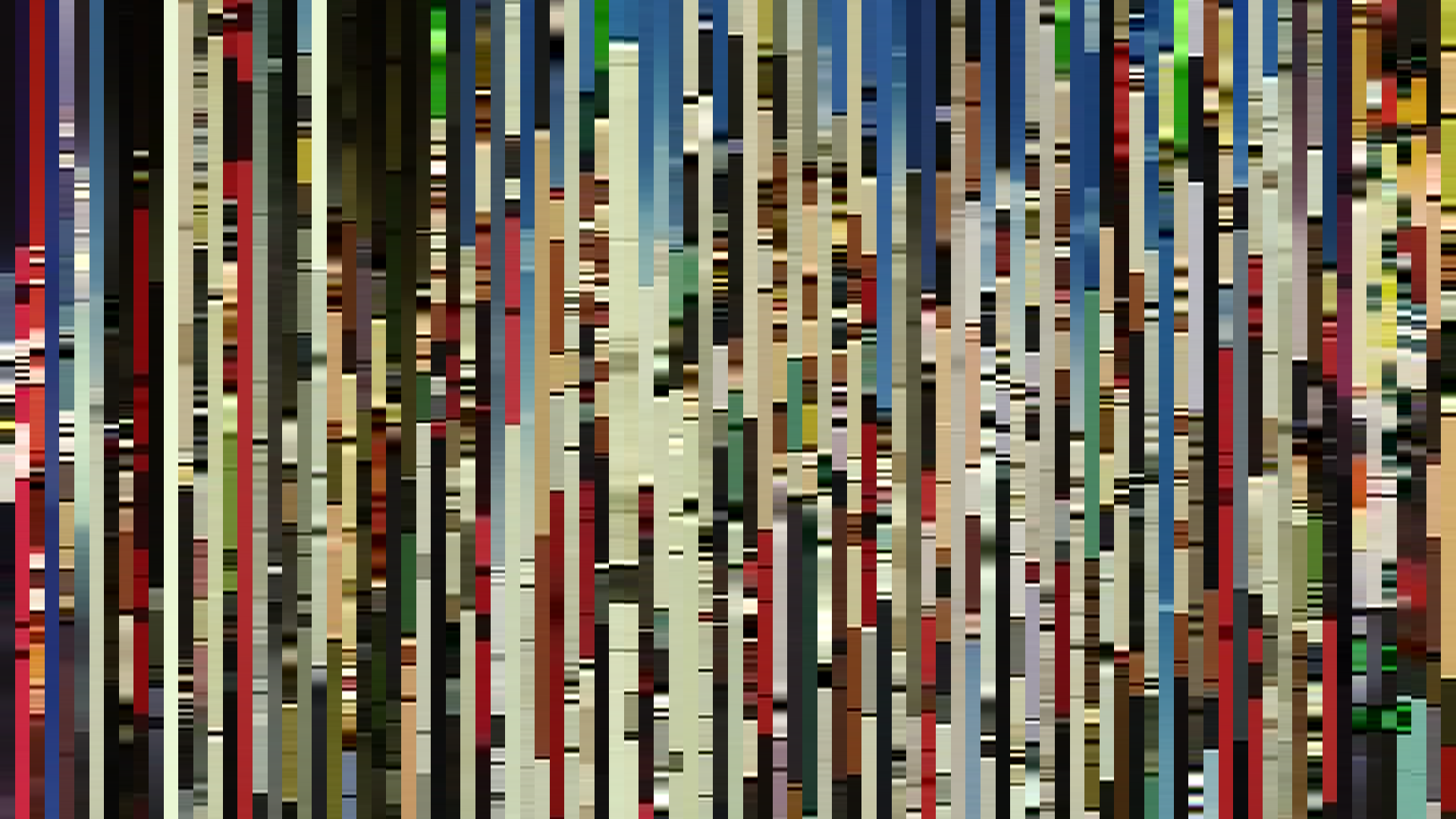
Bebop's barcode defies easy categorization, which is fitting. The palette reads Red-dominant
but cooler and more desaturated than its contemporaries — the visual equivalent of jazz
played in a minor key. Shinichirō Watanabe and art director Junichi Higashi built a universe
assembled from genre films: film noir shadows, kung-fu movie warmth, space-western dust.
The barcode is less a color story than a collage of stolen aesthetics, each column a frame
from a different kind of movie. Nothing in anime 1998 looked like this, and nothing since
has quite managed to look like it again.






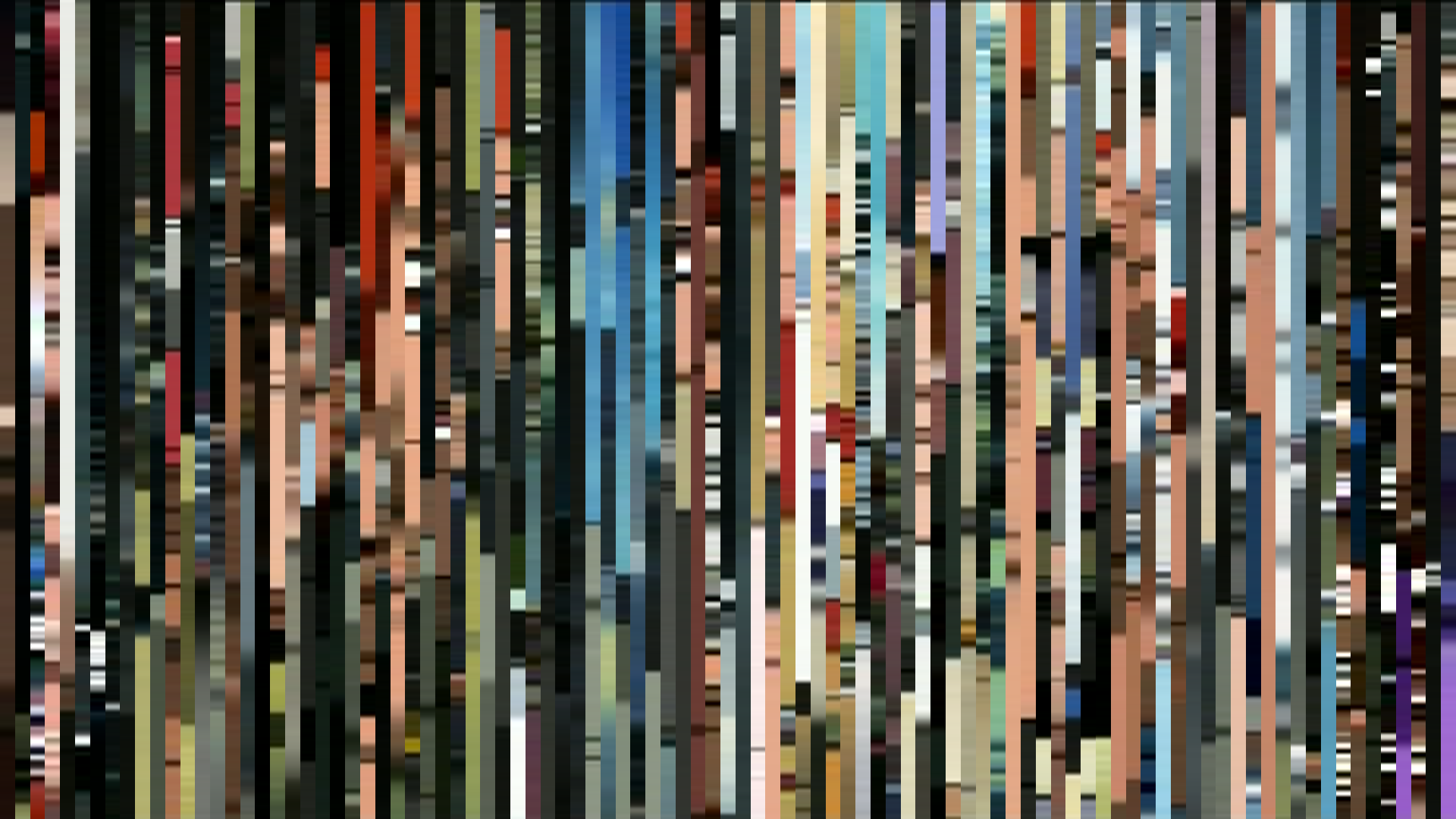
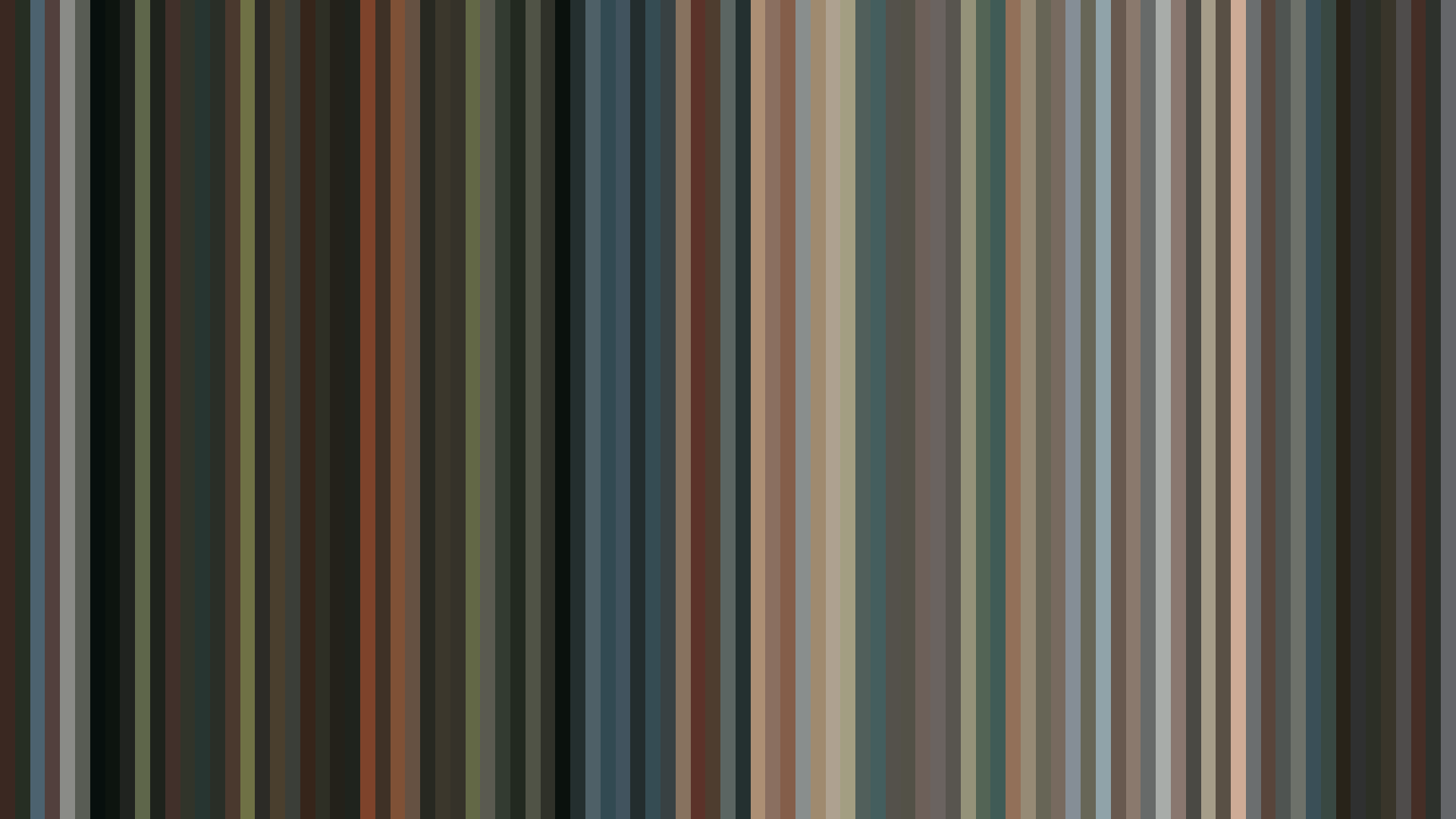
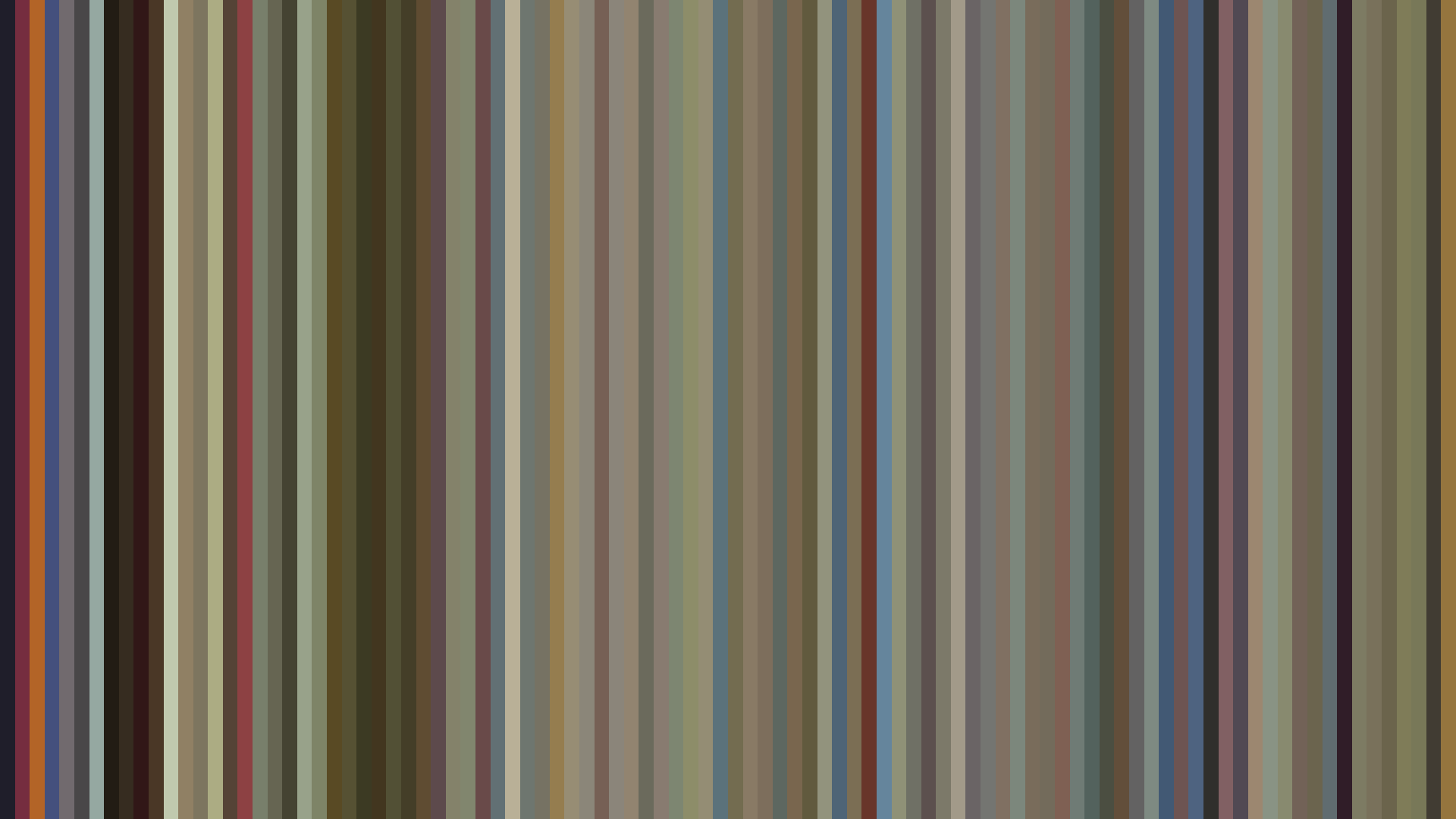
Bebop's barcode defies easy categorization, which is fitting. The palette reads Red-dominant
but cooler and more desaturated than its contemporaries — the visual equivalent of jazz
played in a minor key. Shinichirō Watanabe and art director Junichi Higashi built a universe
assembled from genre films: film noir shadows, kung-fu movie warmth, space-western dust.
The barcode is less a color story than a collage of stolen aesthetics, each column a frame
from a different kind of movie. Nothing in anime 1998 looked like this, and nothing since
has quite managed to look like it again.