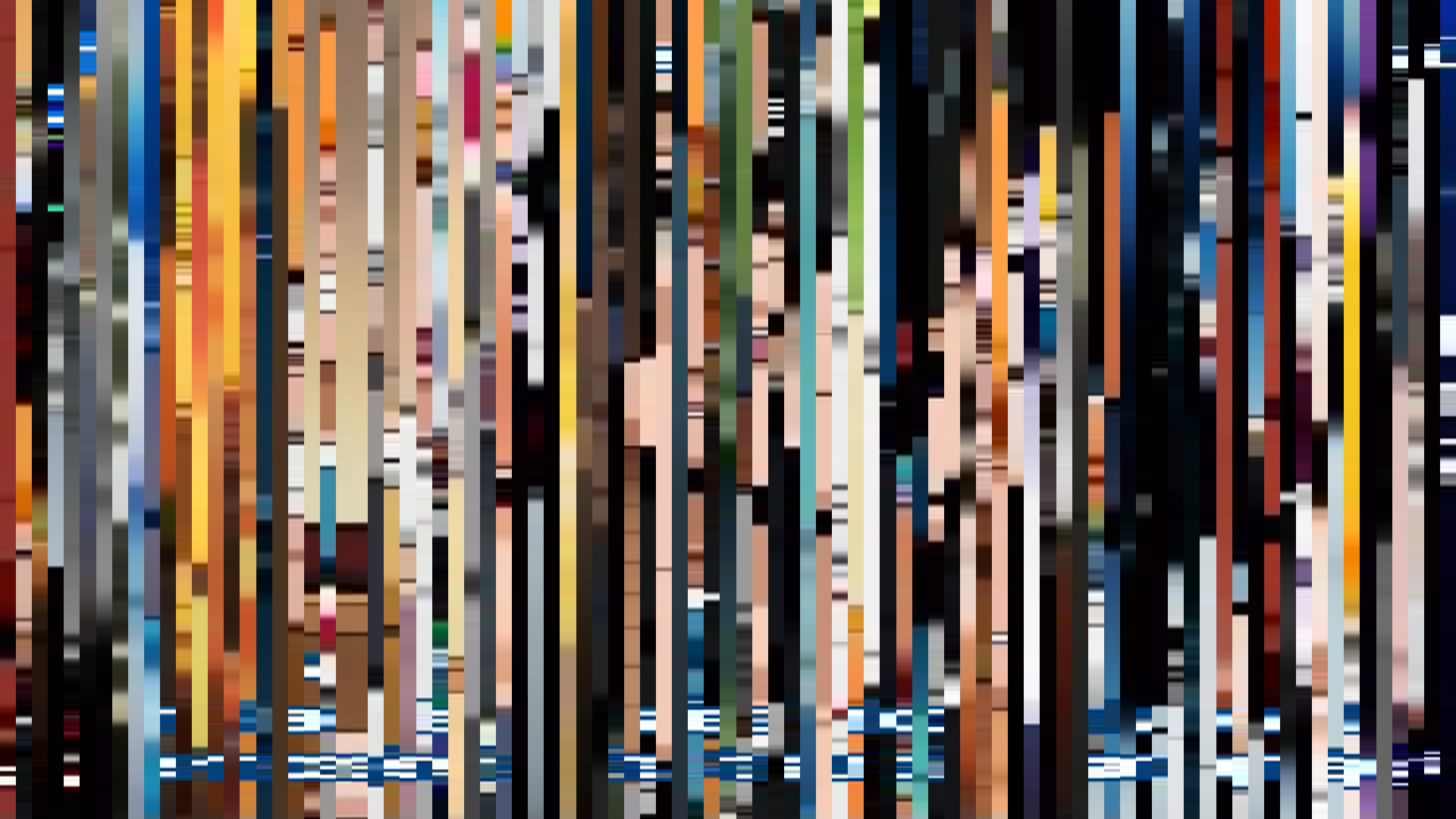
Edit Pace — frame-to-frame color delta (bright = fast cuts)
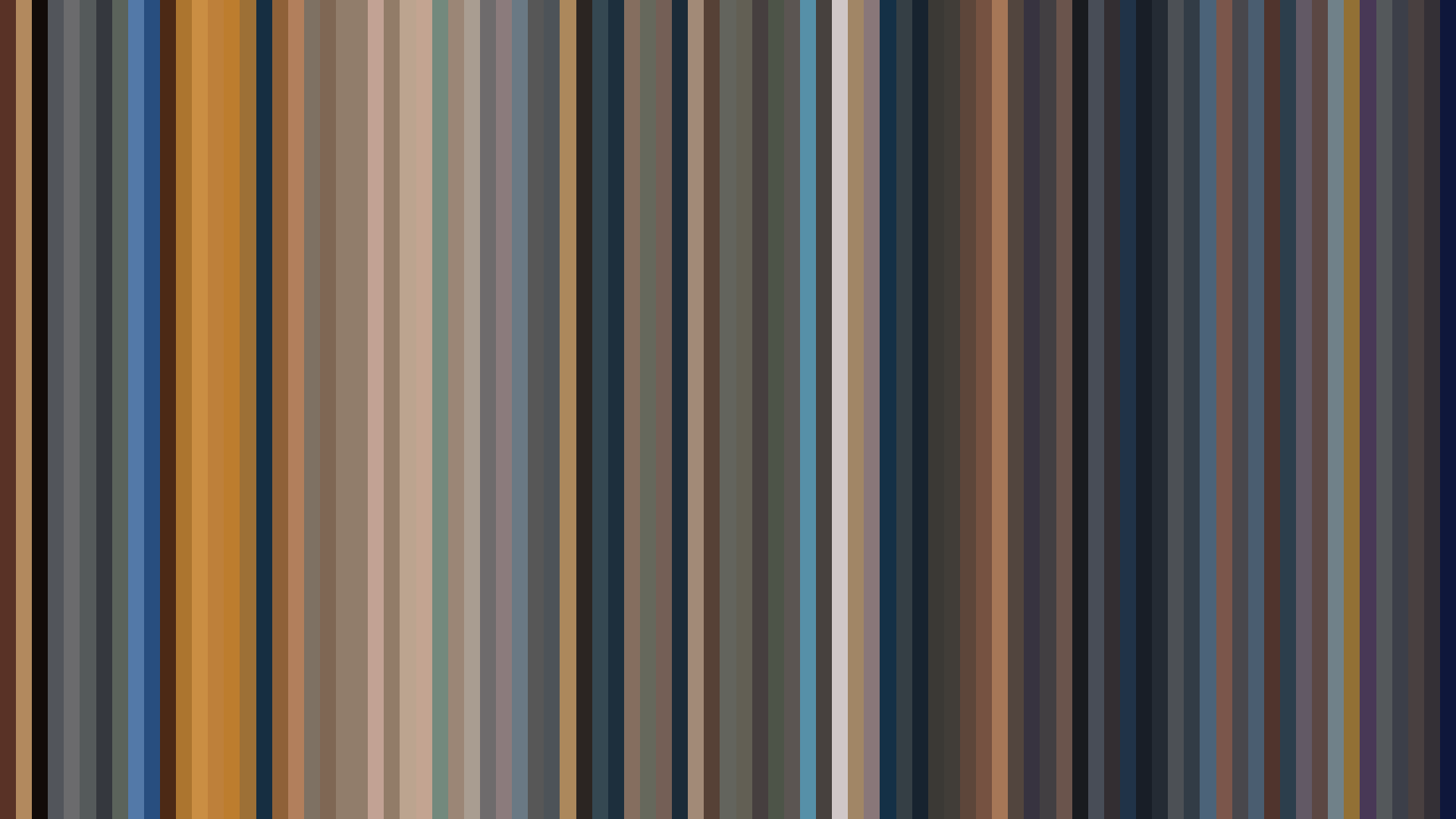
Color Temperature — warm (gold) vs cool (teal) per frame
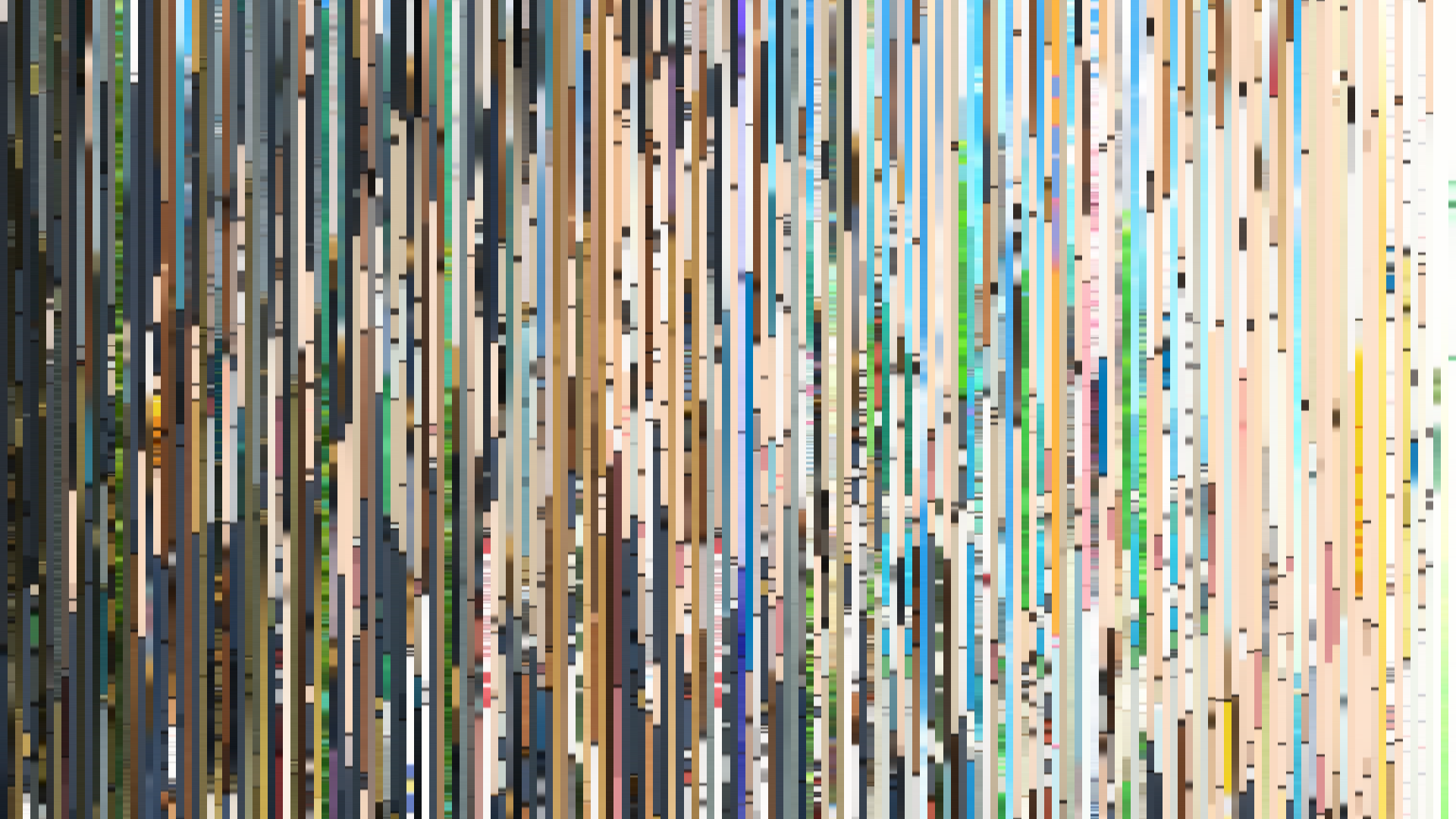
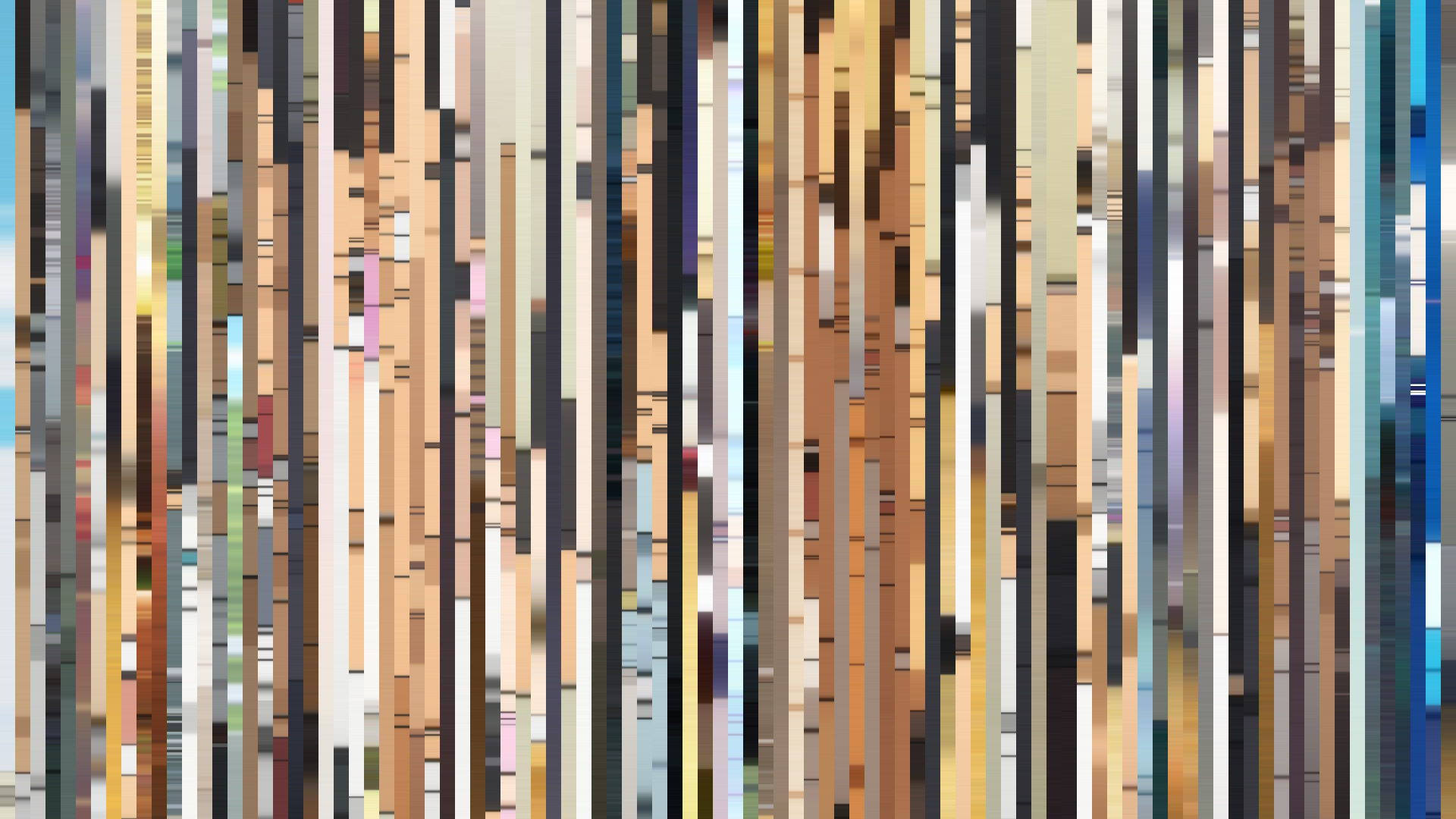
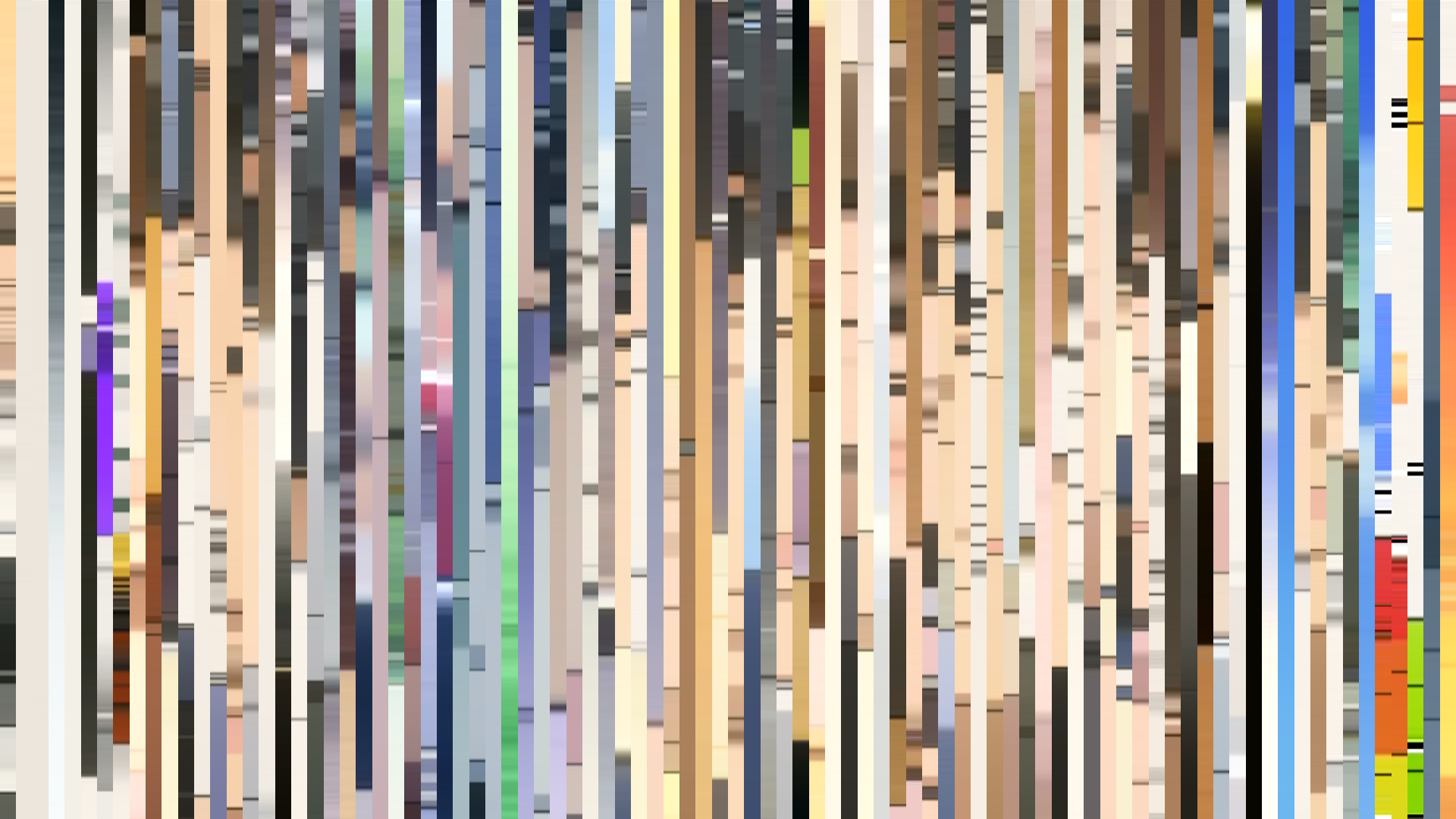
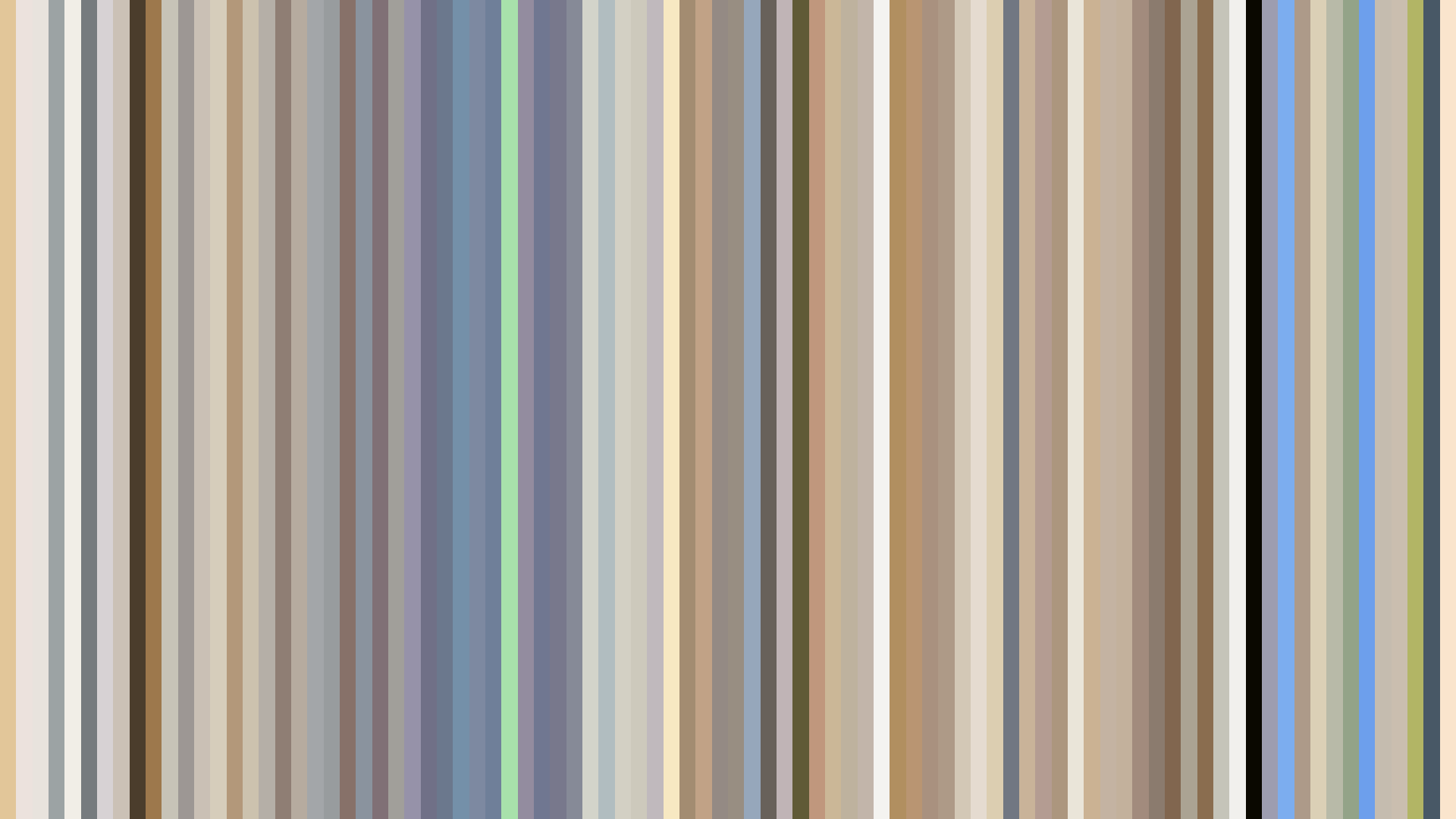
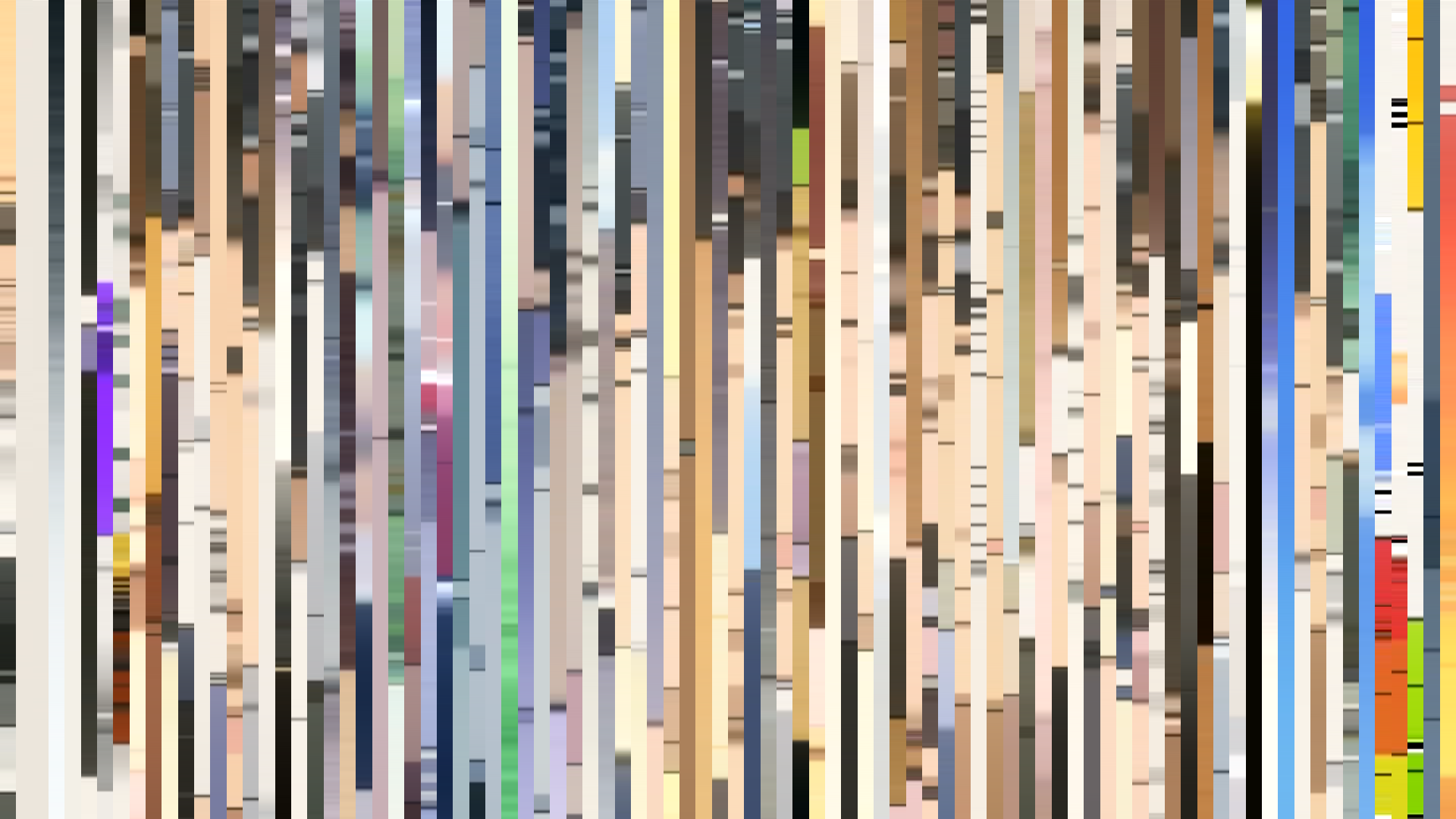
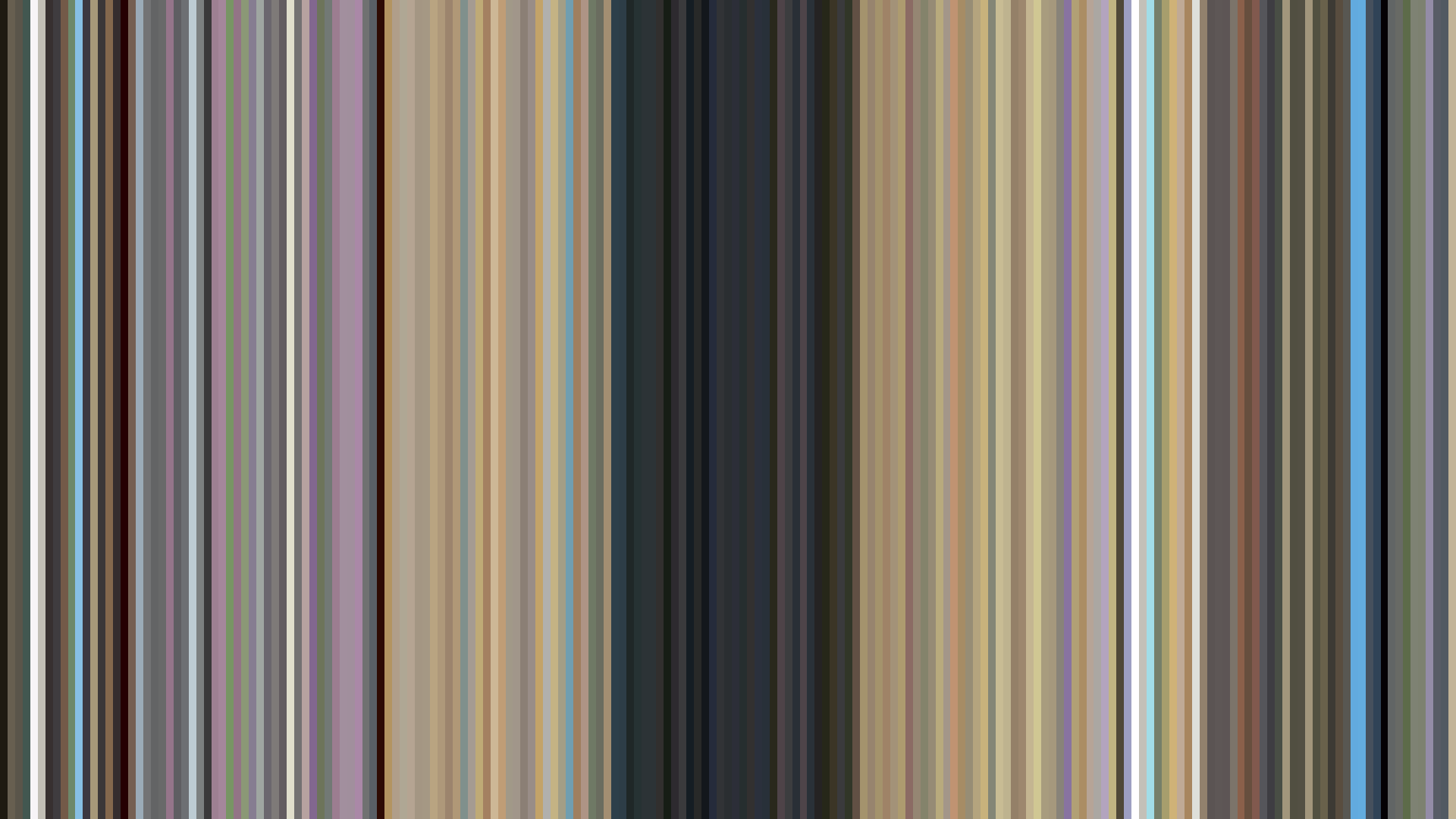
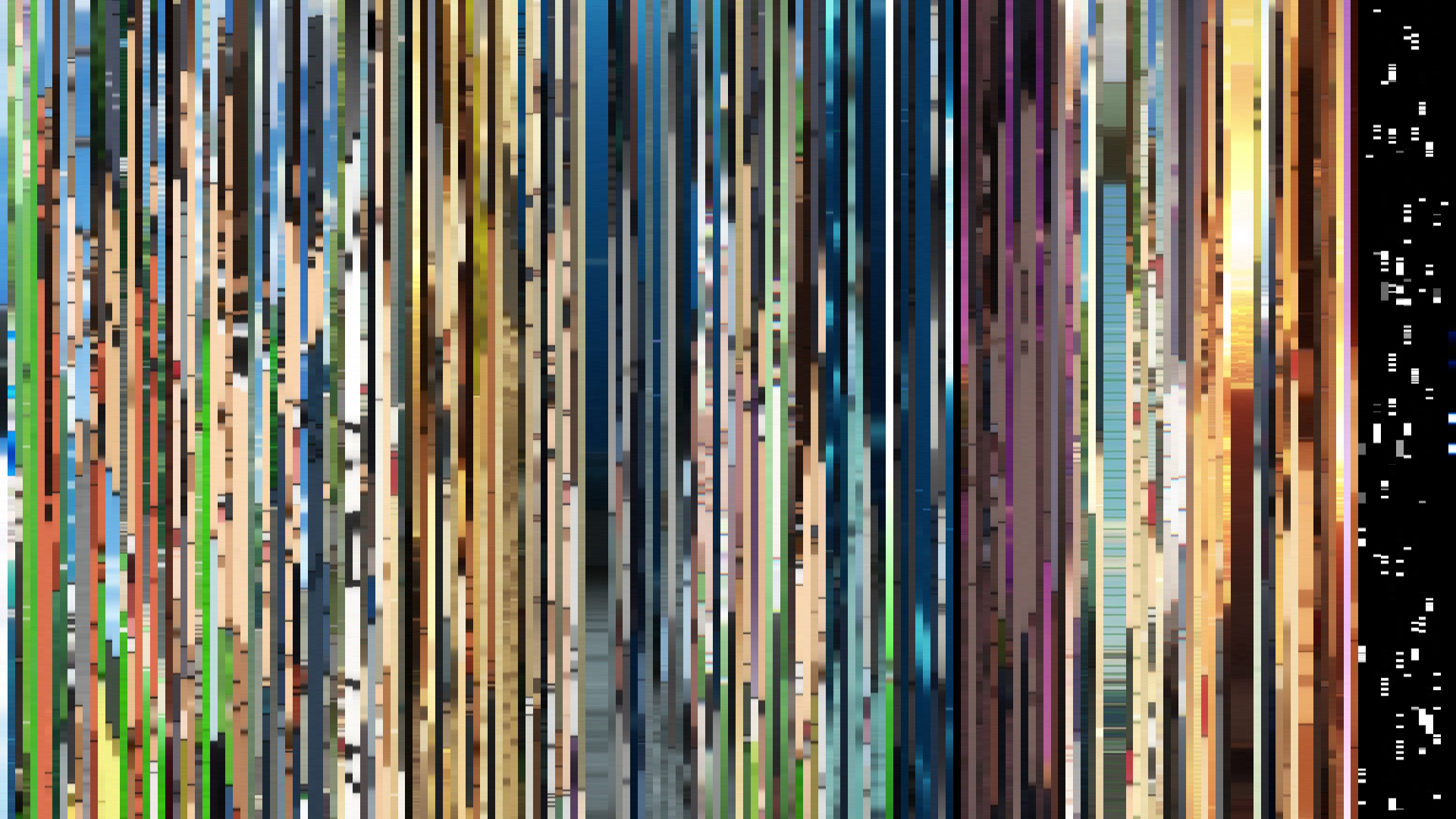
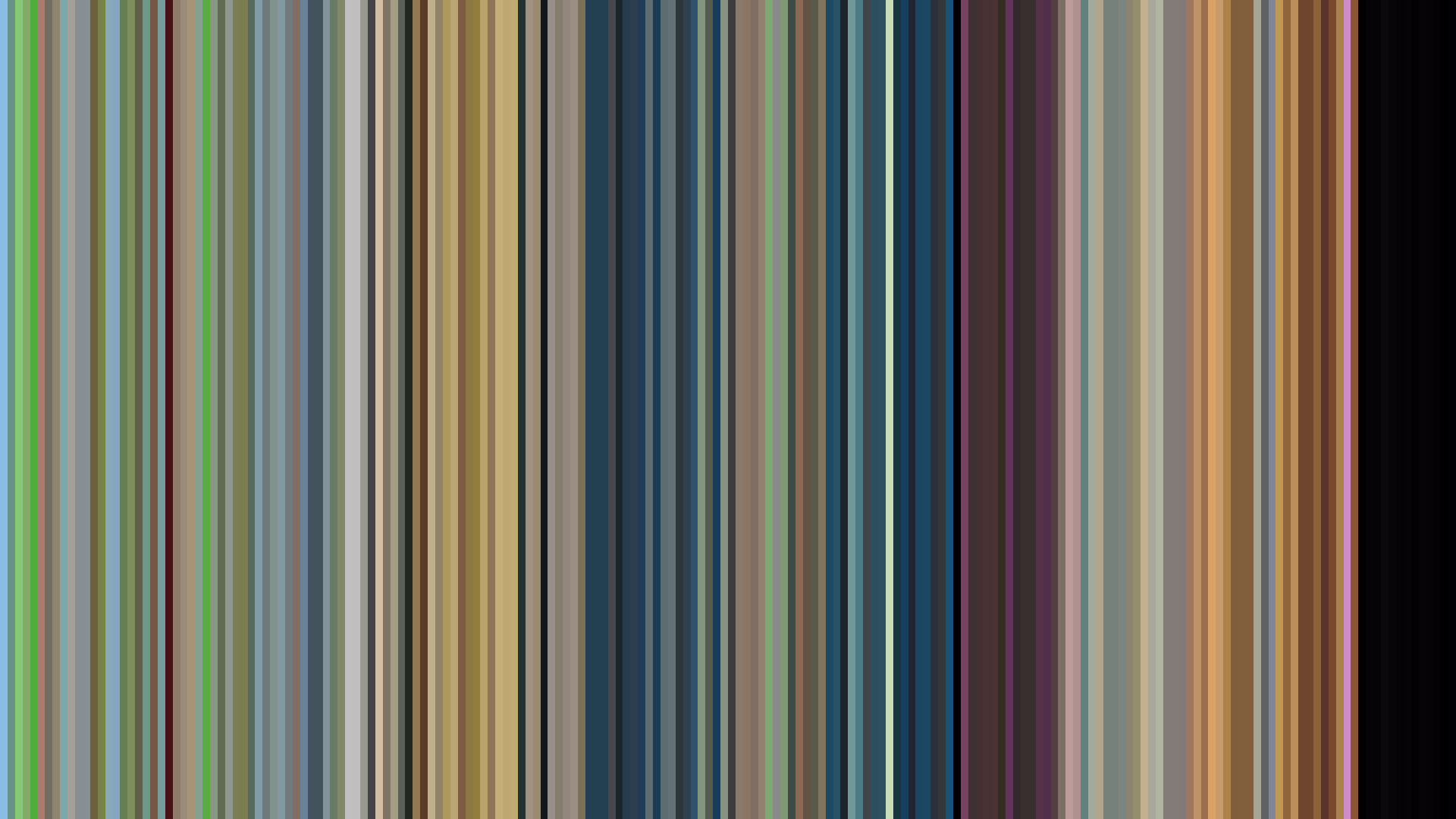
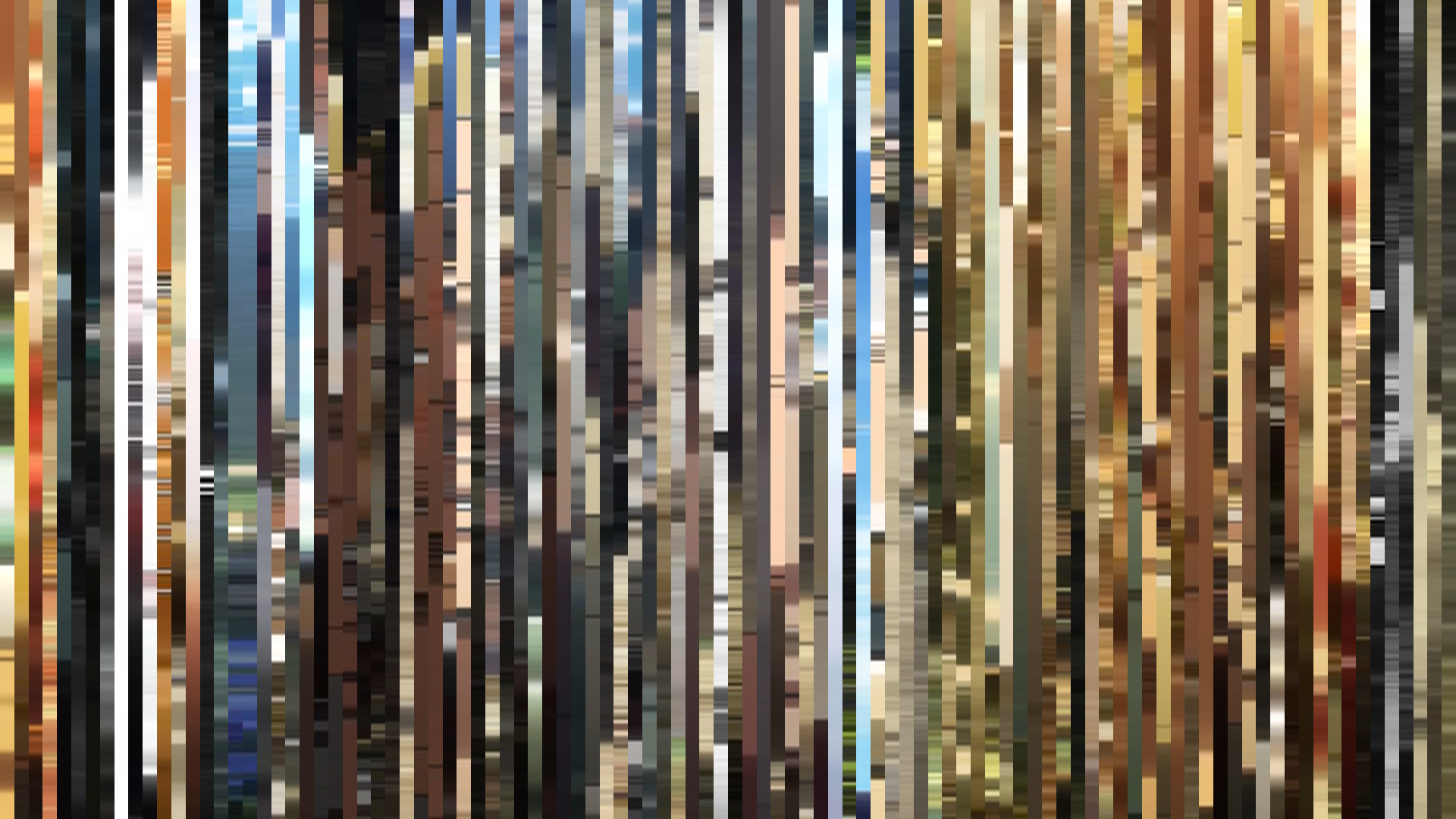
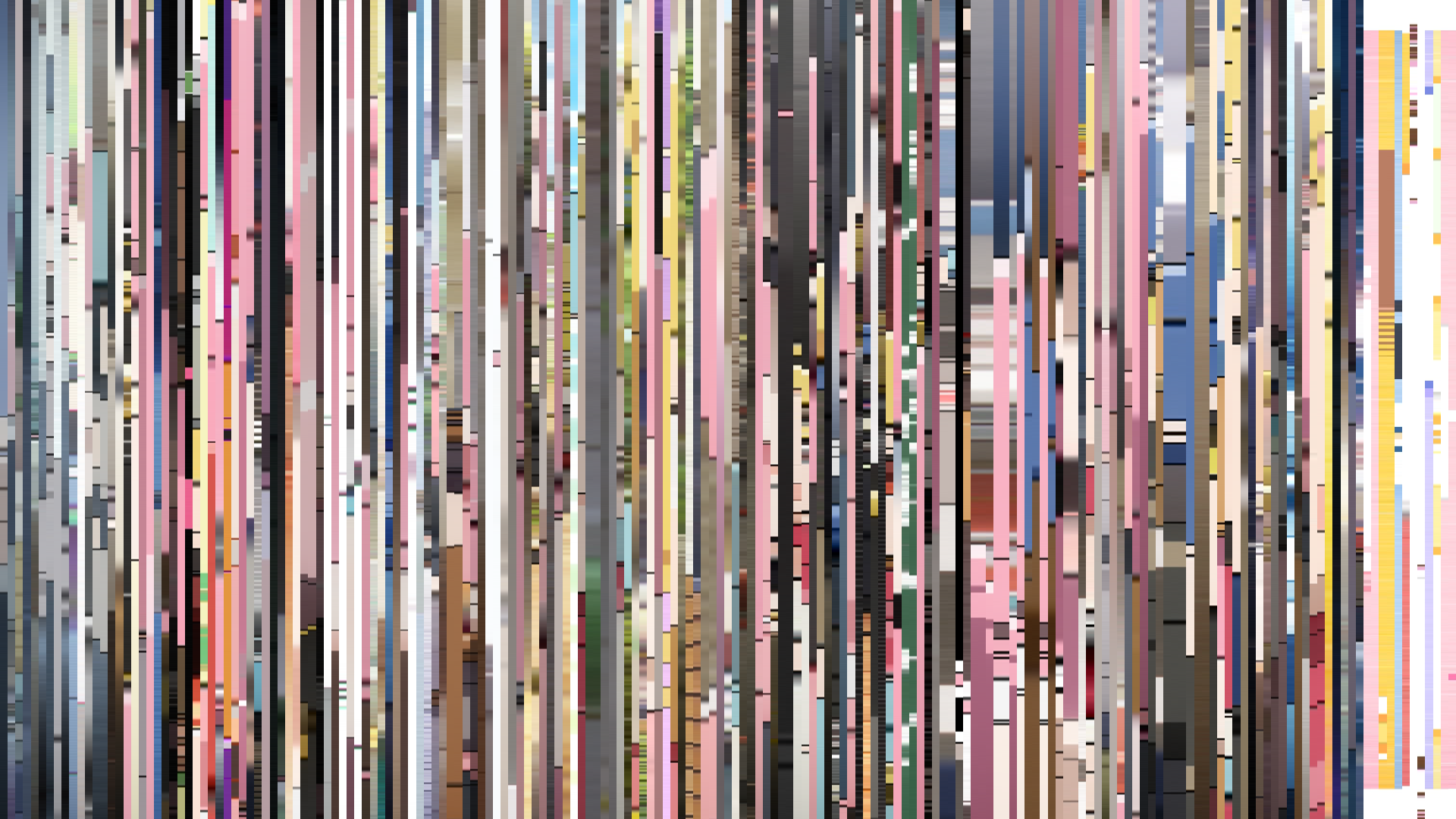
Frame Density Comparison — every 2nd vs every 4th frame
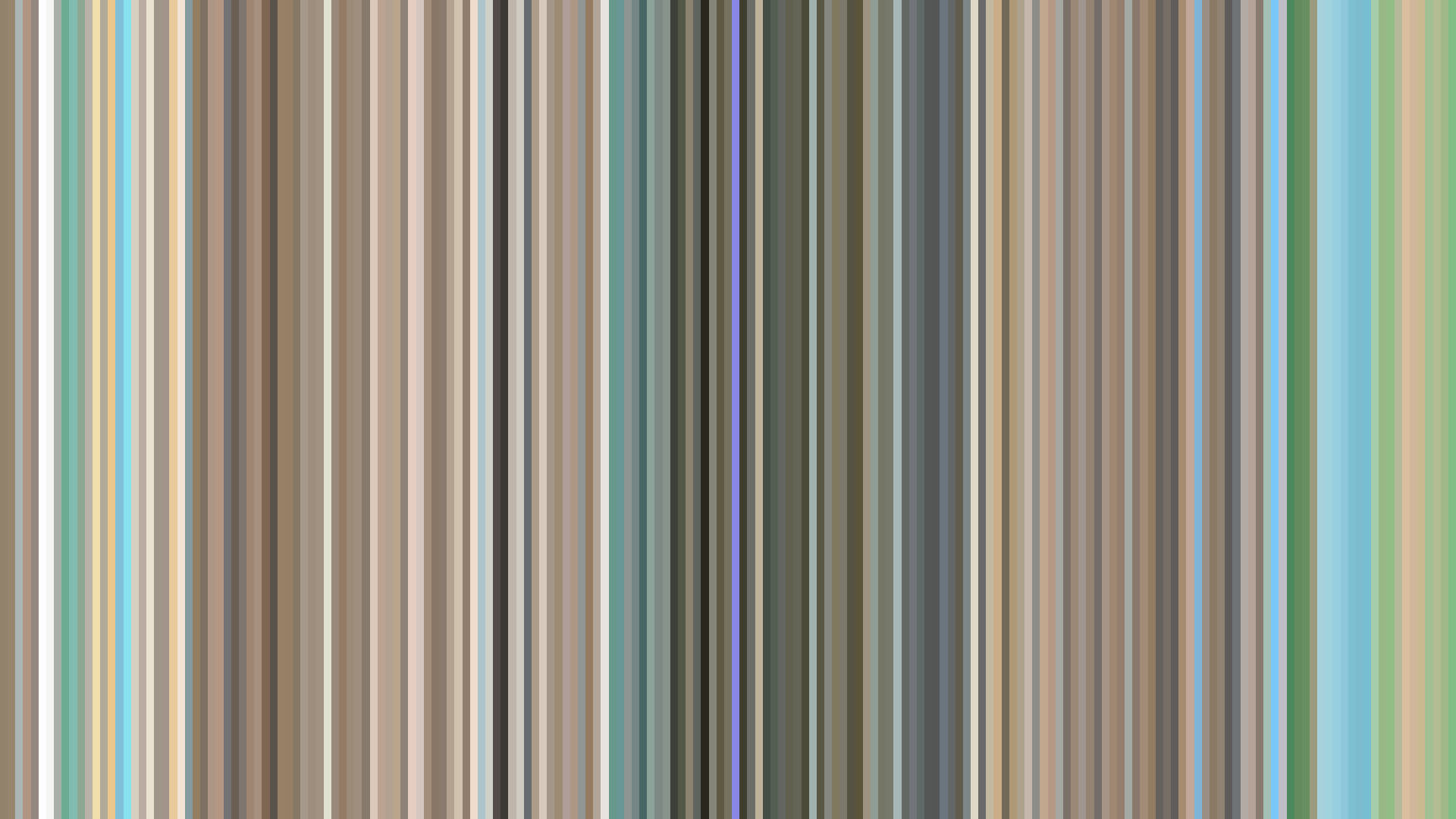
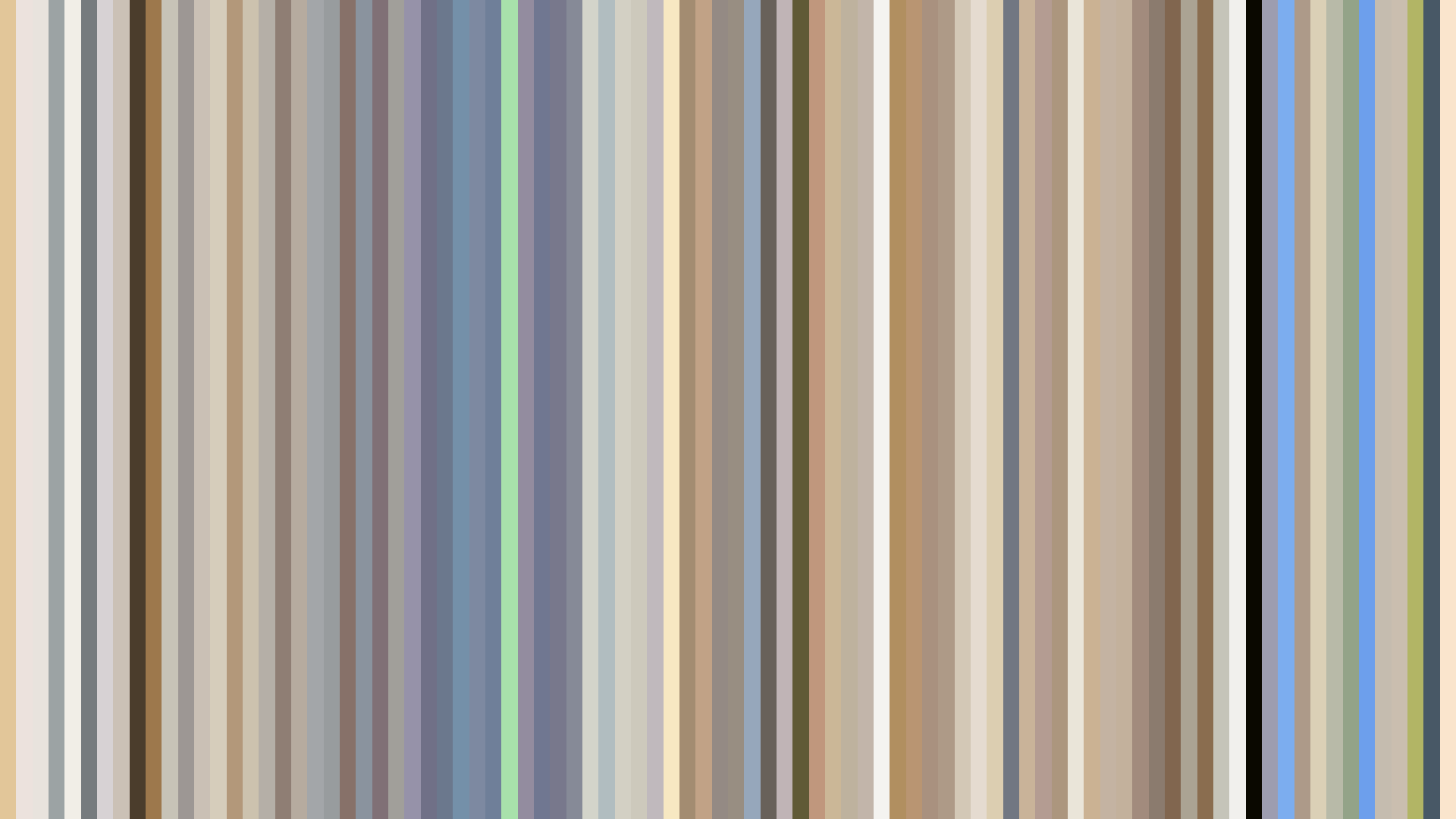
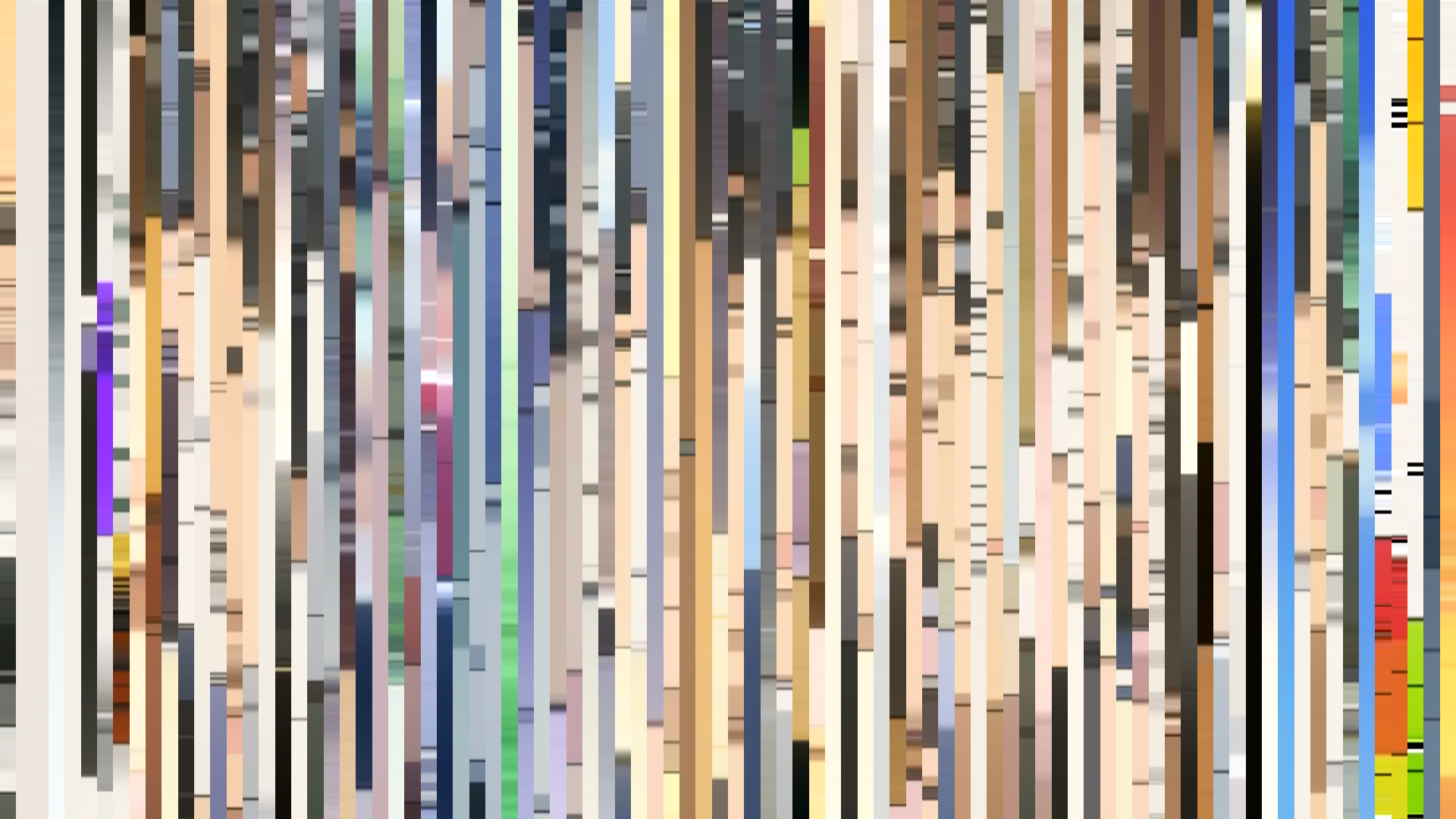
Slice · 15s
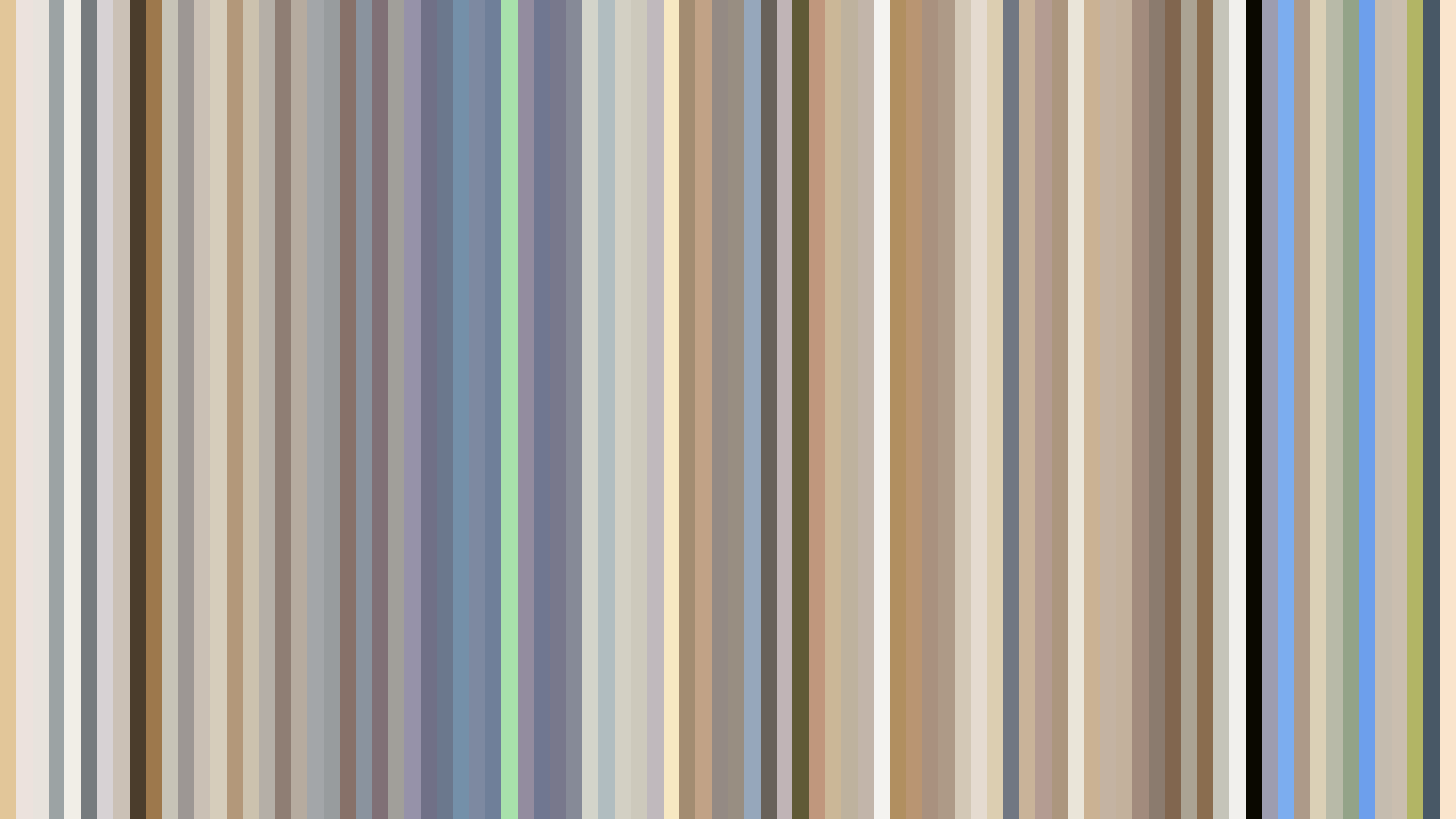
Avg · 15s
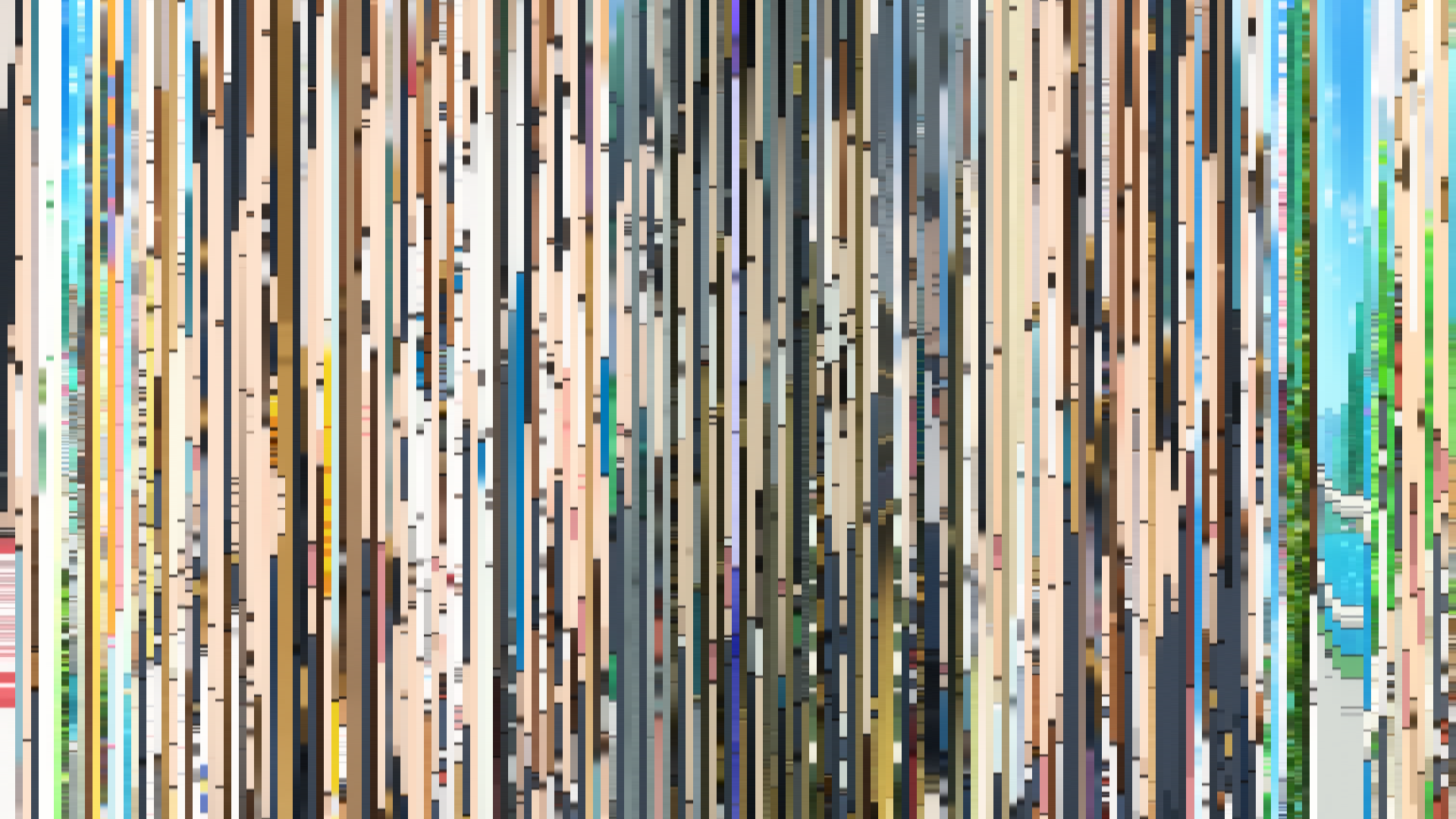
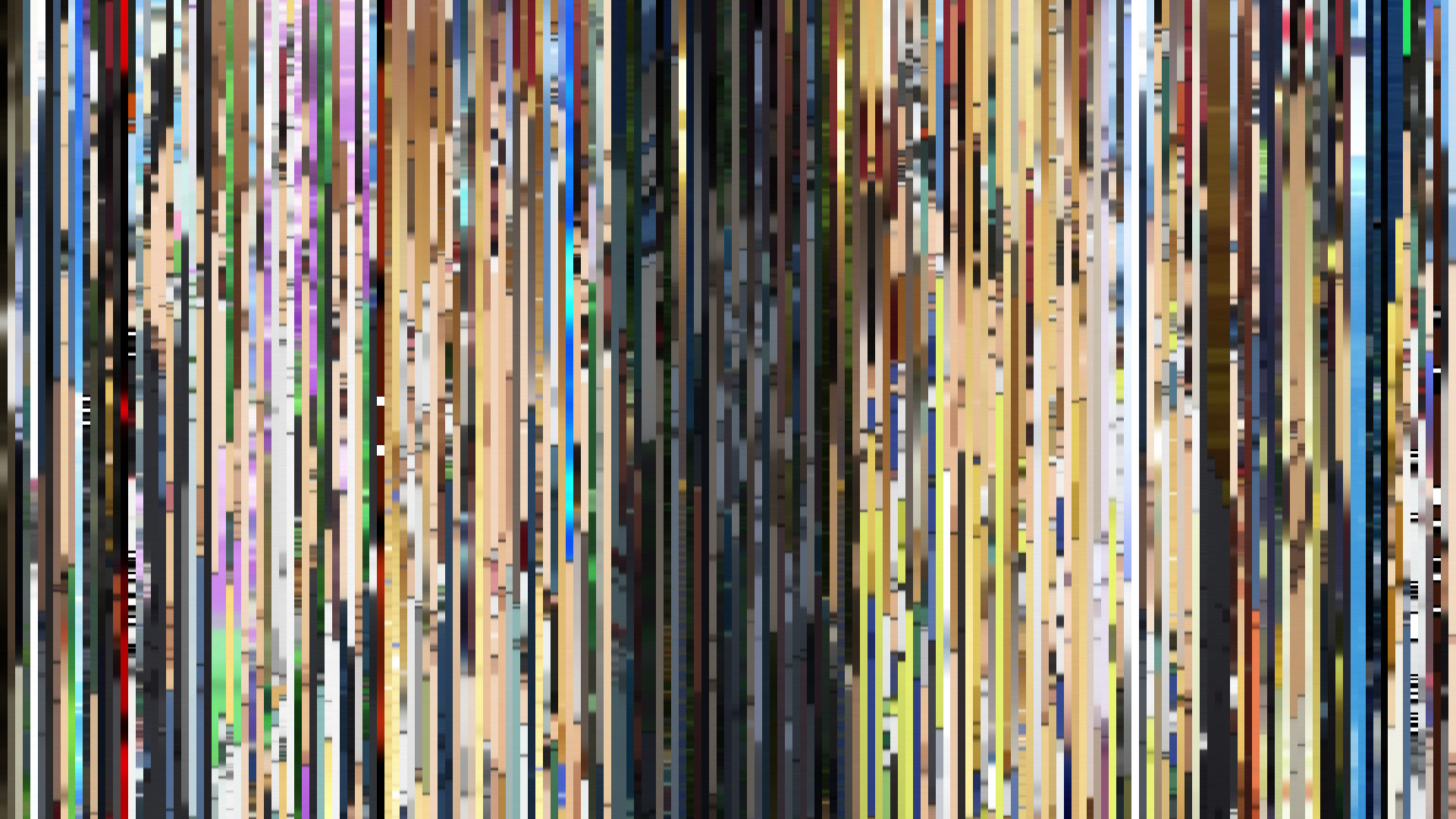
Slice · 30s
Avg · 30s
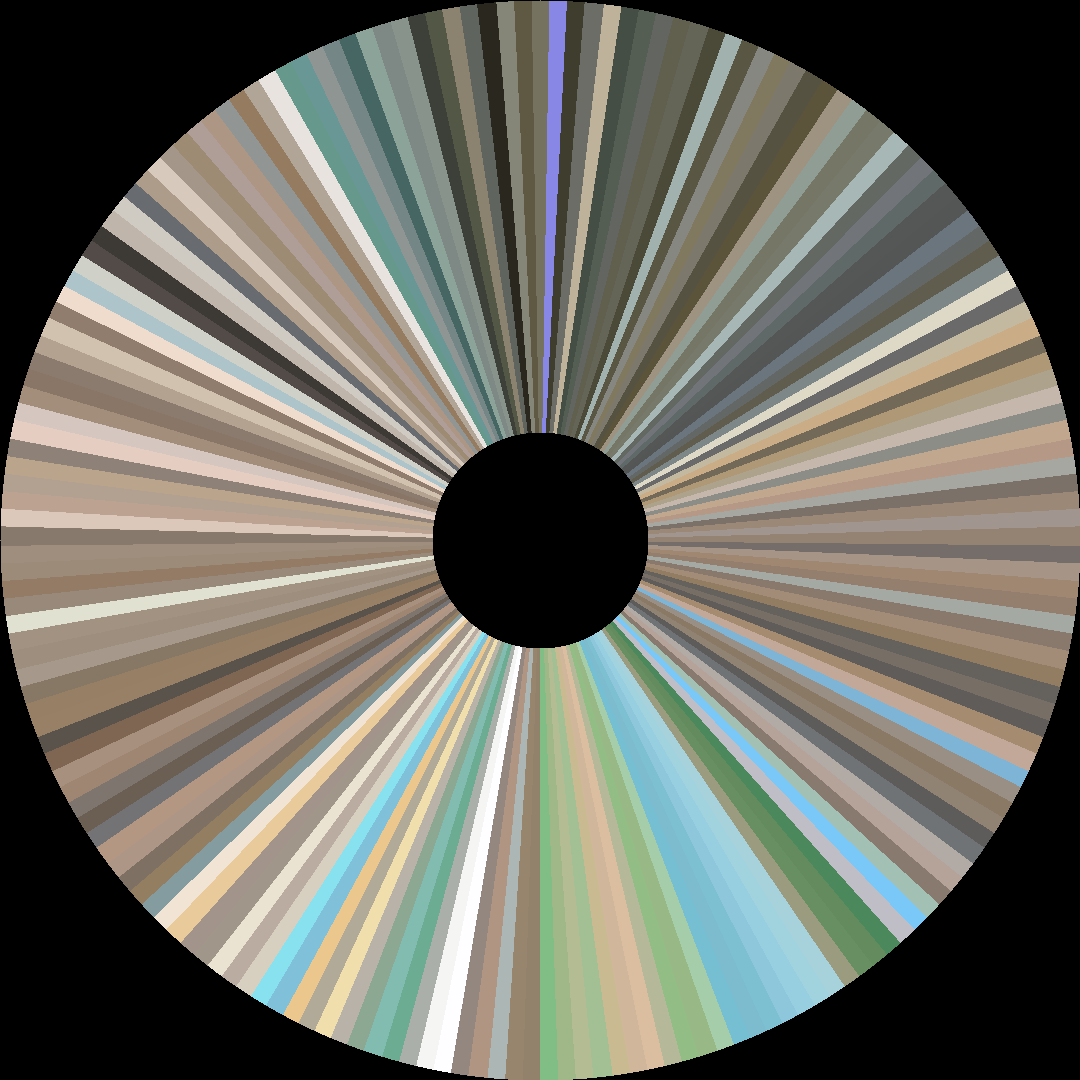
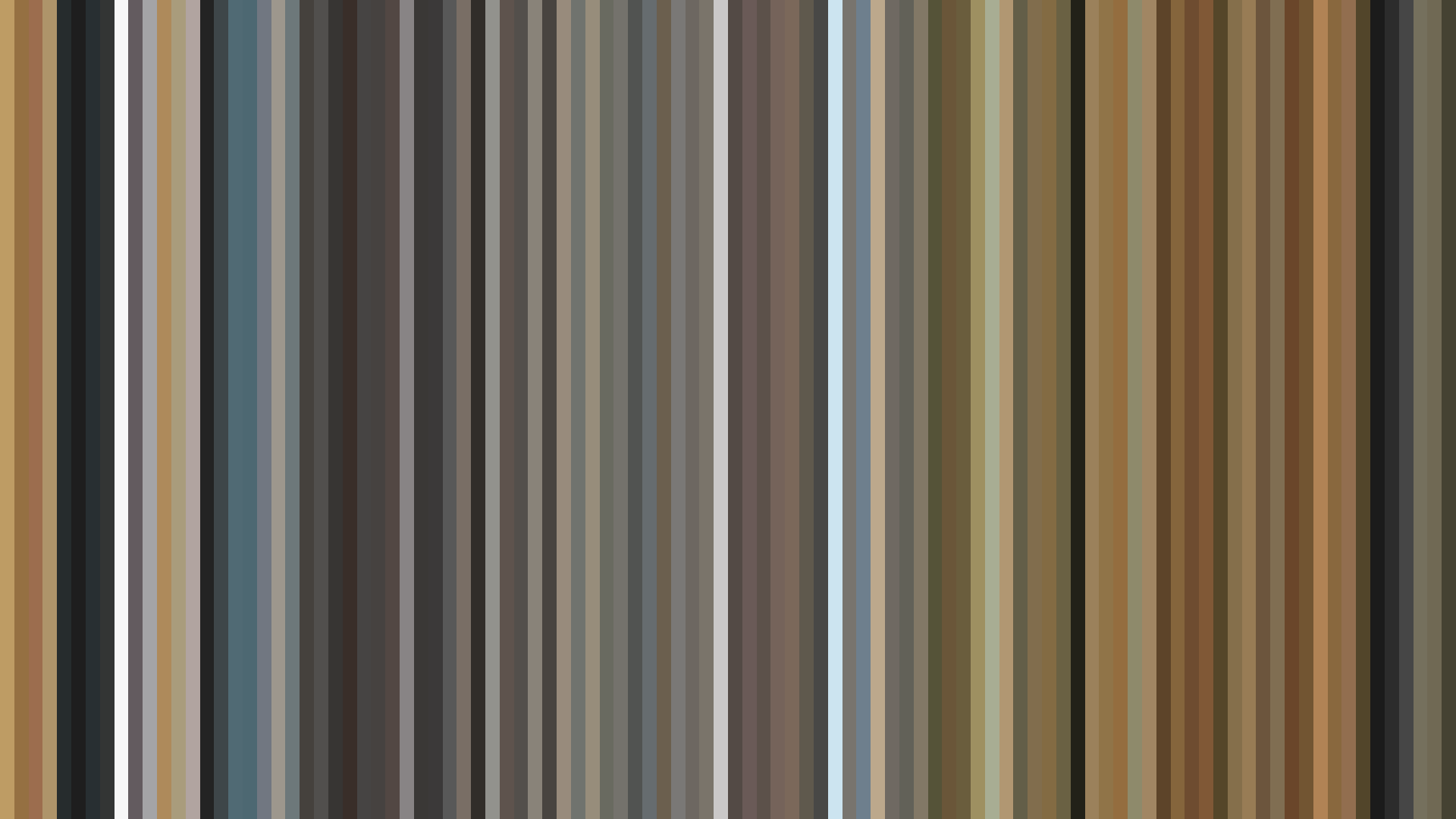
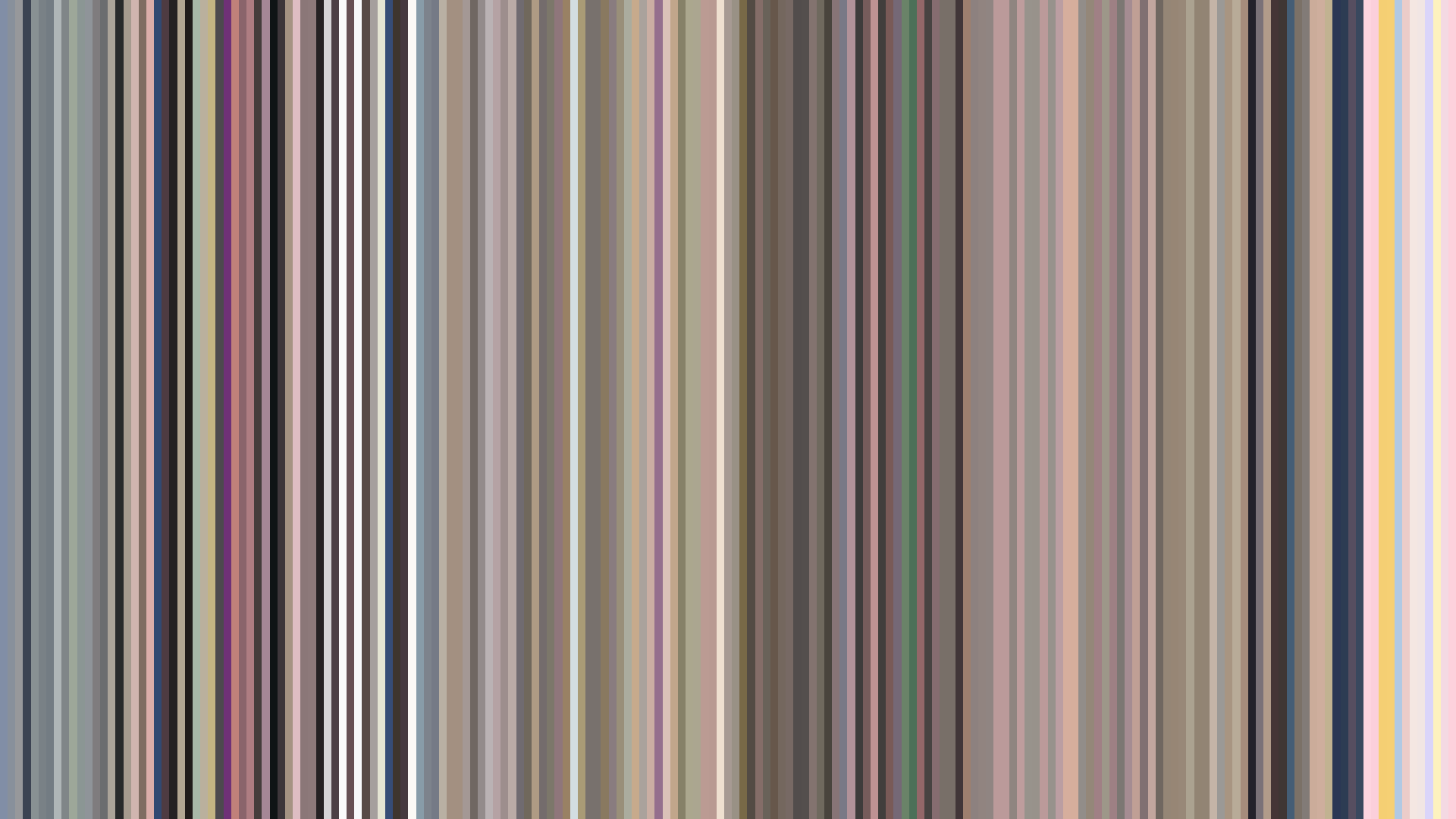
The arc-down shape of Takagi-san’s third season is a structural confession: this is a series built on the warmth of everyday repetition, but the middle act knows repetition can fray. The palette’s Red dominance—41% of all frames—leans not toward passion but toward the dusty rose of a sunset that won’t fully set, supported by #EDE4D8 and #CFB39C, as if the whole show were filtered through a bamboo screen in late afternoon. Brightness drops from 0.613 to 0.400 in the middle, then recovers to only 0.558—a deliberate lopsided arc that mirrors Nishikata’s frustration plateauing higher than it resolves. The low saturation (0.201) strips the palette of any cartoon punch; these are the muted tones of an almost-winter schoolyard, where every blush is more felt than seen. Director Hiroaki Akagi and his team understood that the joke of Nishikata losing is itself a kind of loss—the dark midpoint isn’t tragedy, but it is fatigue. The closing act’s recovery isn’t a return to innocence; it’s a learned patience, rendered in colors that have mellowed.
Brightness Arc (episode progression)
Hue Distribution
Act Breakdown
Opening
0.613
Middle
0.400
Closing
0.558
Avg Brightness
0.609
Avg Saturation
0.201
Warmth
0.559
Color Palette
#EDE4D8
#5E5F5C
#A3A29B
#E4CFB0
#CFB39C
#A38C6B
#2C2E2E
#91725A
3-Act Color Story
Opening
Middle
Closing
Color Twins
Perceptually nearest palettes — measured in OKLab space, not RGB







The arc-down shape of Takagi-san’s third season is a structural confession: this is a series built on the warmth of everyday repetition, but the middle act knows repetition can fray. The palette’s Red dominance—41% of all frames—leans not toward passion but toward the dusty rose of a sunset that won’t fully set, supported by #EDE4D8 and #CFB39C, as if the whole show were filtered through a bamboo screen in late afternoon. Brightness drops from 0.613 to 0.400 in the middle, then recovers to only 0.558—a deliberate lopsided arc that mirrors Nishikata’s frustration plateauing higher than it resolves. The low saturation (0.201) strips the palette of any cartoon punch; these are the muted tones of an almost-winter schoolyard, where every blush is more felt than seen. Director Hiroaki Akagi and his team understood that the joke of Nishikata losing is itself a kind of loss—the dark midpoint isn’t tragedy, but it is fatigue. The closing act’s recovery isn’t a return to innocence; it’s a learned patience, rendered in colors that have mellowed.