Edit Pace — frame-to-frame color delta (bright = fast cuts)
Color Temperature — warm (gold) vs cool (teal) per frame
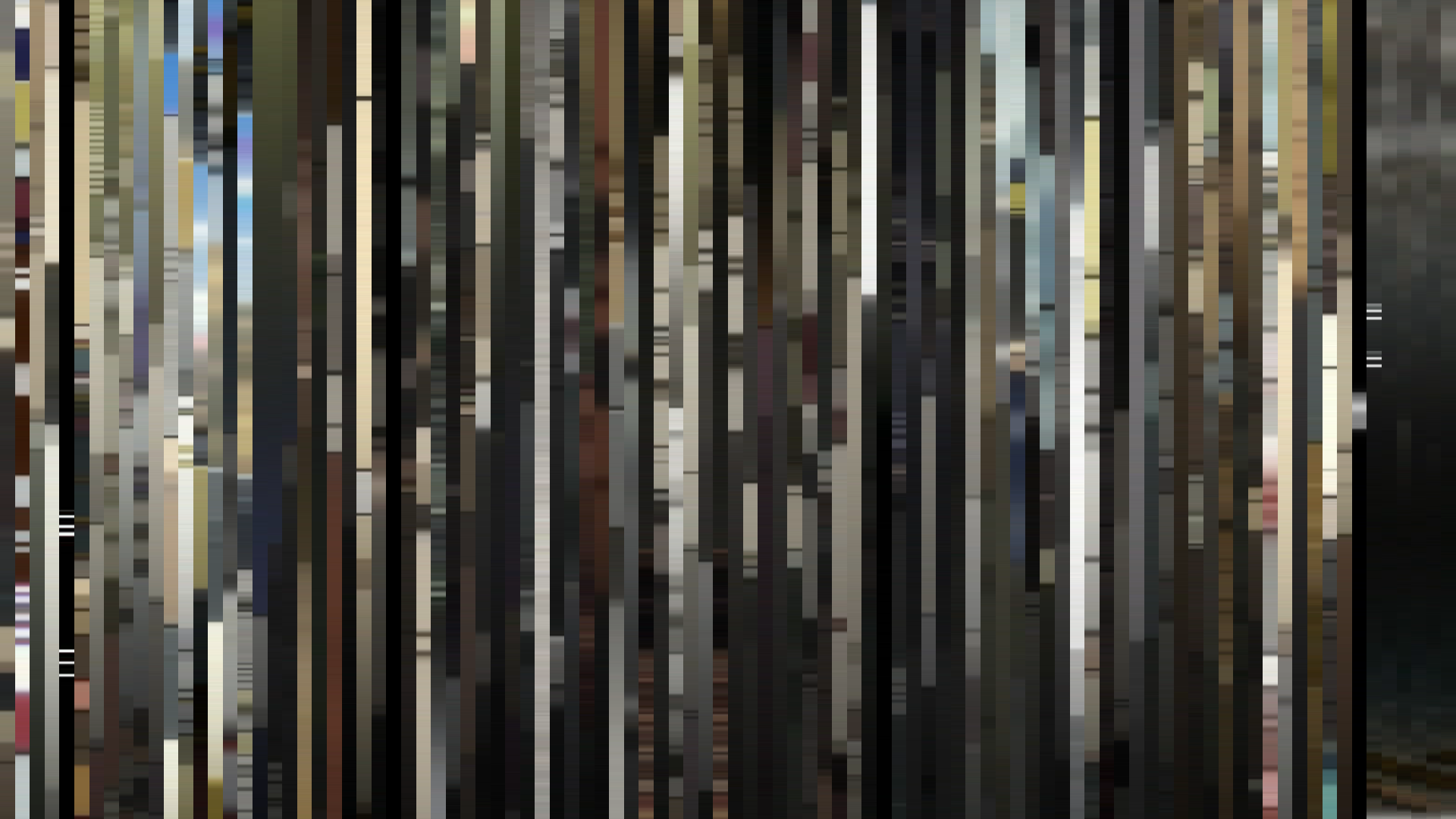
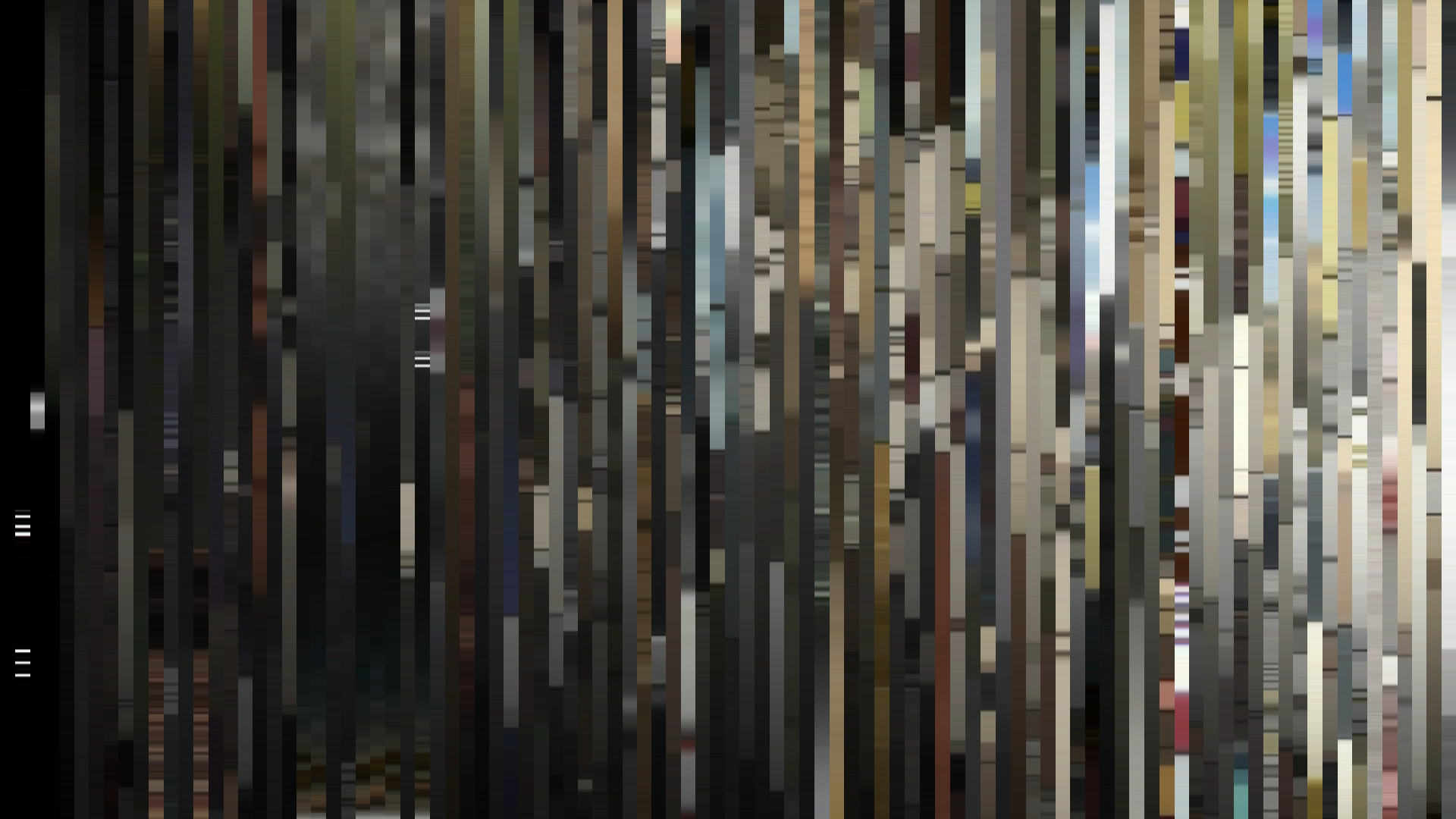
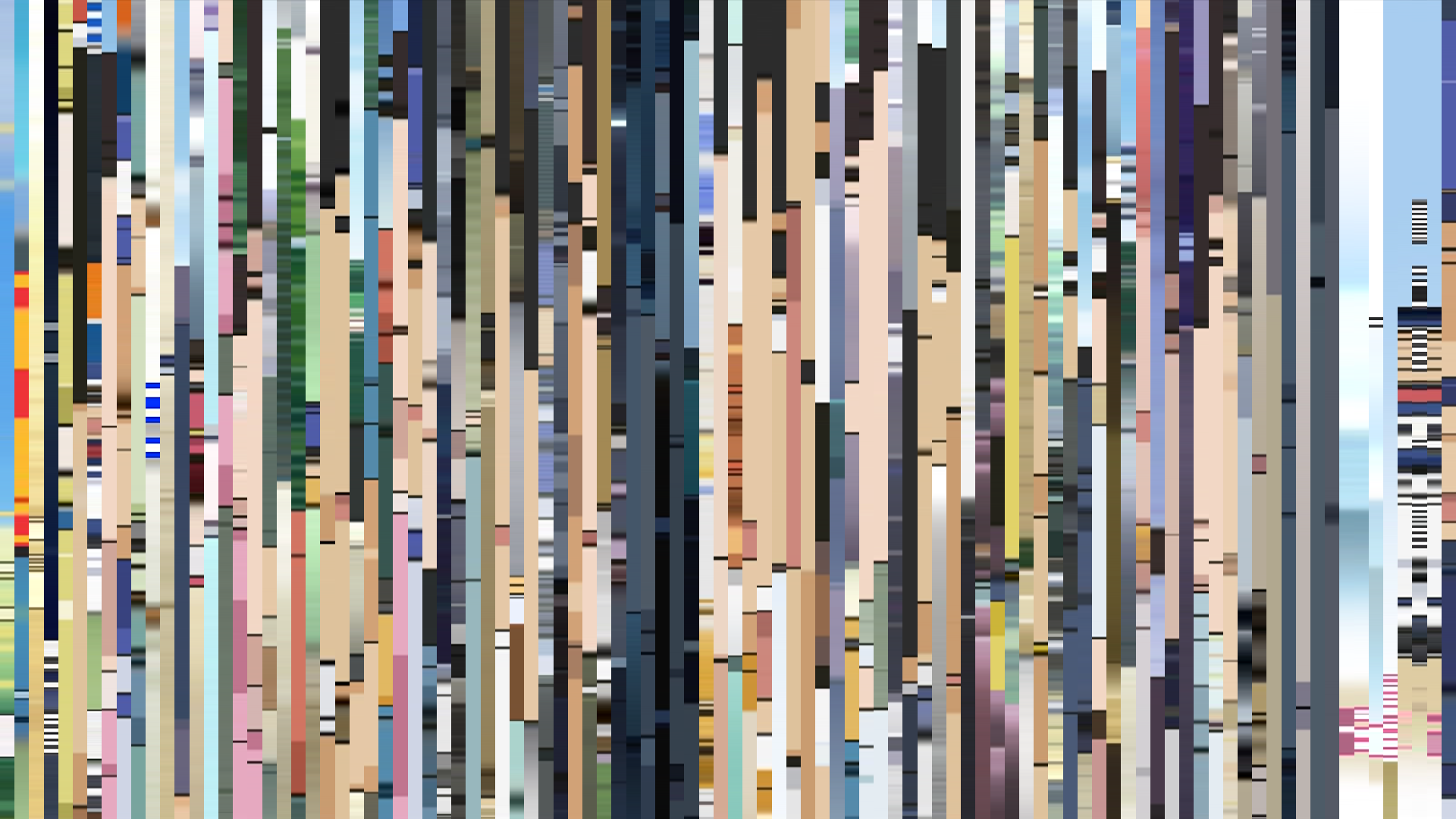
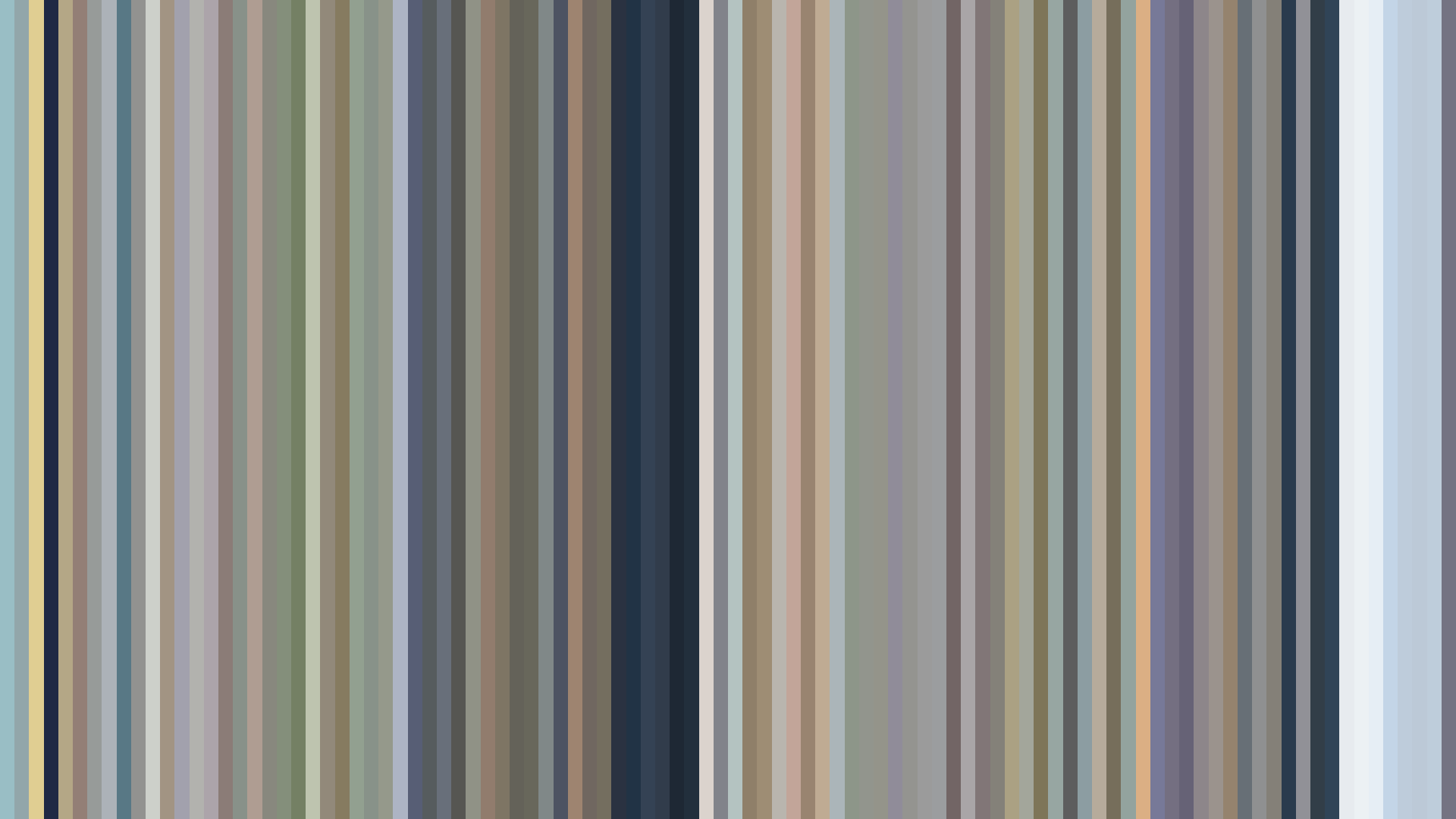
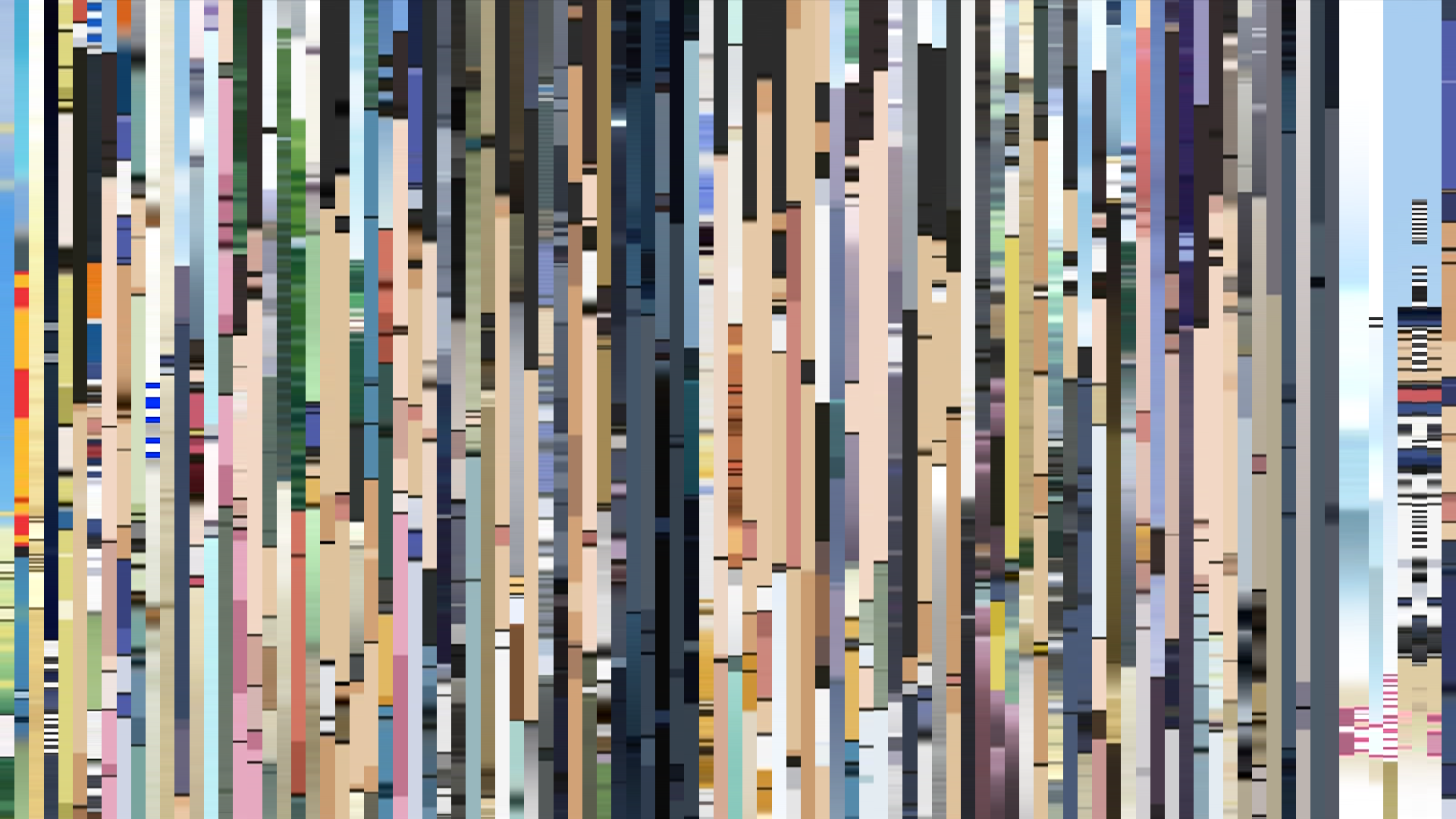
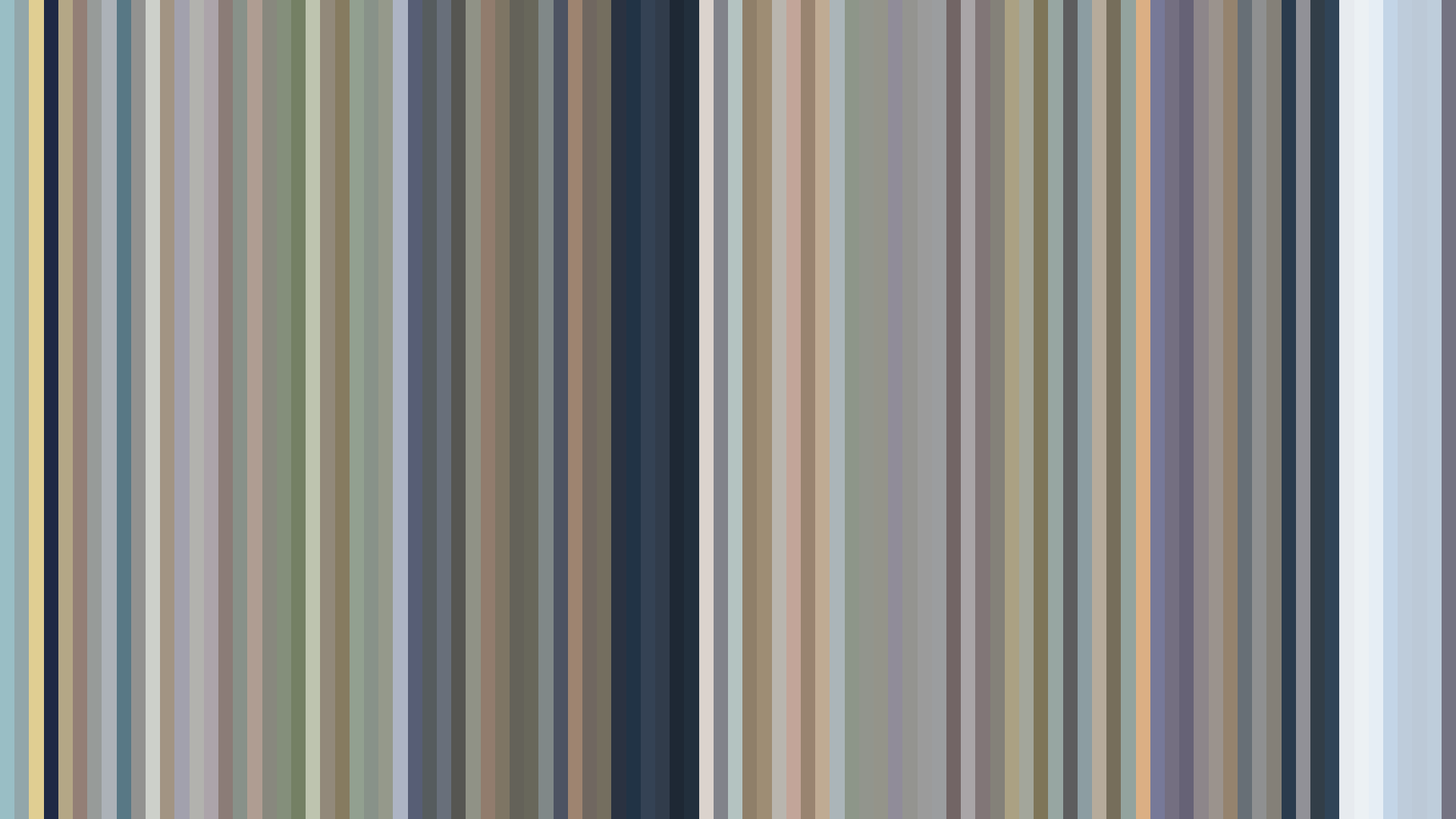
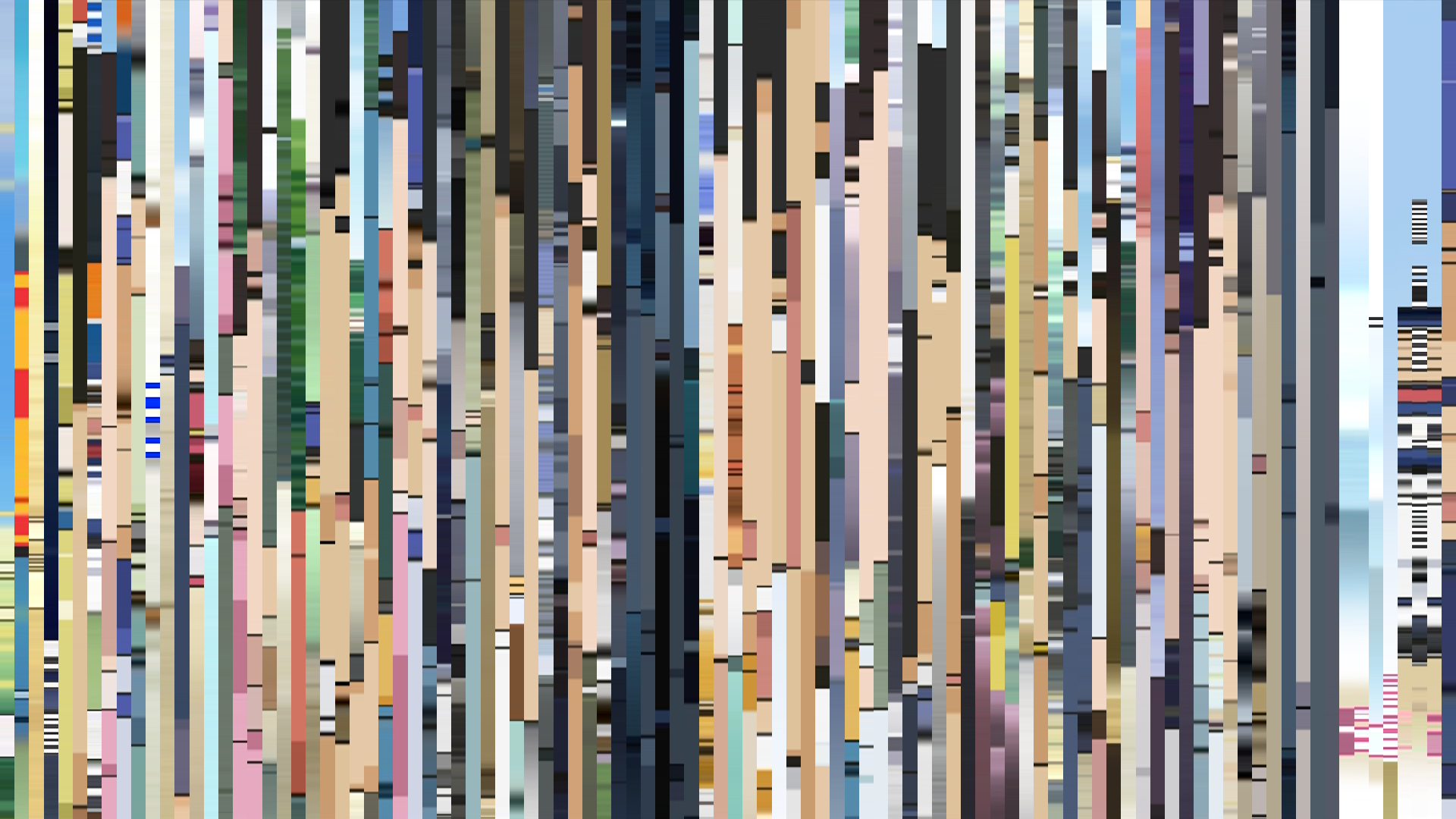
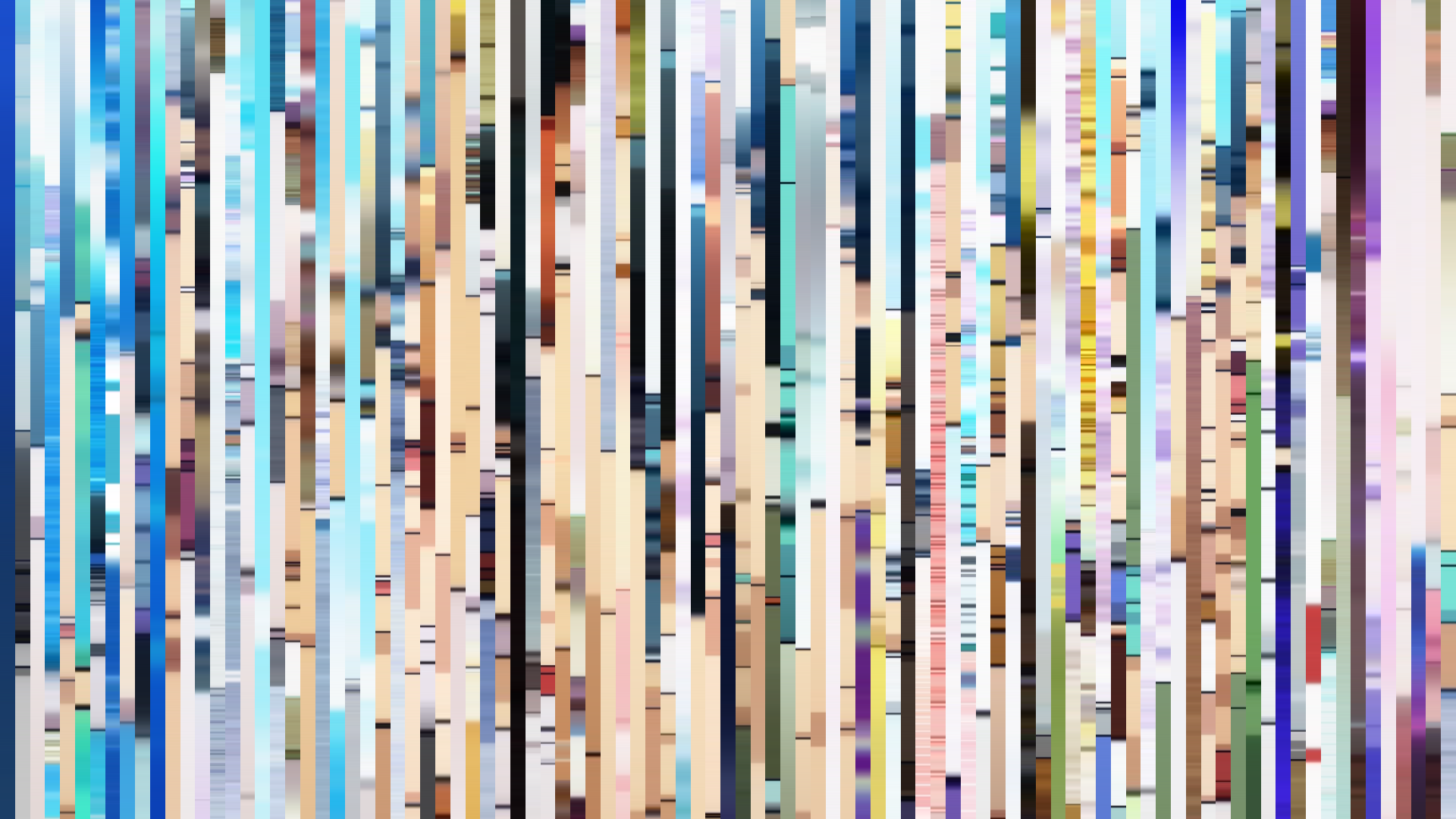
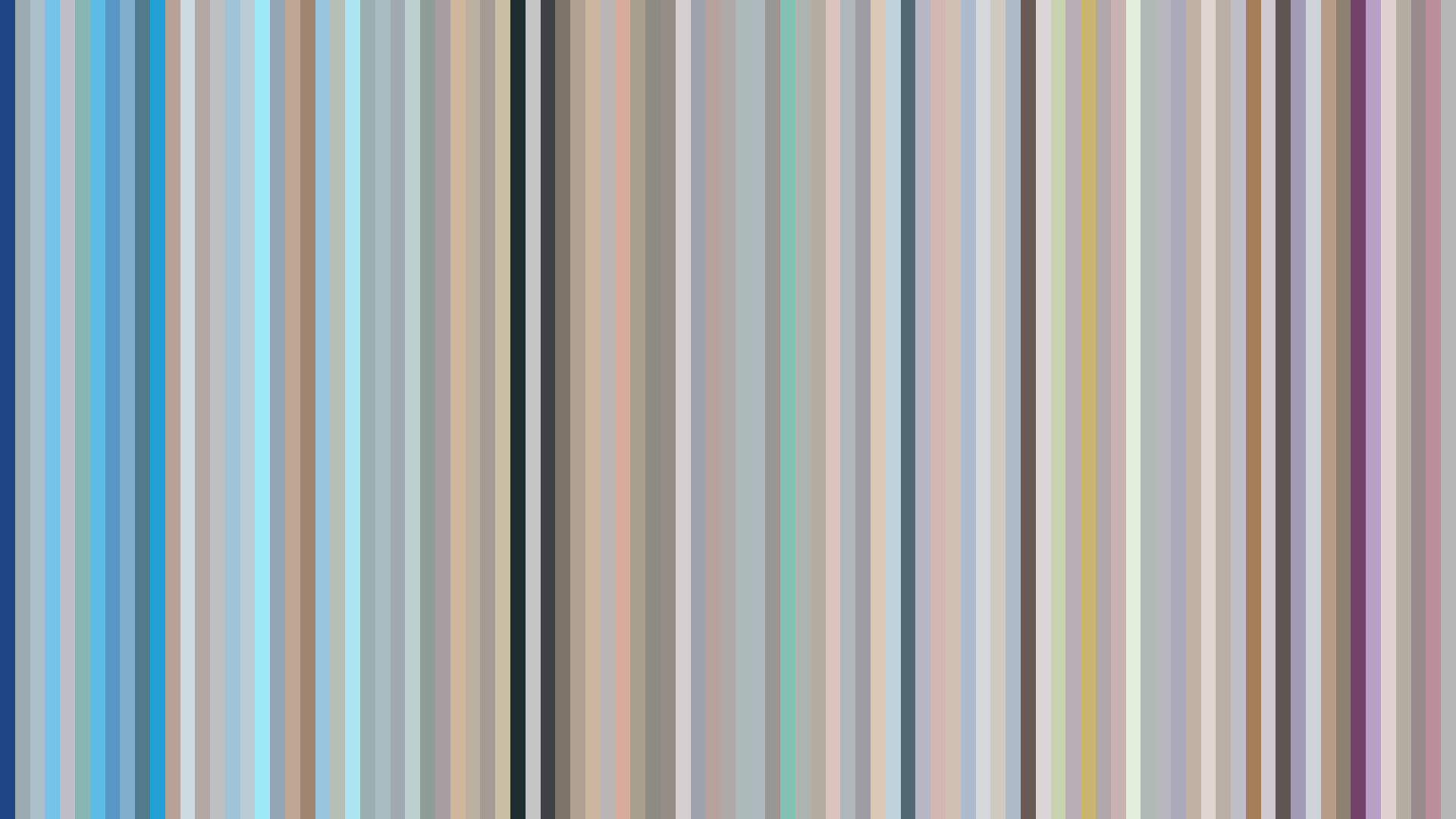
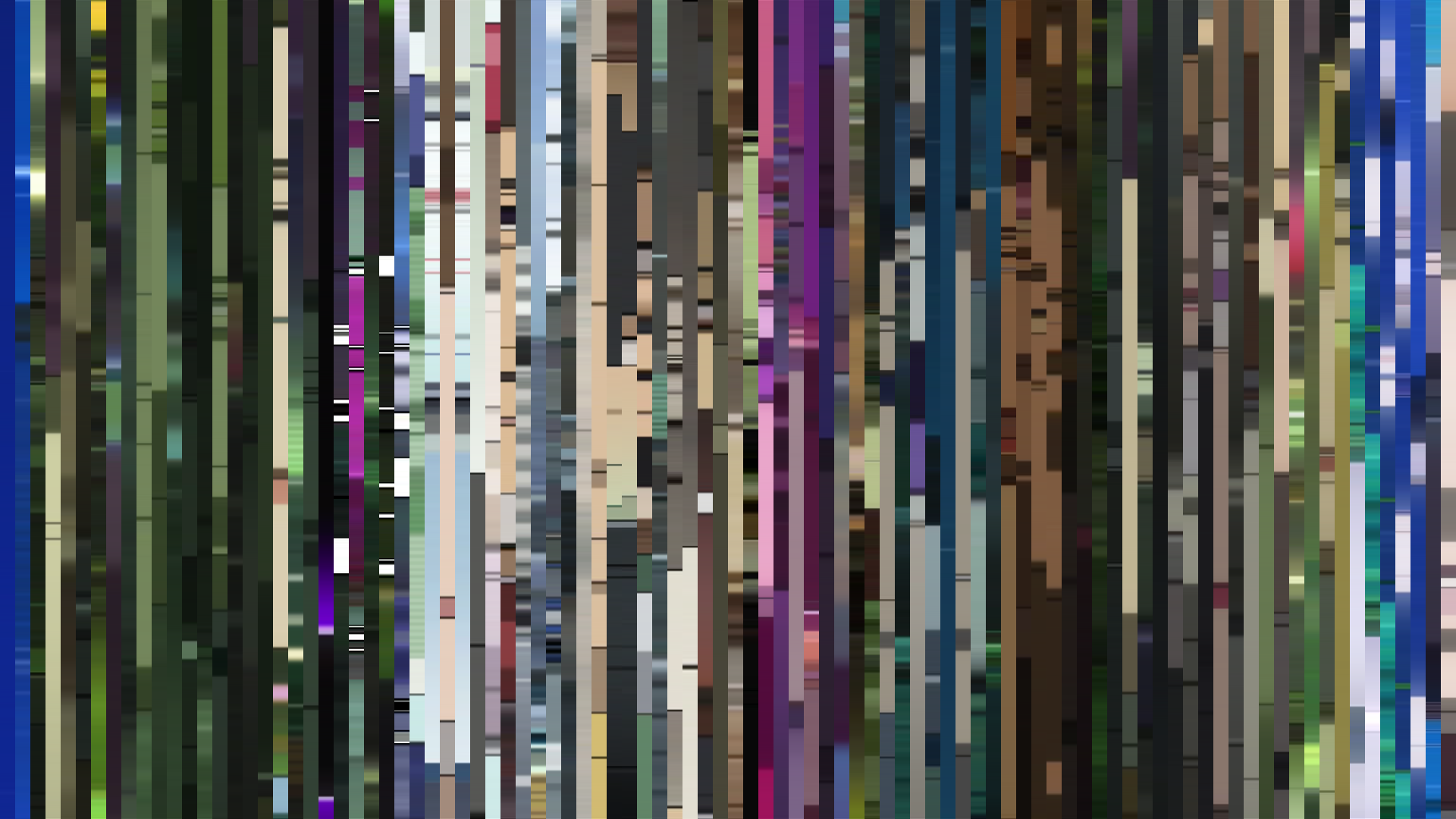
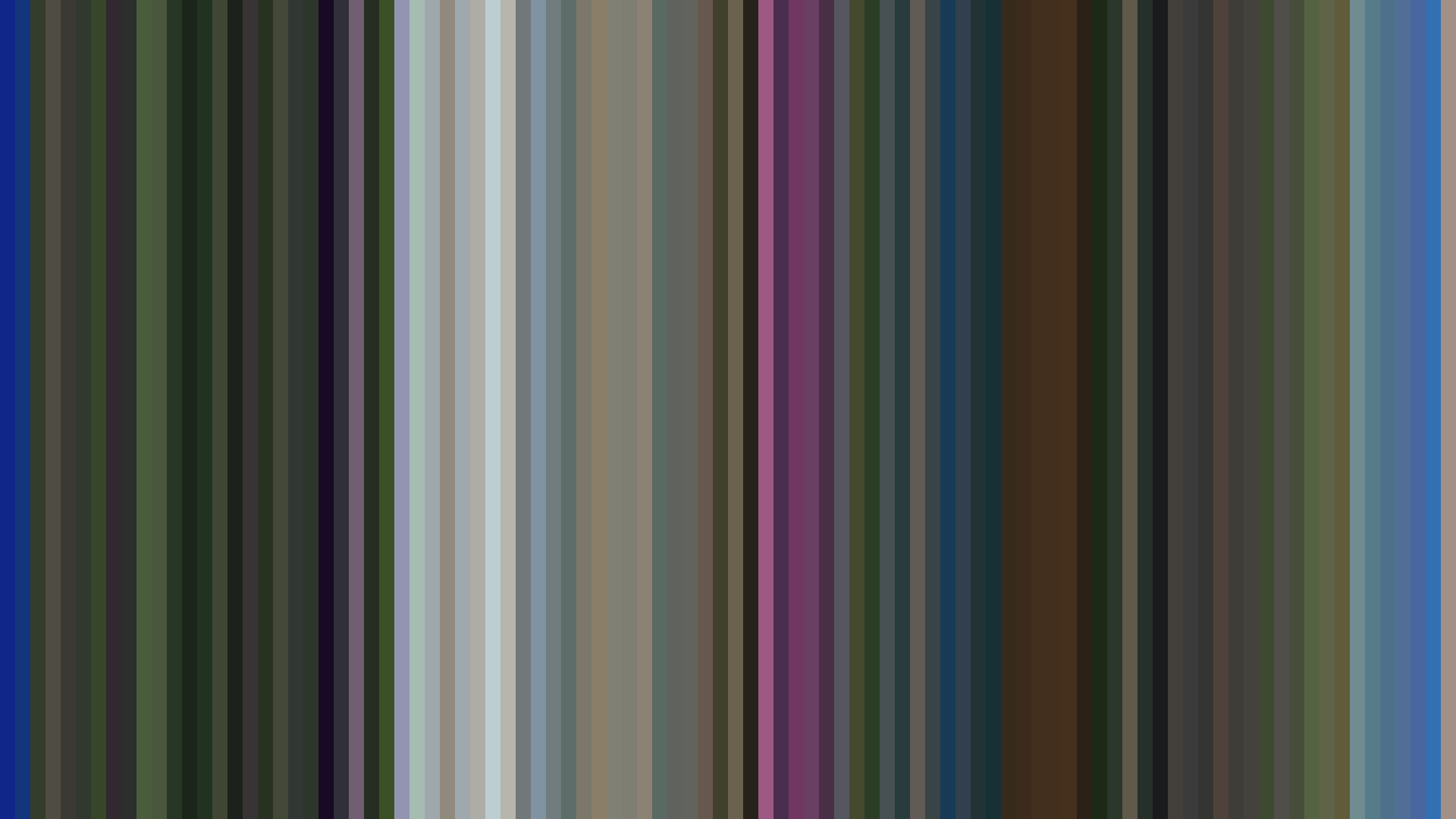
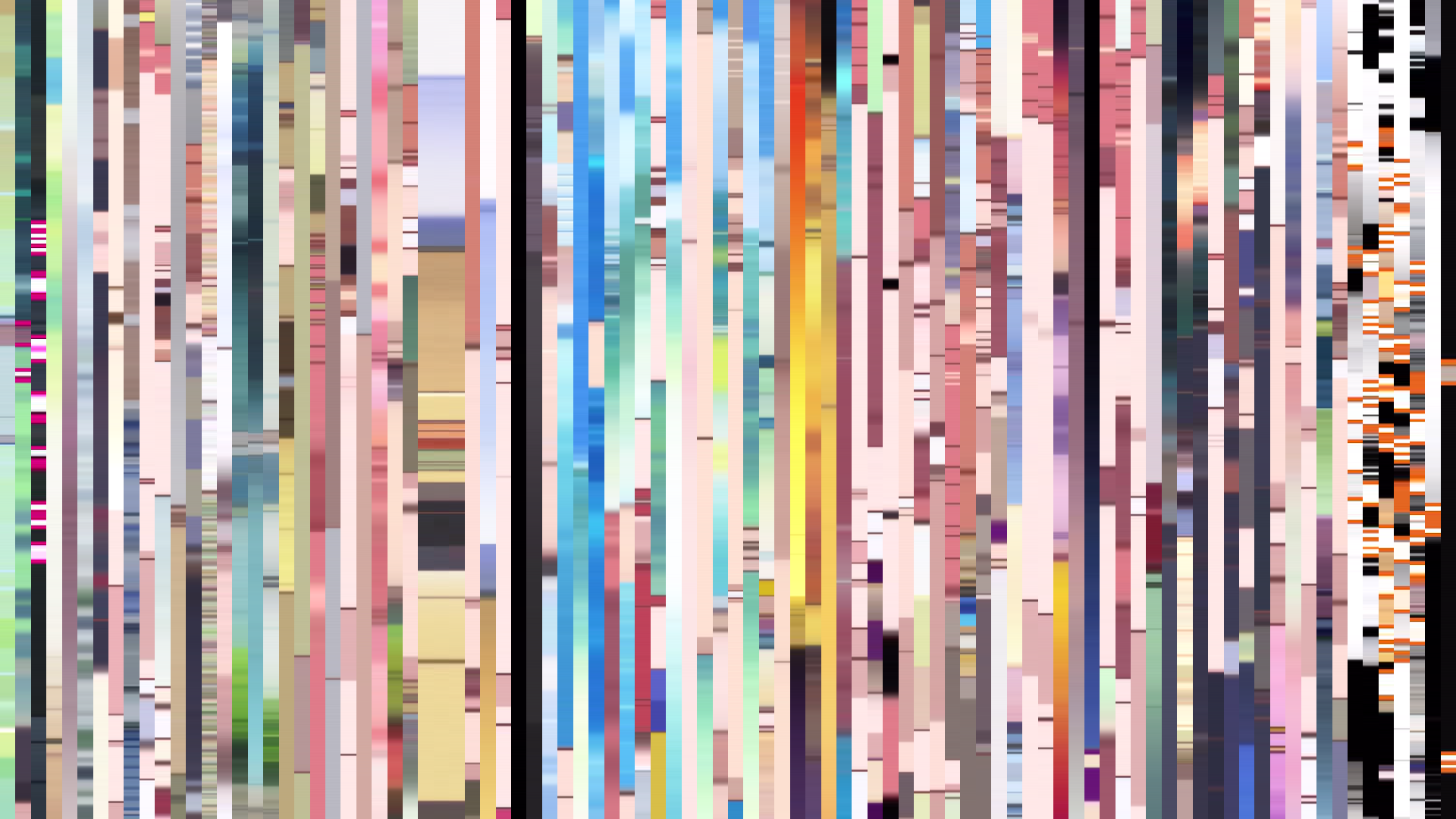
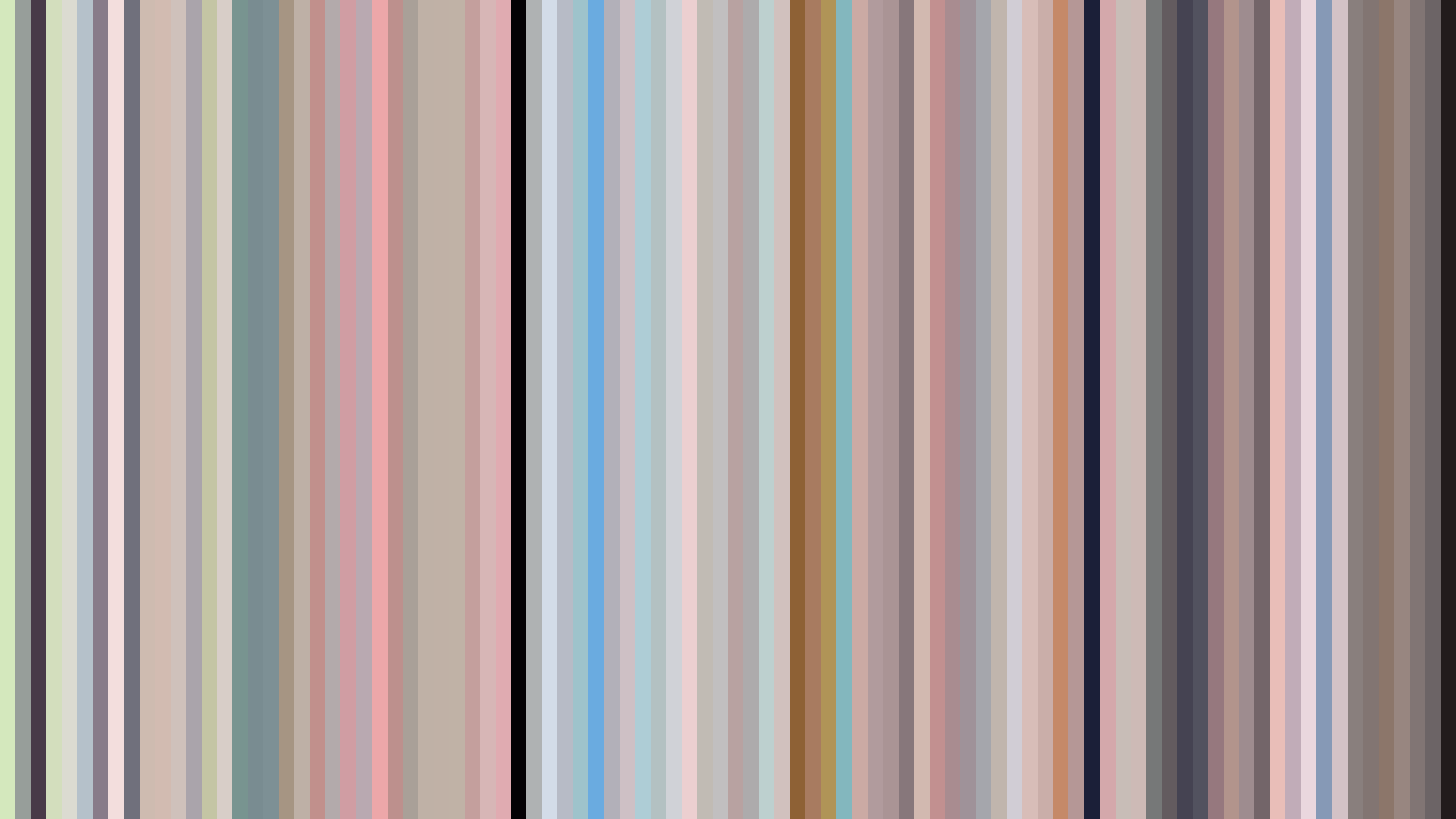
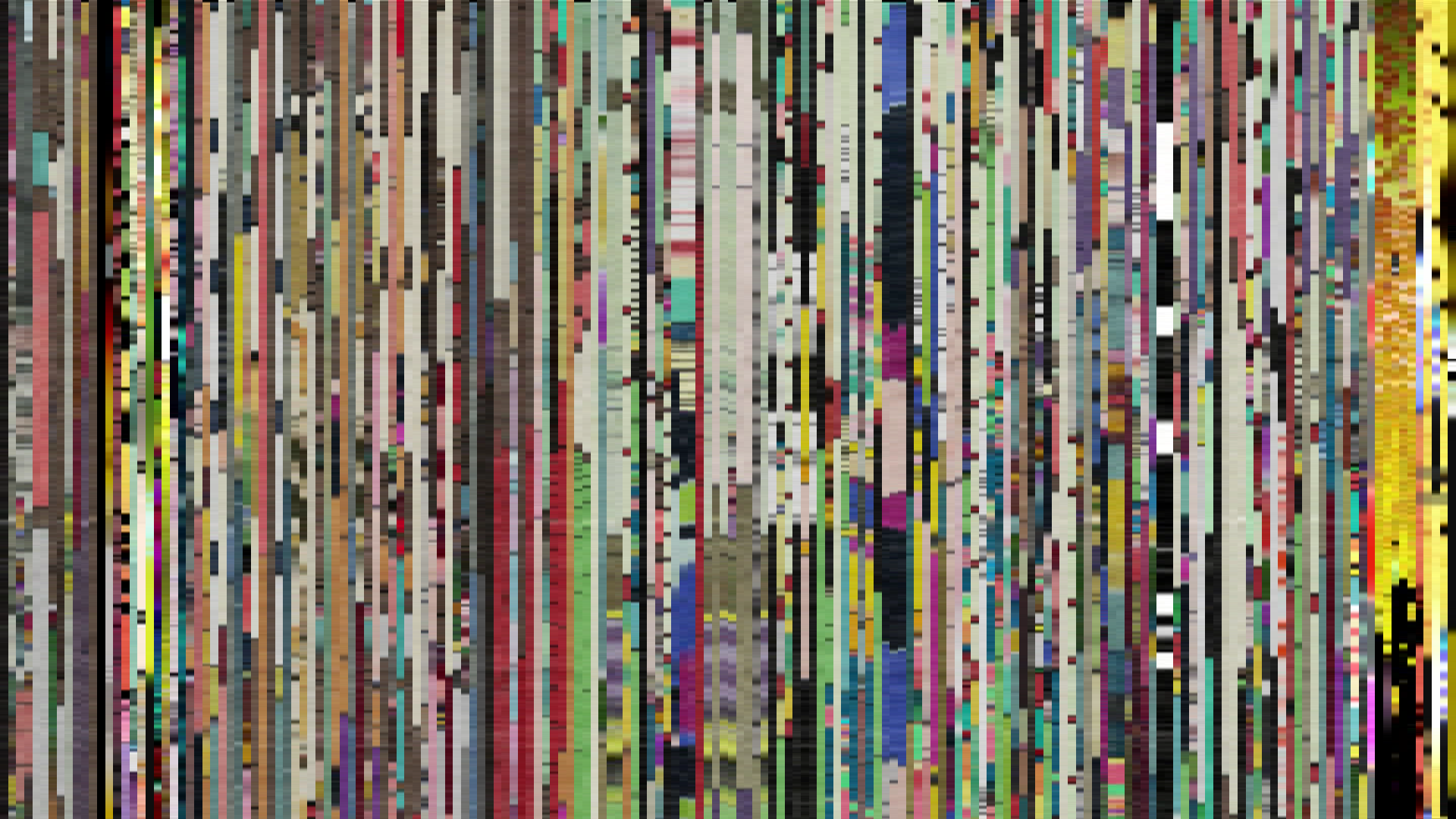
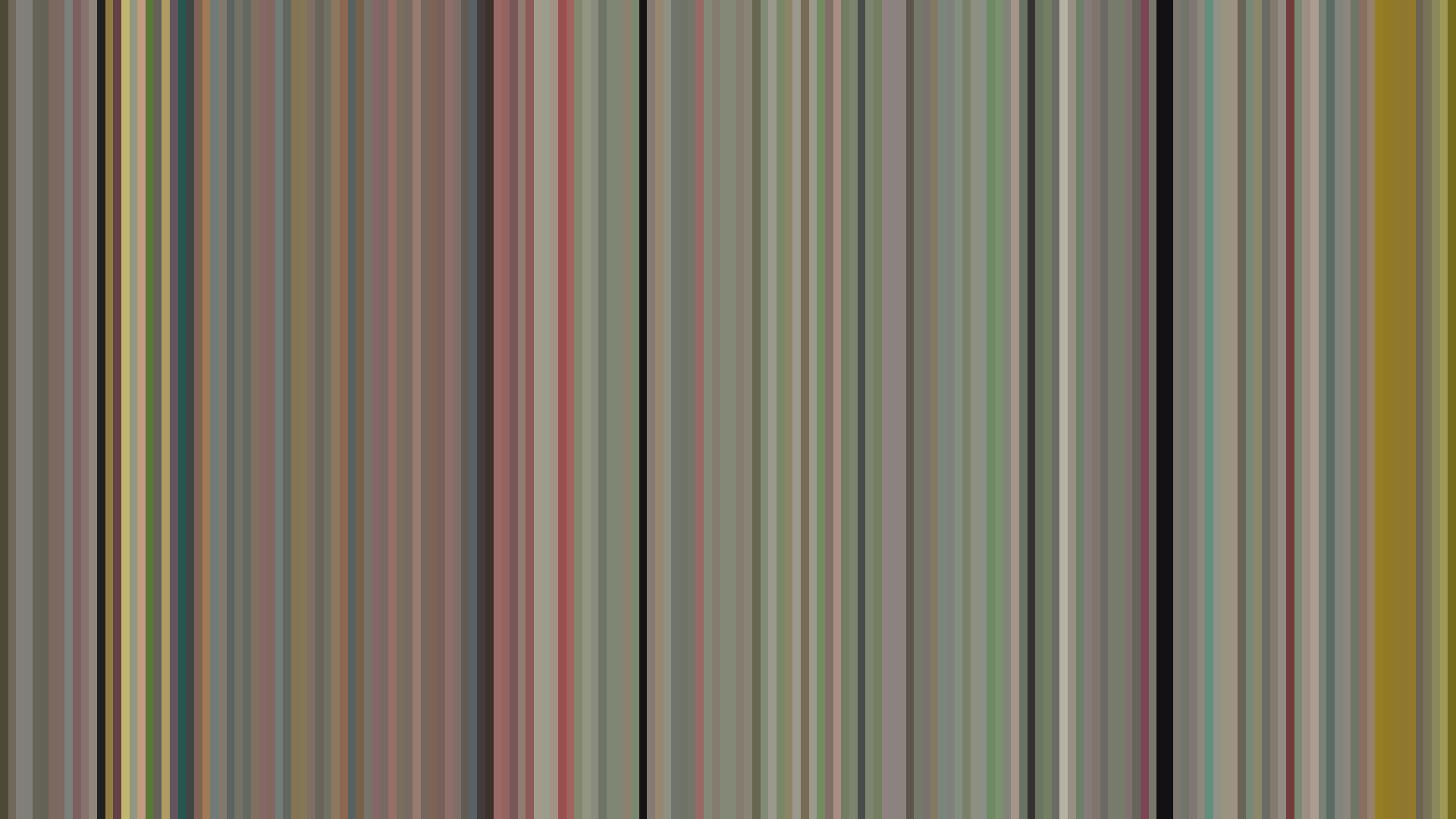
Frame Density Comparison — every 2nd vs every 4th frame
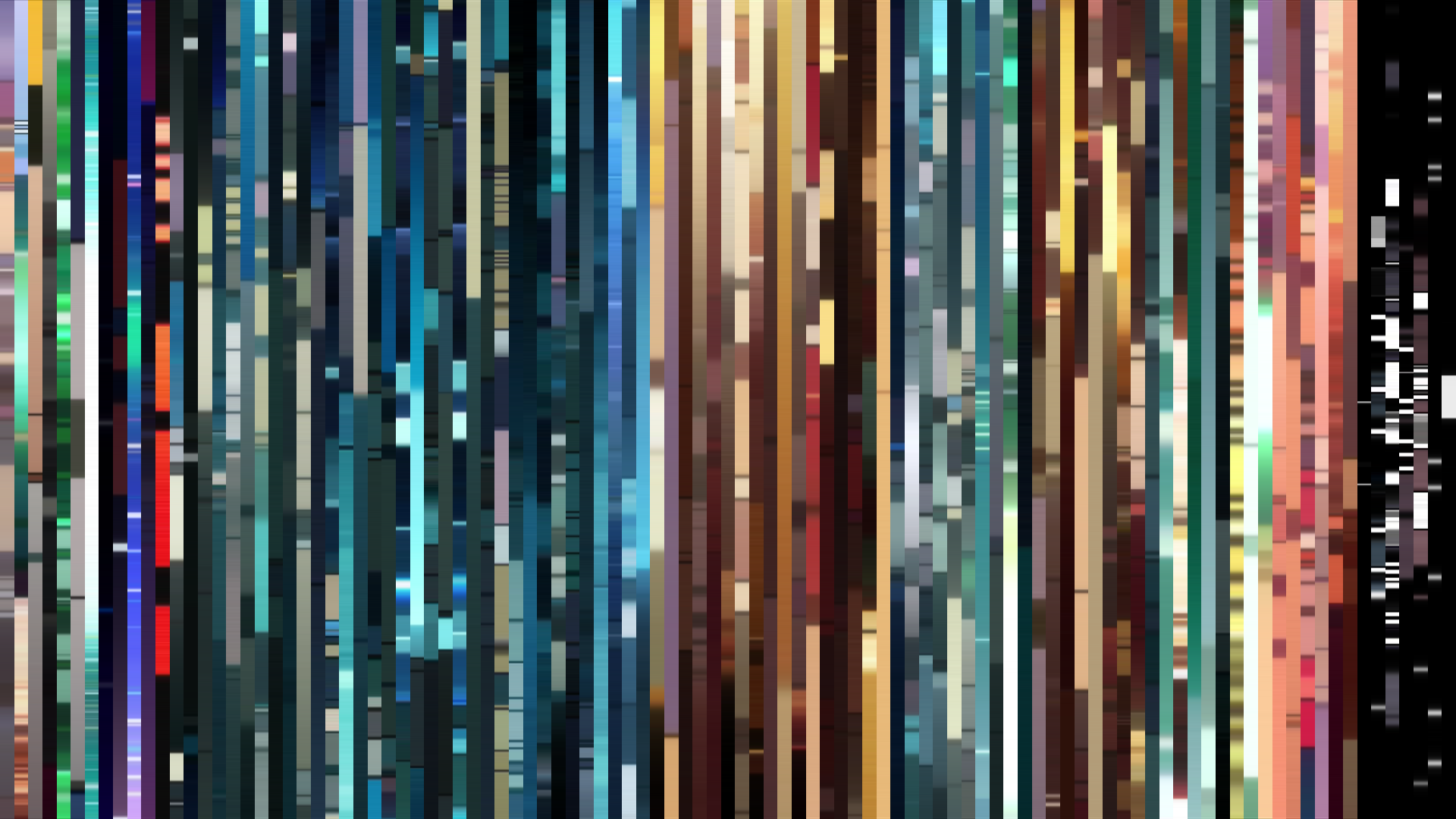
Slice · 15s
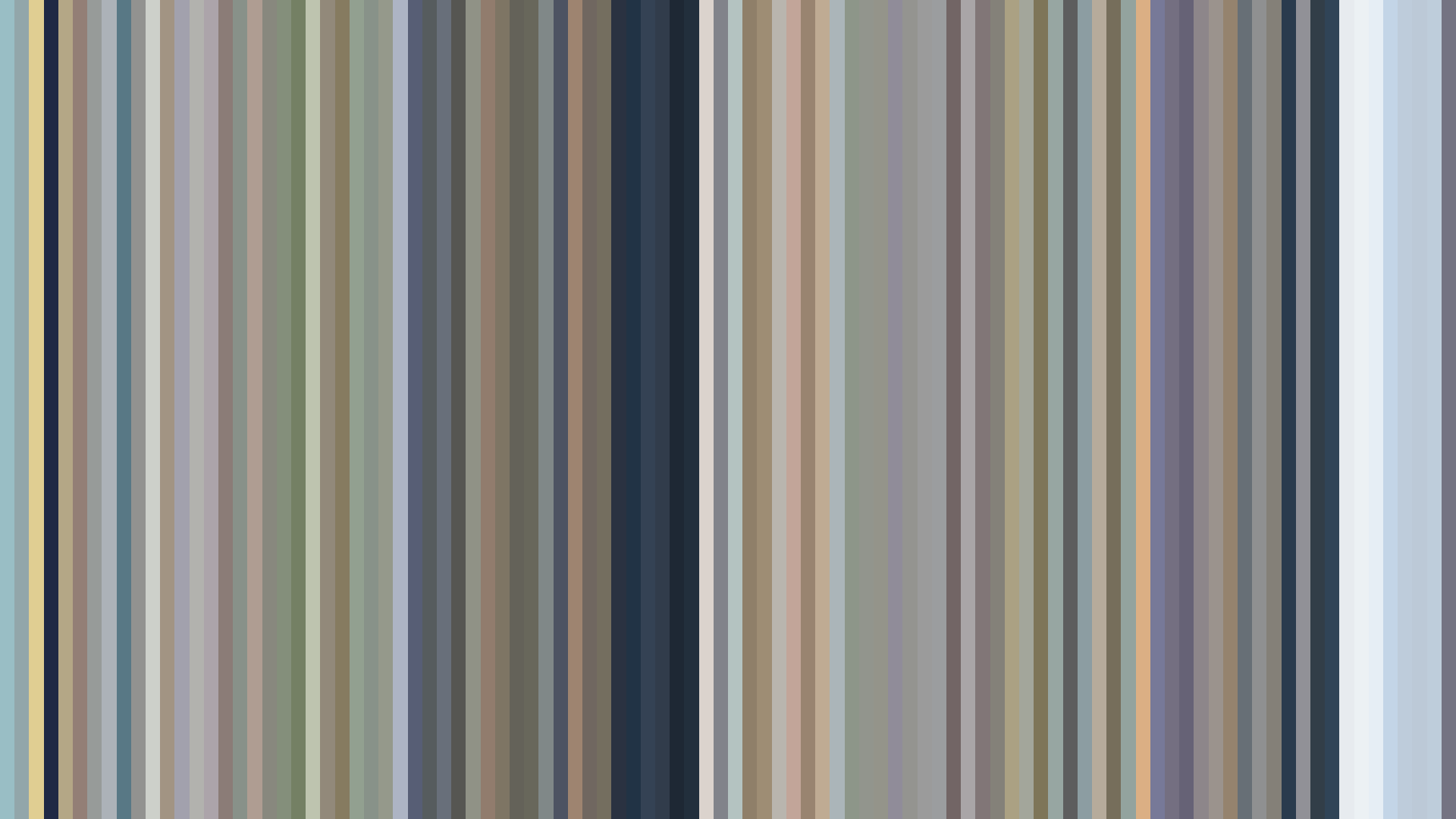
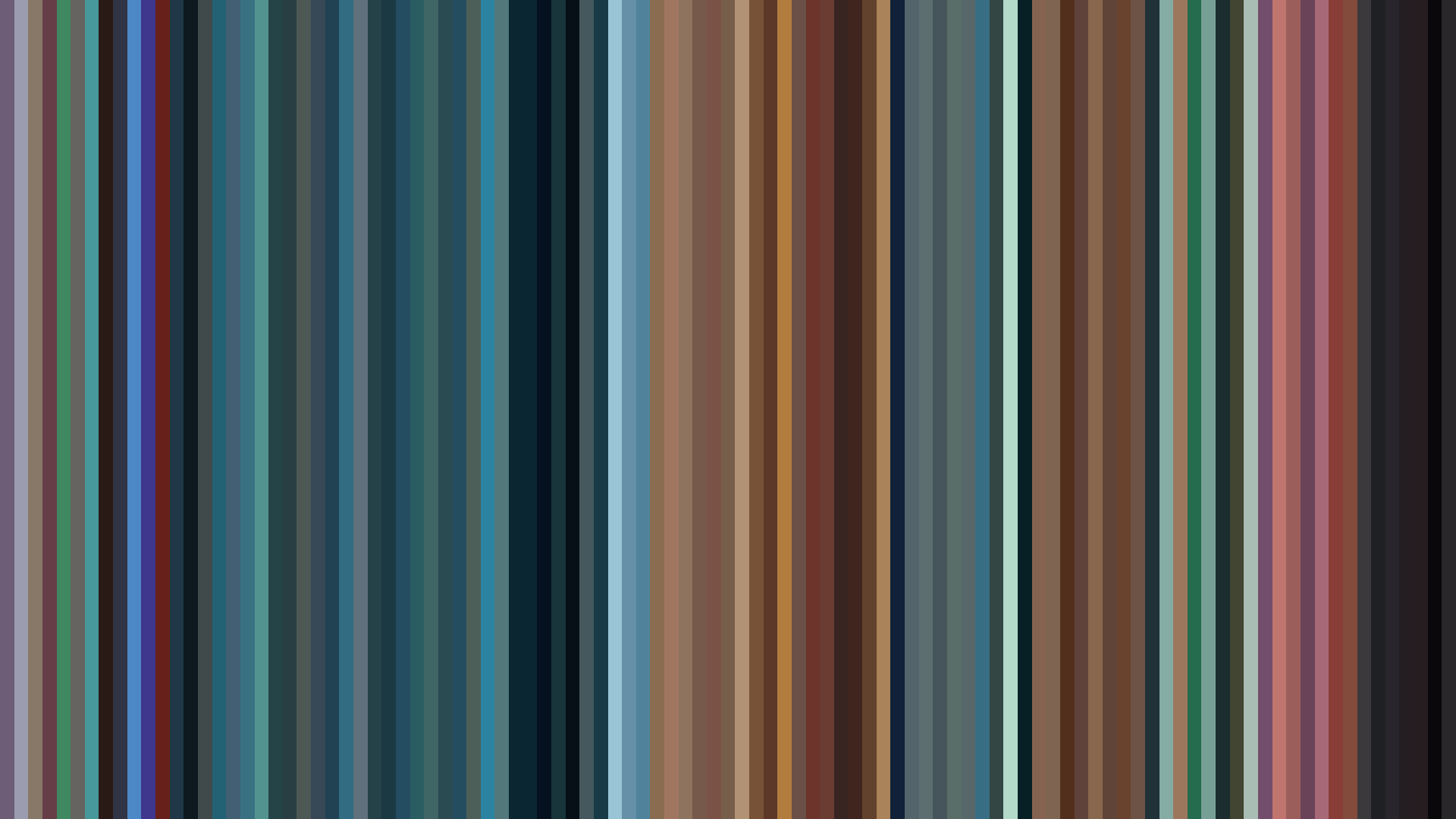
Avg · 15s
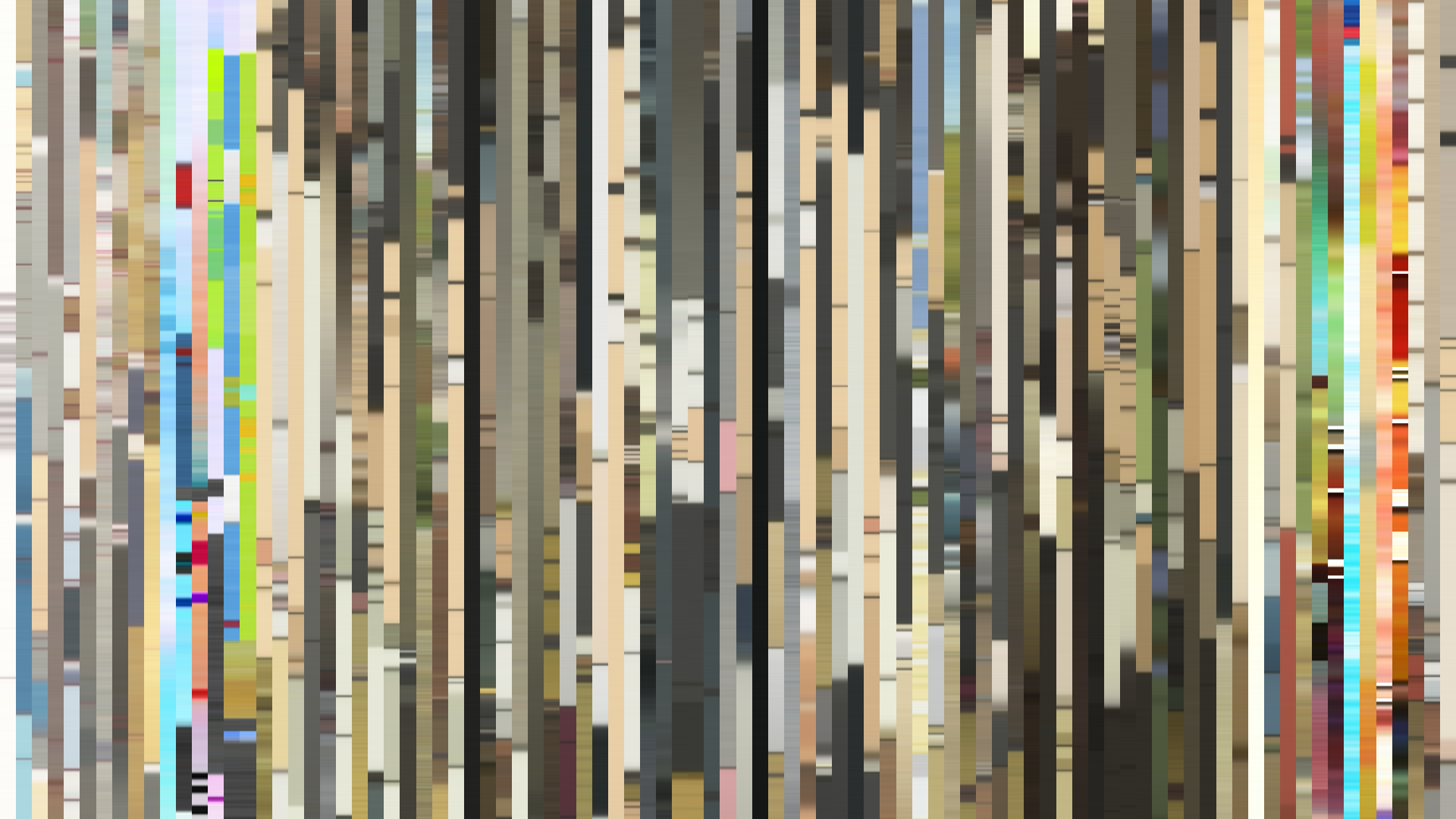
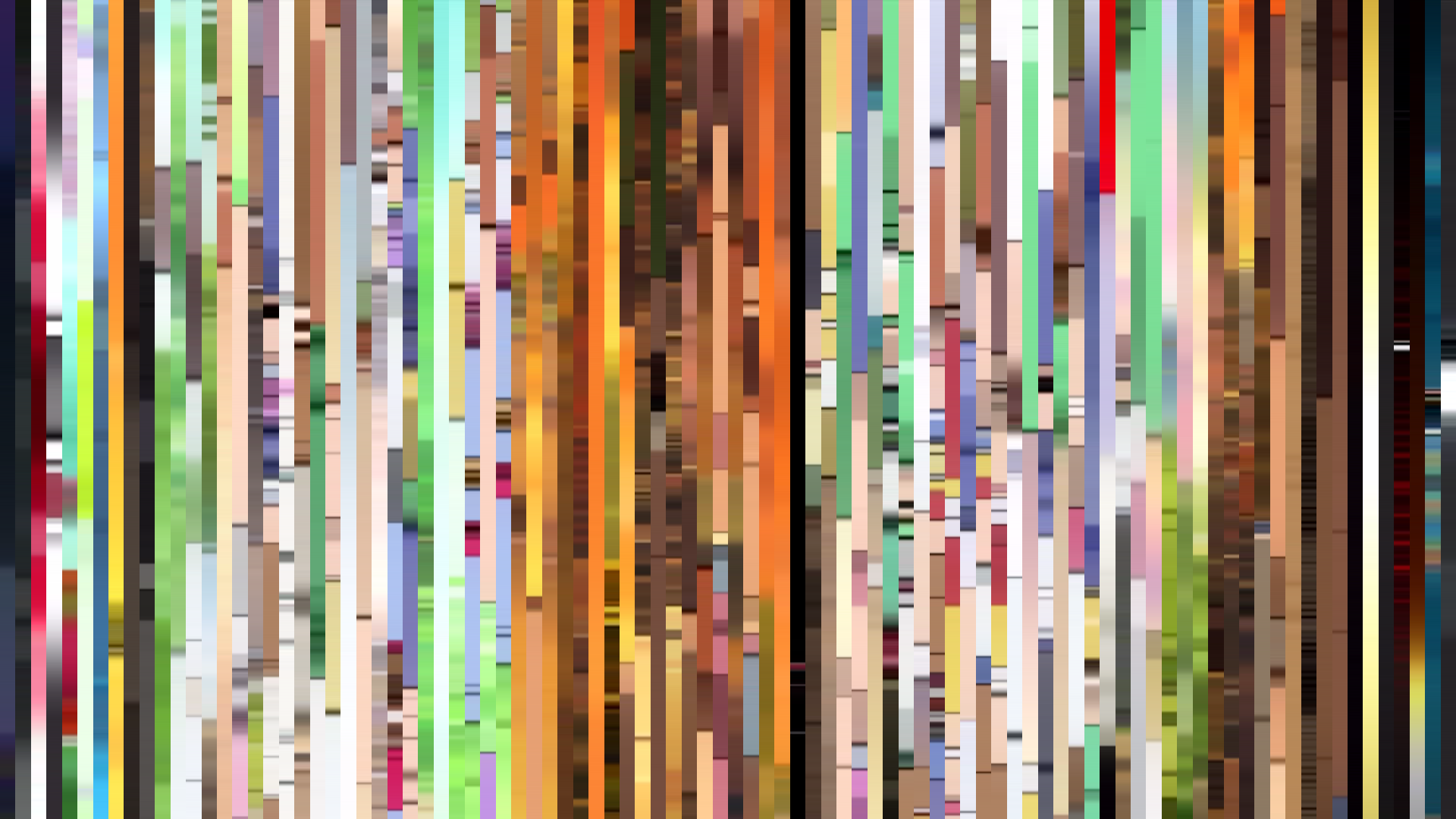
Slice · 30s
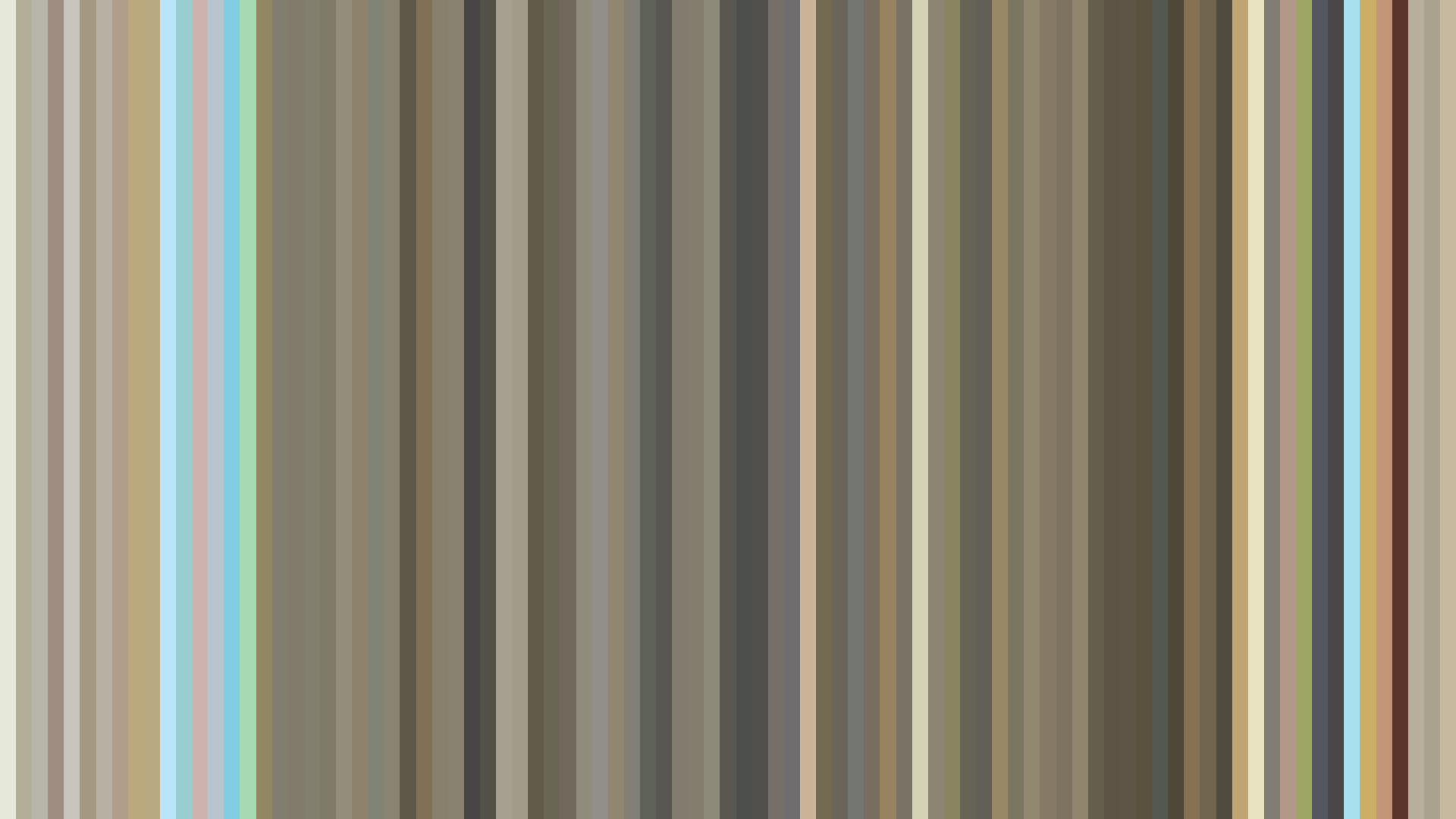
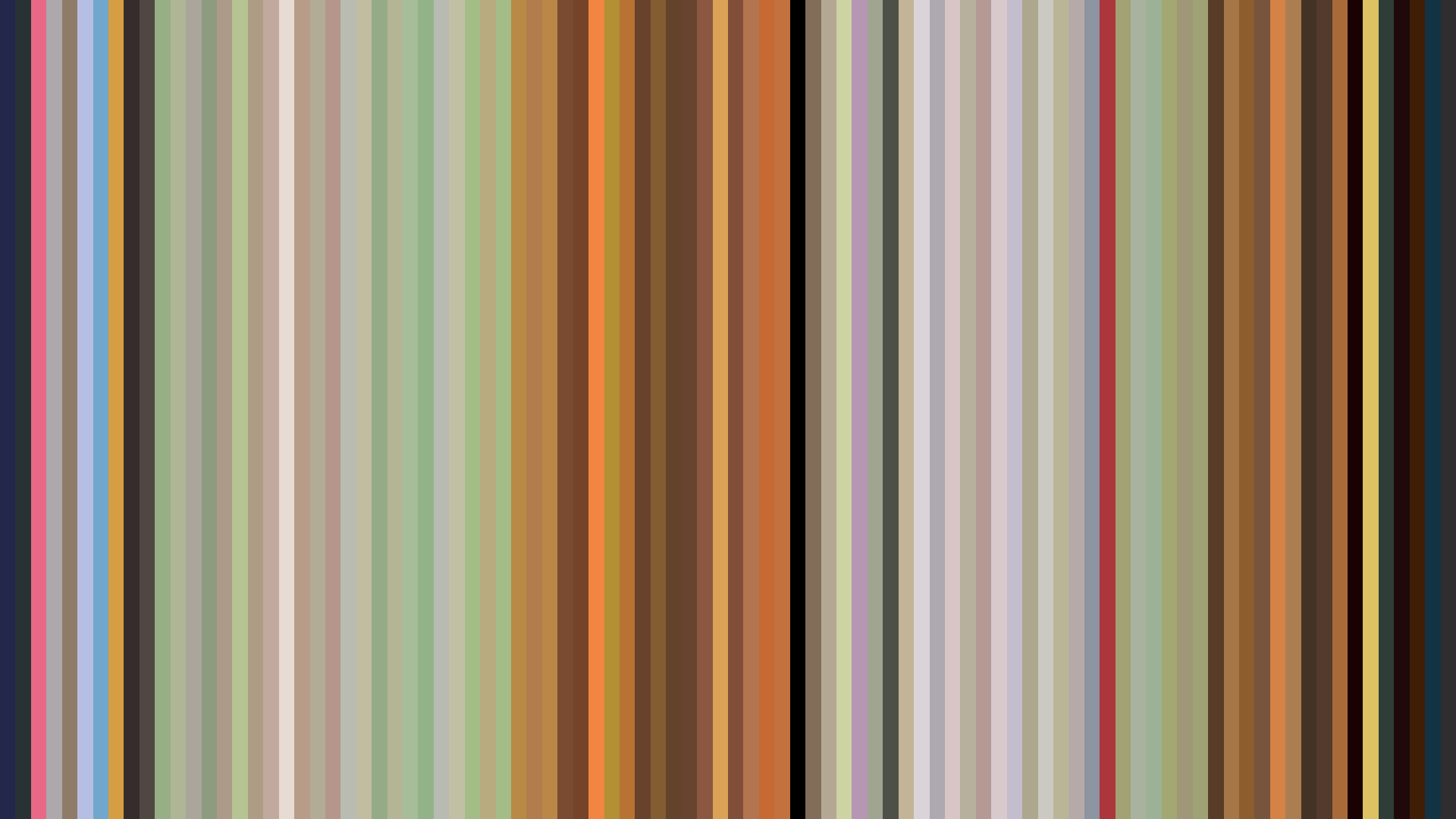
Avg · 30s
Baccano!'s barcode is a study in controlled chaos. The palette, dominated by Red-Orange at 83%, is nonetheless choked with desaturated browns and taupes—the visual residue of 1930s grain and grime. Director Takahiro Omori and art director Yuji Ikeda didn't just set the series in Prohibition-era America; they soaked every frame in the sepia of yellowed newspaper columns and the rust of a blood-spattered railway. The arc-down structure (opening 0.51, middle 0.366, closing 0.447) maps perfectly onto the show's narrative architecture: the warm, inviting chaos of the first episode's
Brightness Arc (episode progression)
Hue Distribution
Act Breakdown
Opening
0.510
Middle
0.366
Closing
0.447
Avg Brightness
0.292
Avg Saturation
0.137
Warmth
0.538
Color Palette
#21201D
#615F57
#A2A196
#4F4738
#938B71
#47372D
#E1E1D8
#D5CBAD
3-Act Color Story
Opening
Middle
Closing
Color Twins
Perceptually nearest palettes — measured in OKLab space, not RGB
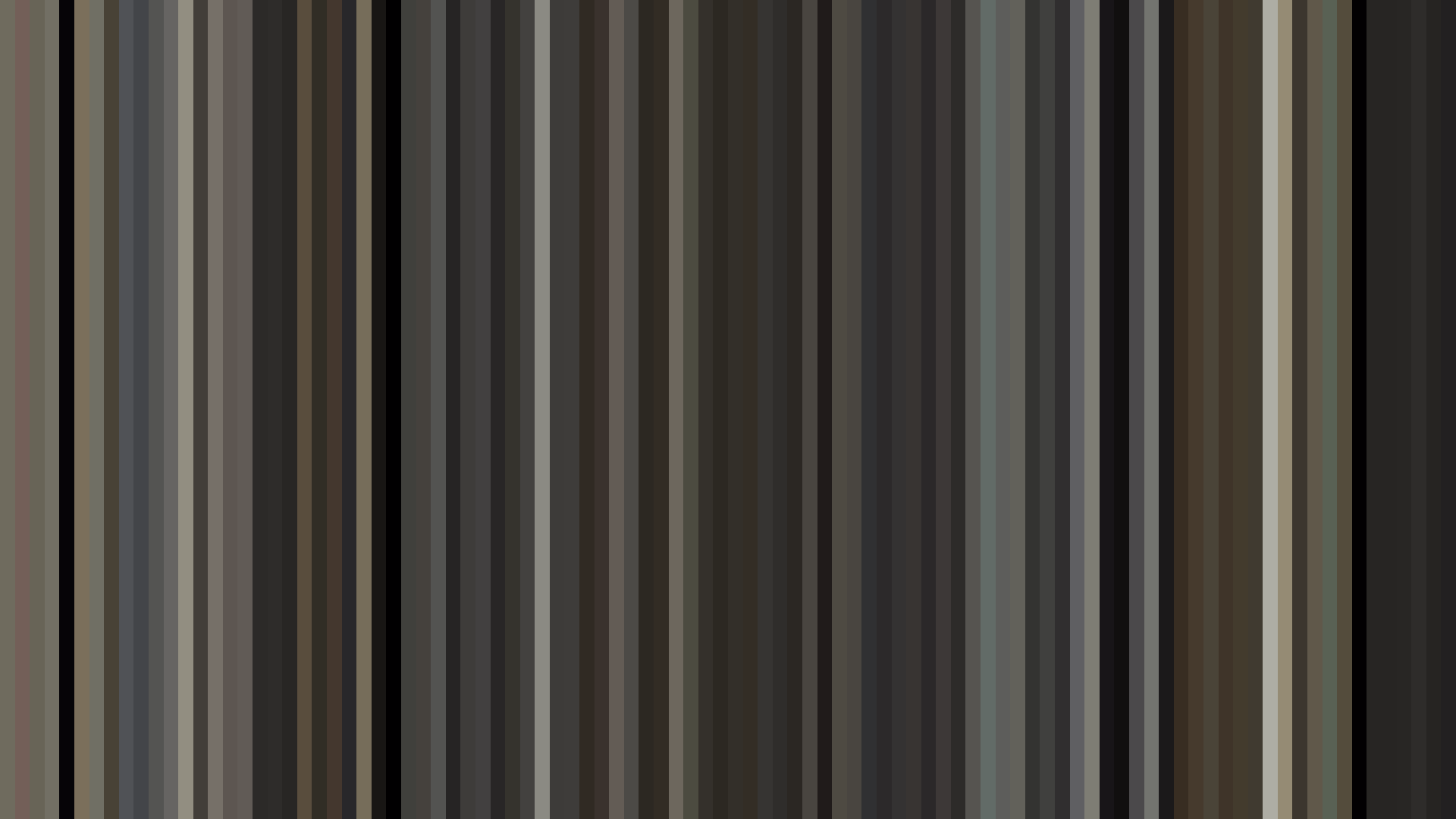
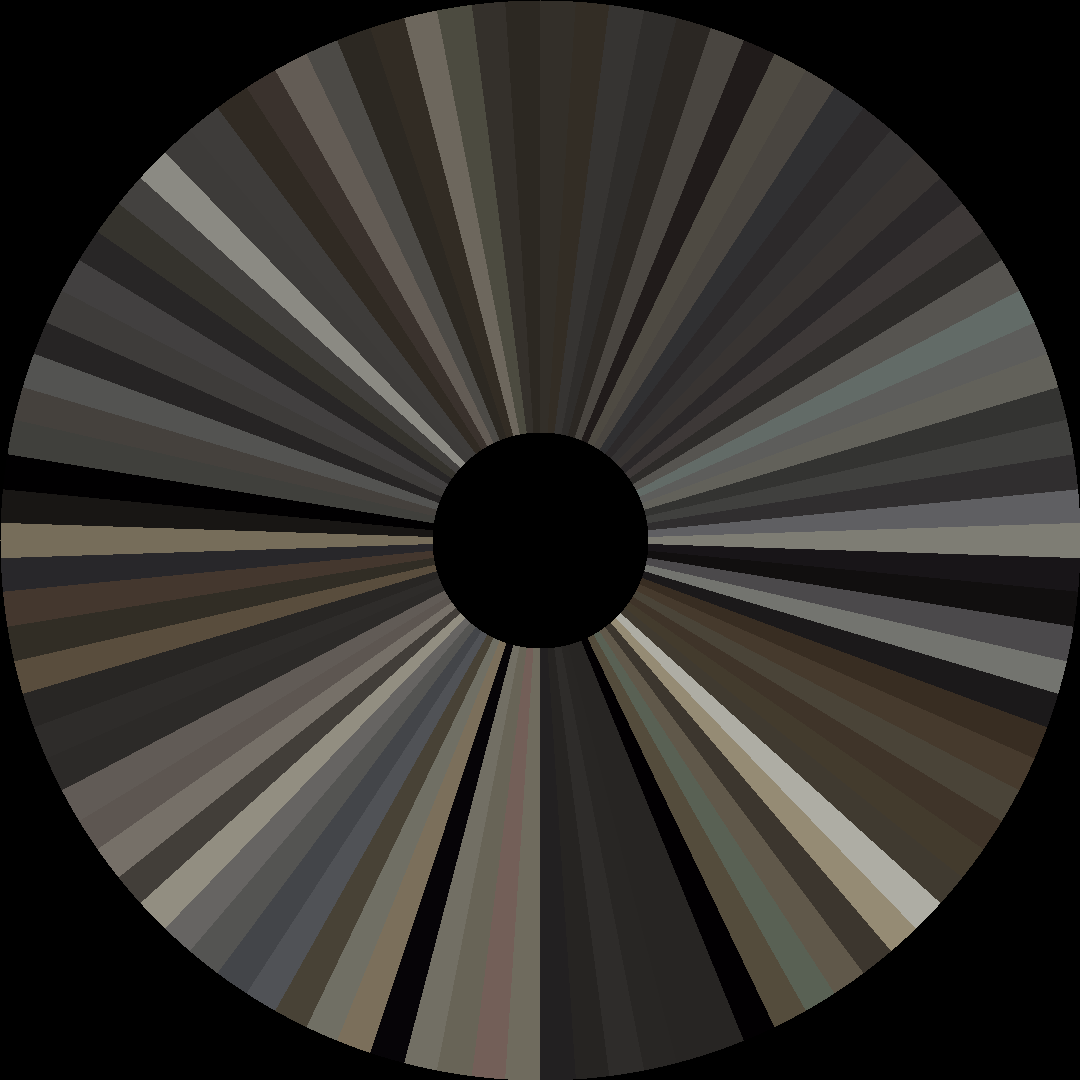






Baccano!'s barcode is a study in controlled chaos. The palette, dominated by Red-Orange at 83%, is nonetheless choked with desaturated browns and taupes—the visual residue of 1930s grain and grime. Director Takahiro Omori and art director Yuji Ikeda didn't just set the series in Prohibition-era America; they soaked every frame in the sepia of yellowed newspaper columns and the rust of a blood-spattered railway. The arc-down structure (opening 0.51, middle 0.366, closing 0.447) maps perfectly onto the show's narrative architecture: the warm, inviting chaos of the first episode's