Edit Pace — frame-to-frame color delta (bright = fast cuts)
Color Temperature — warm (gold) vs cool (teal) per frame
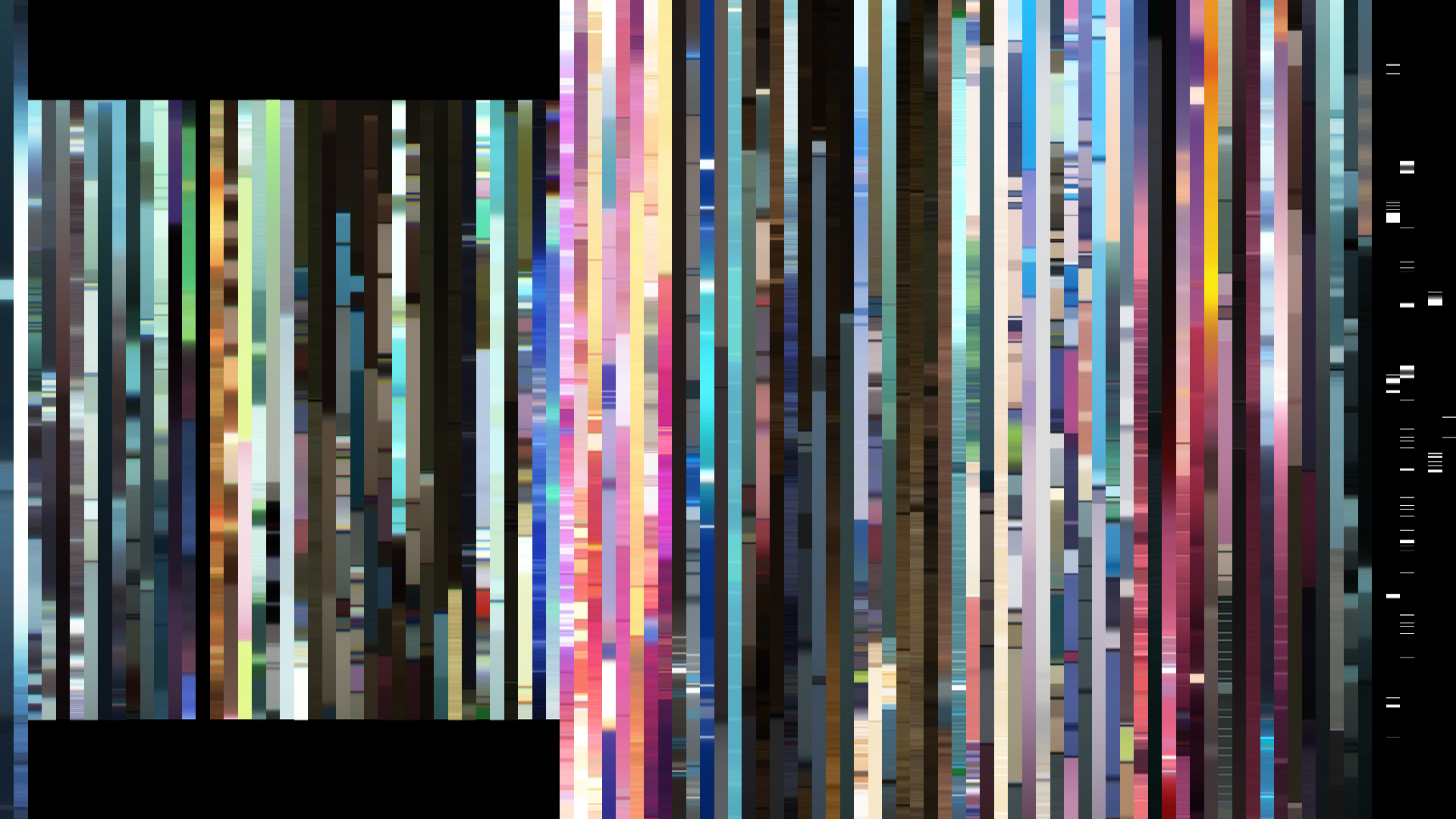
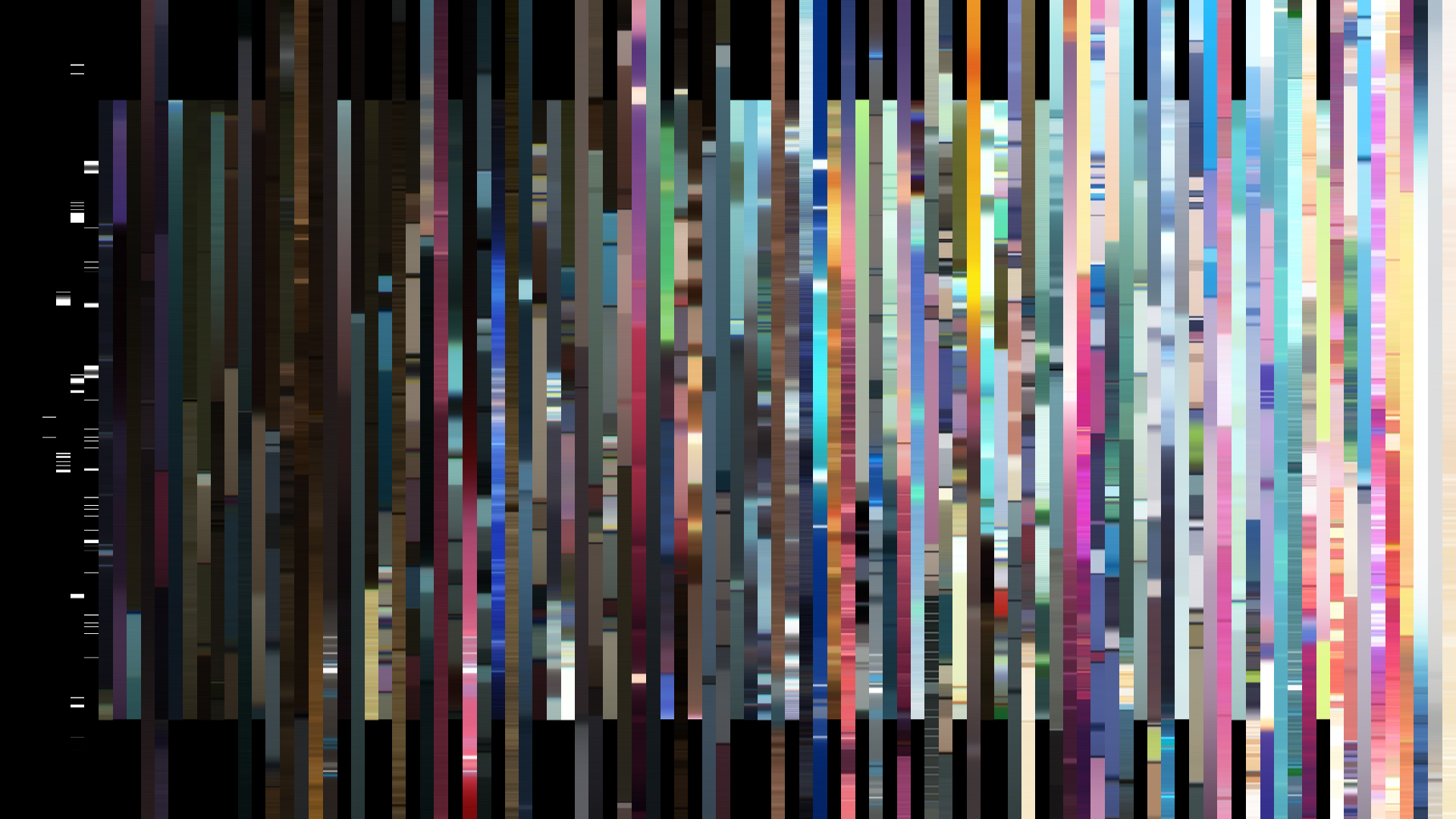
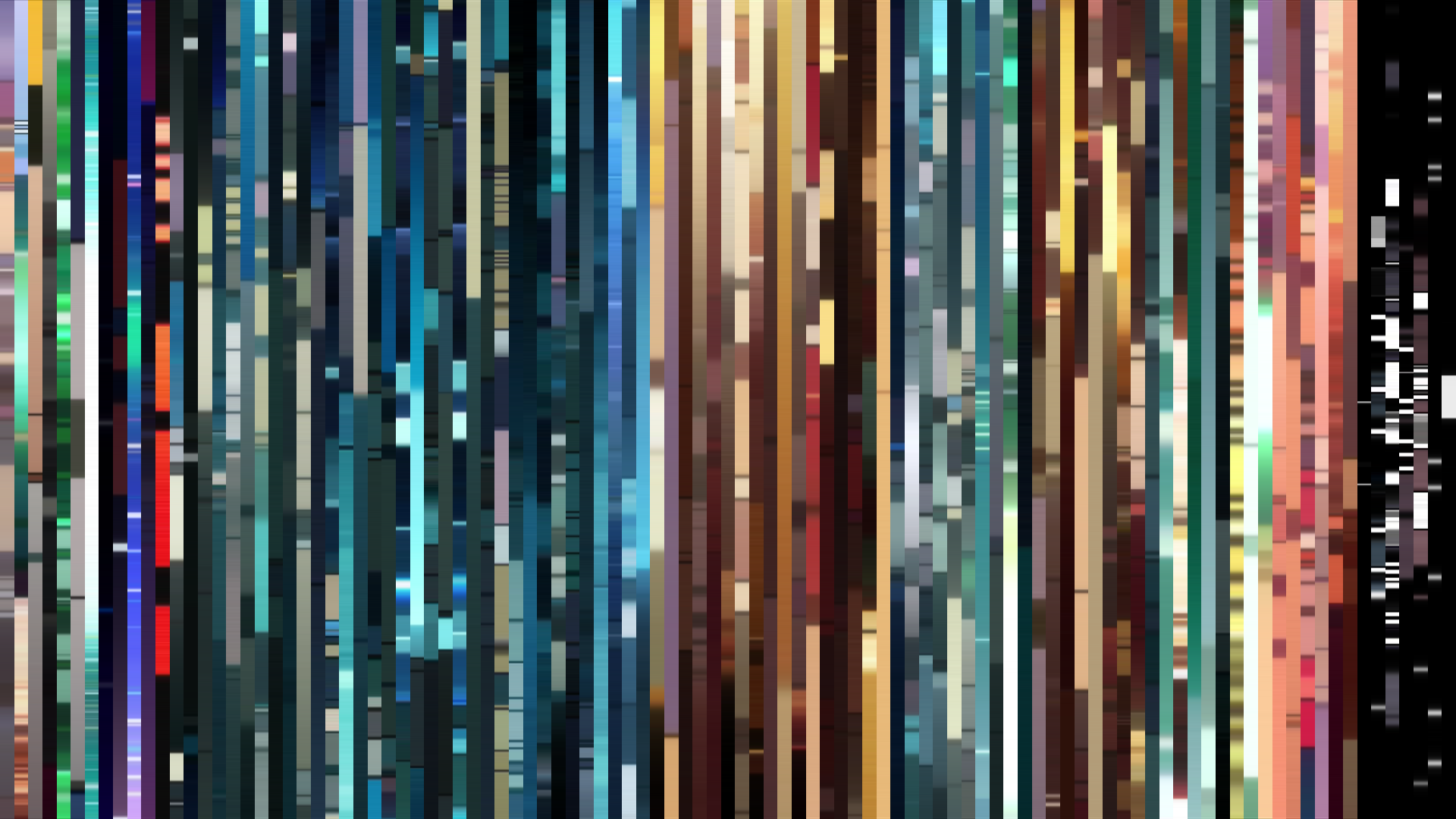
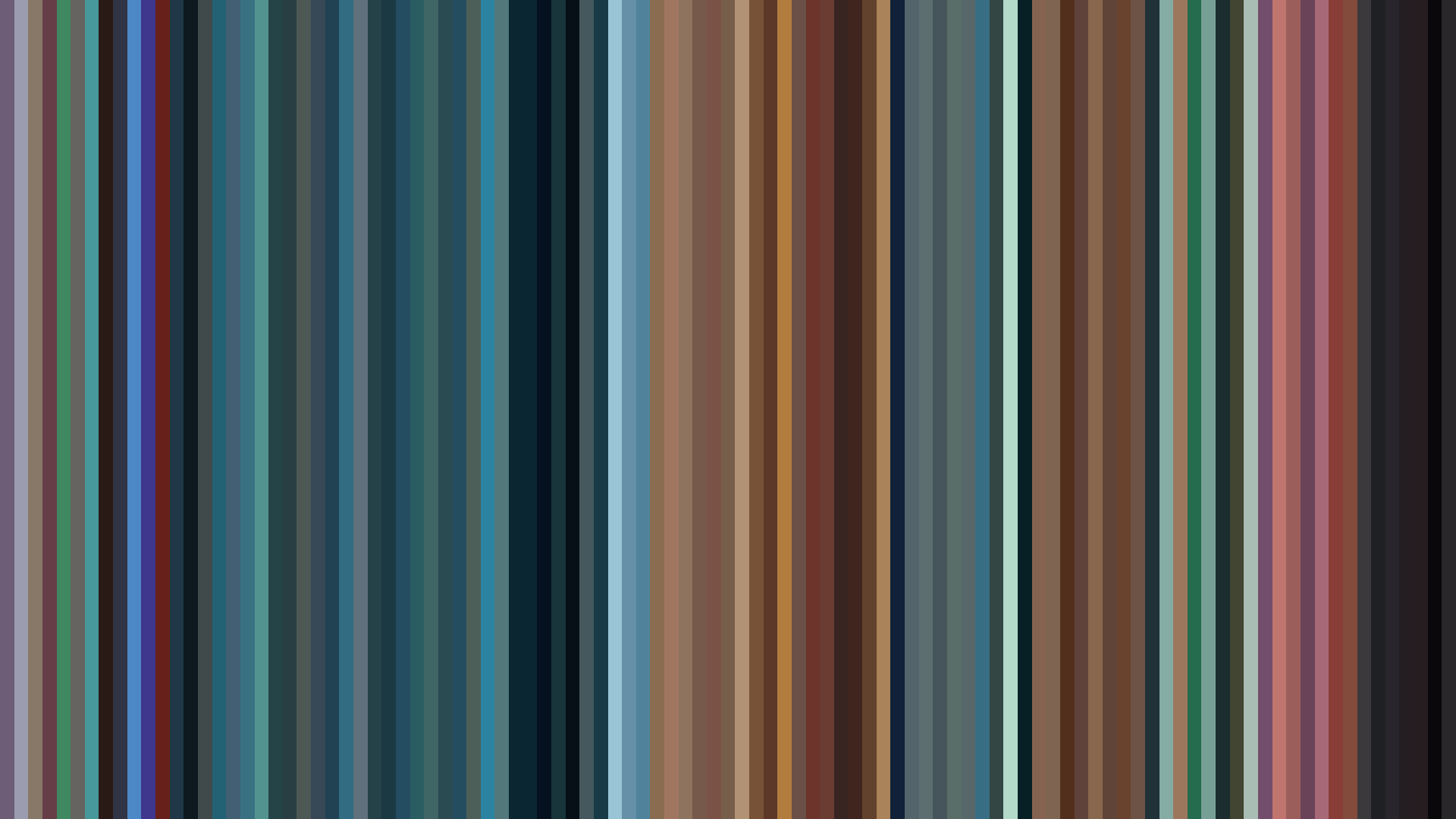
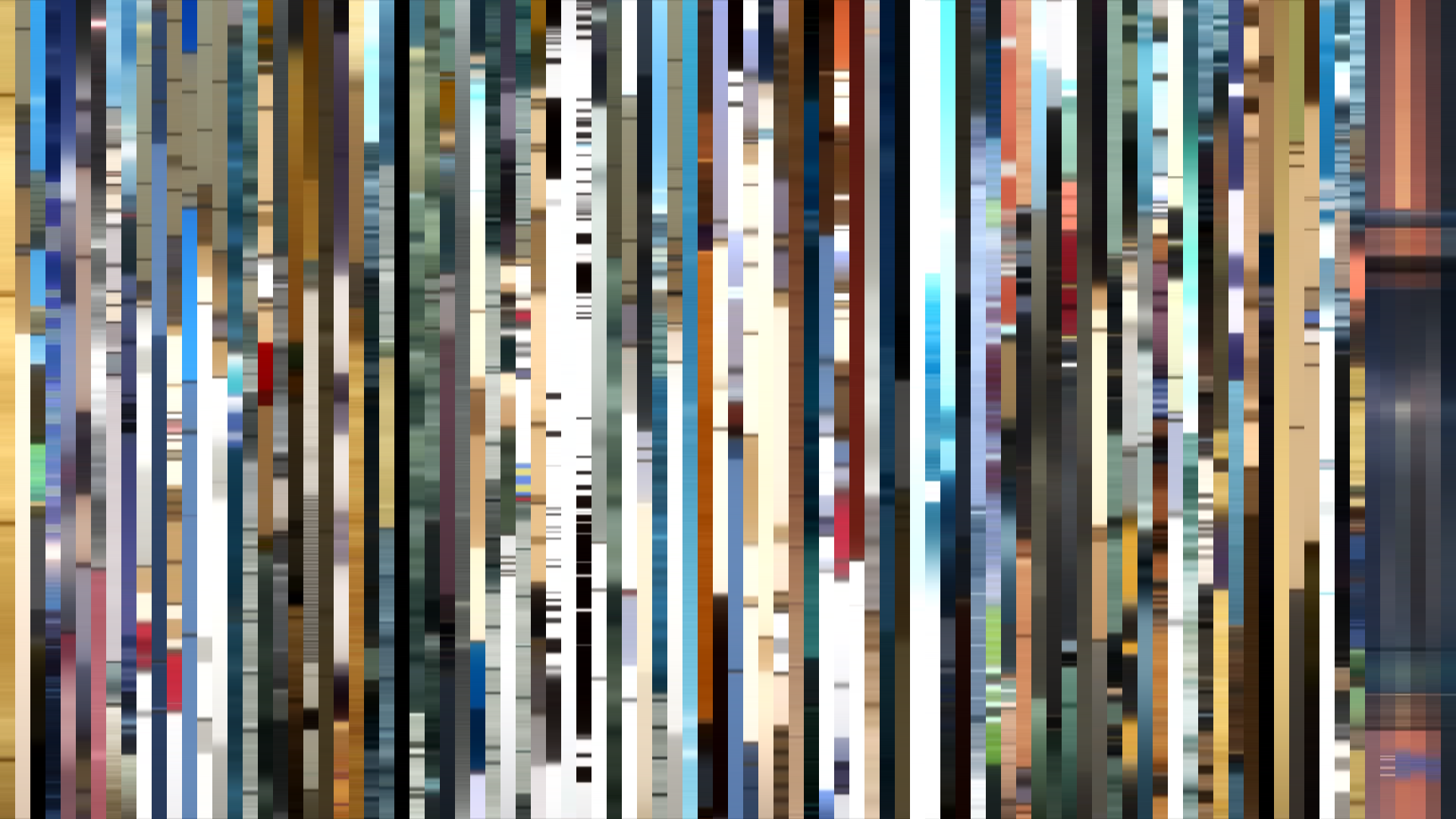
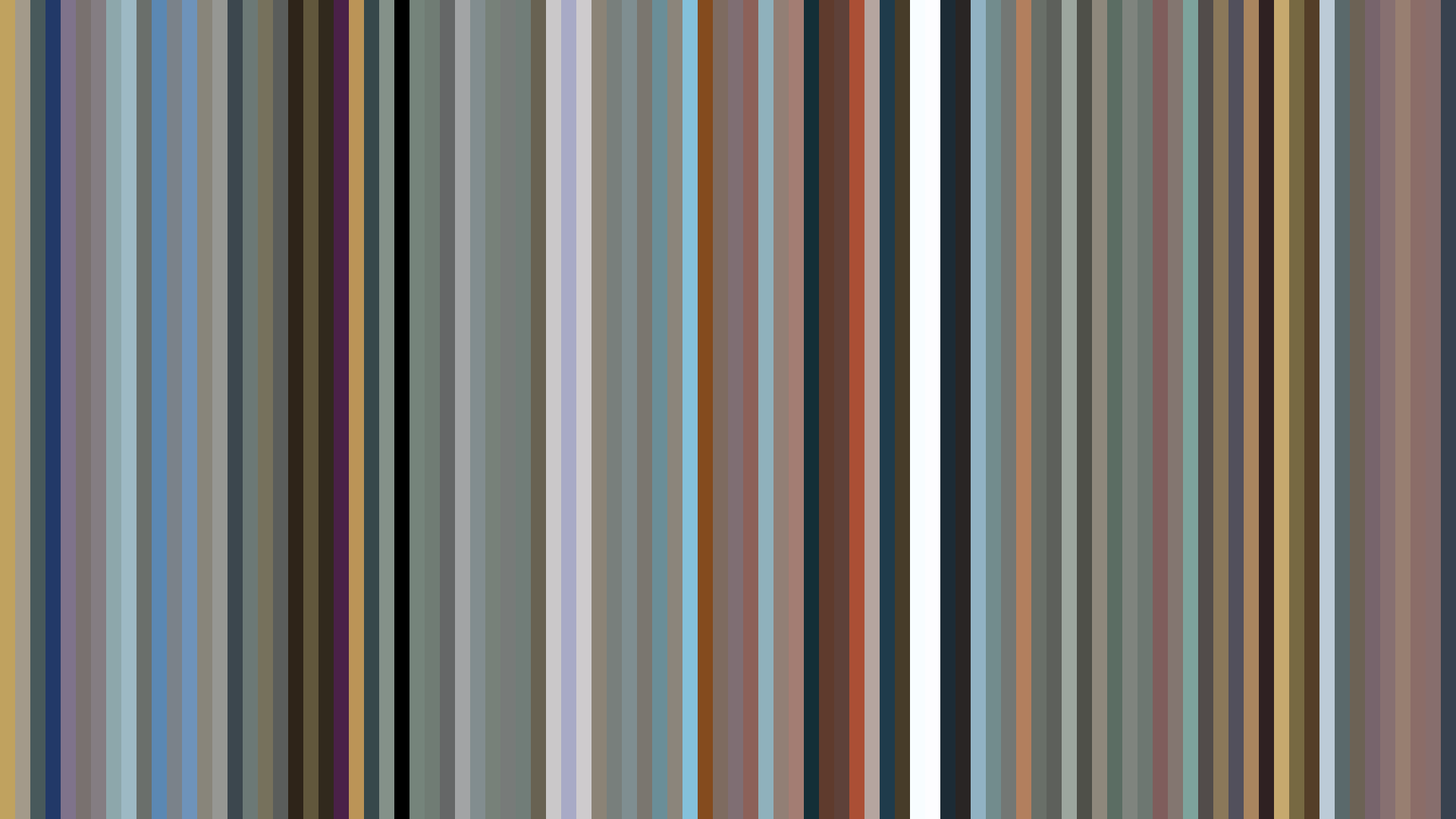
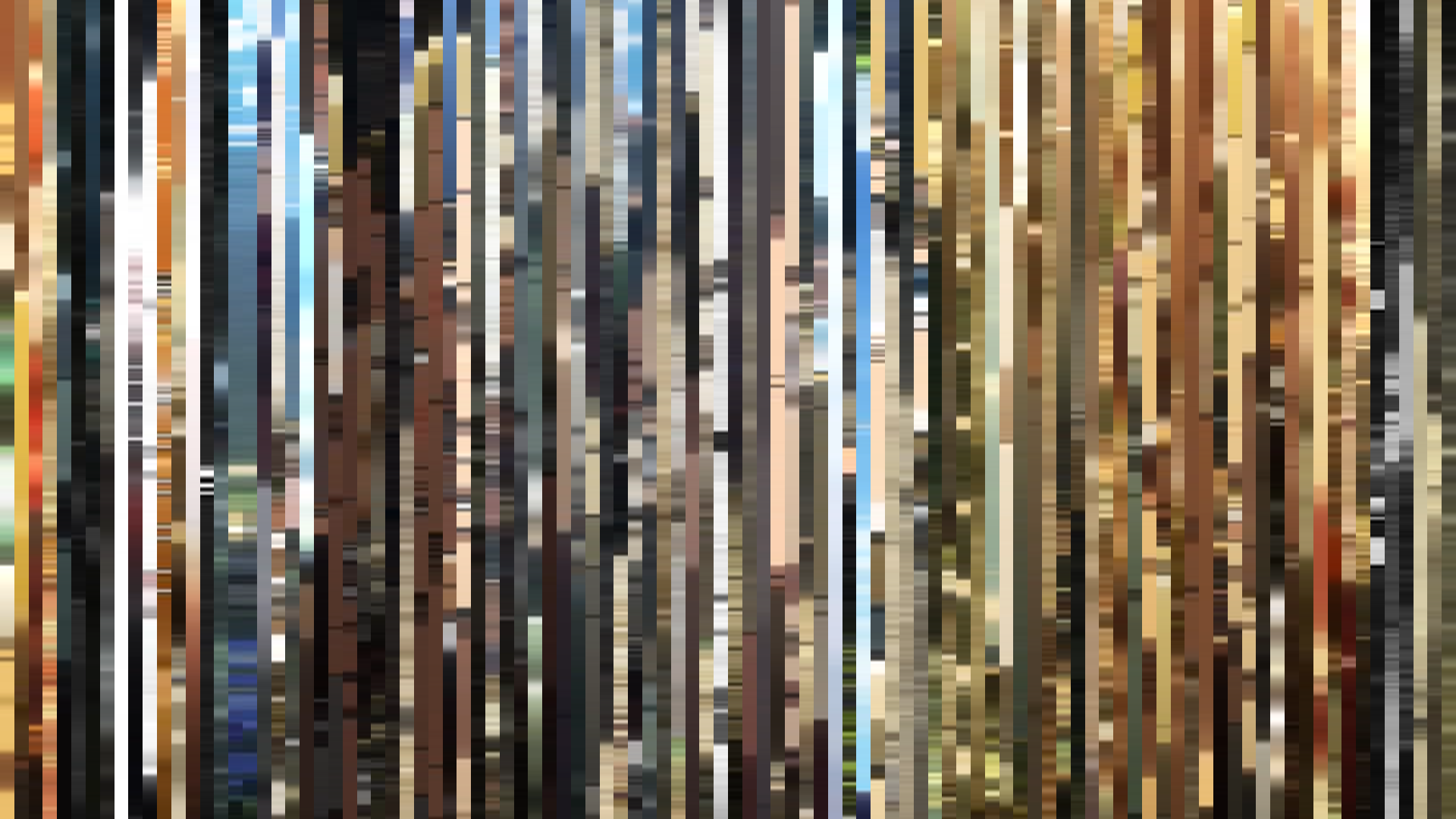
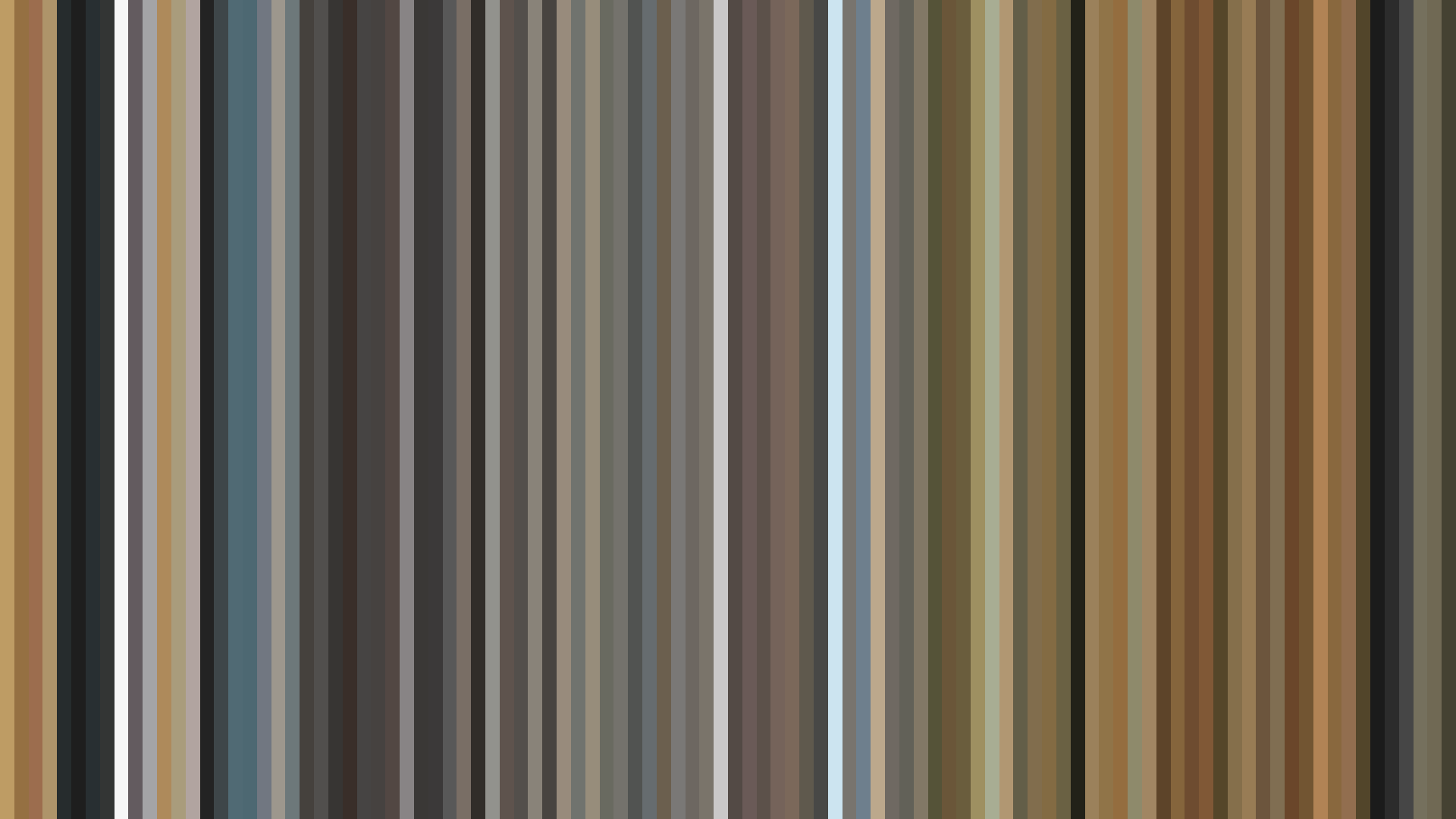
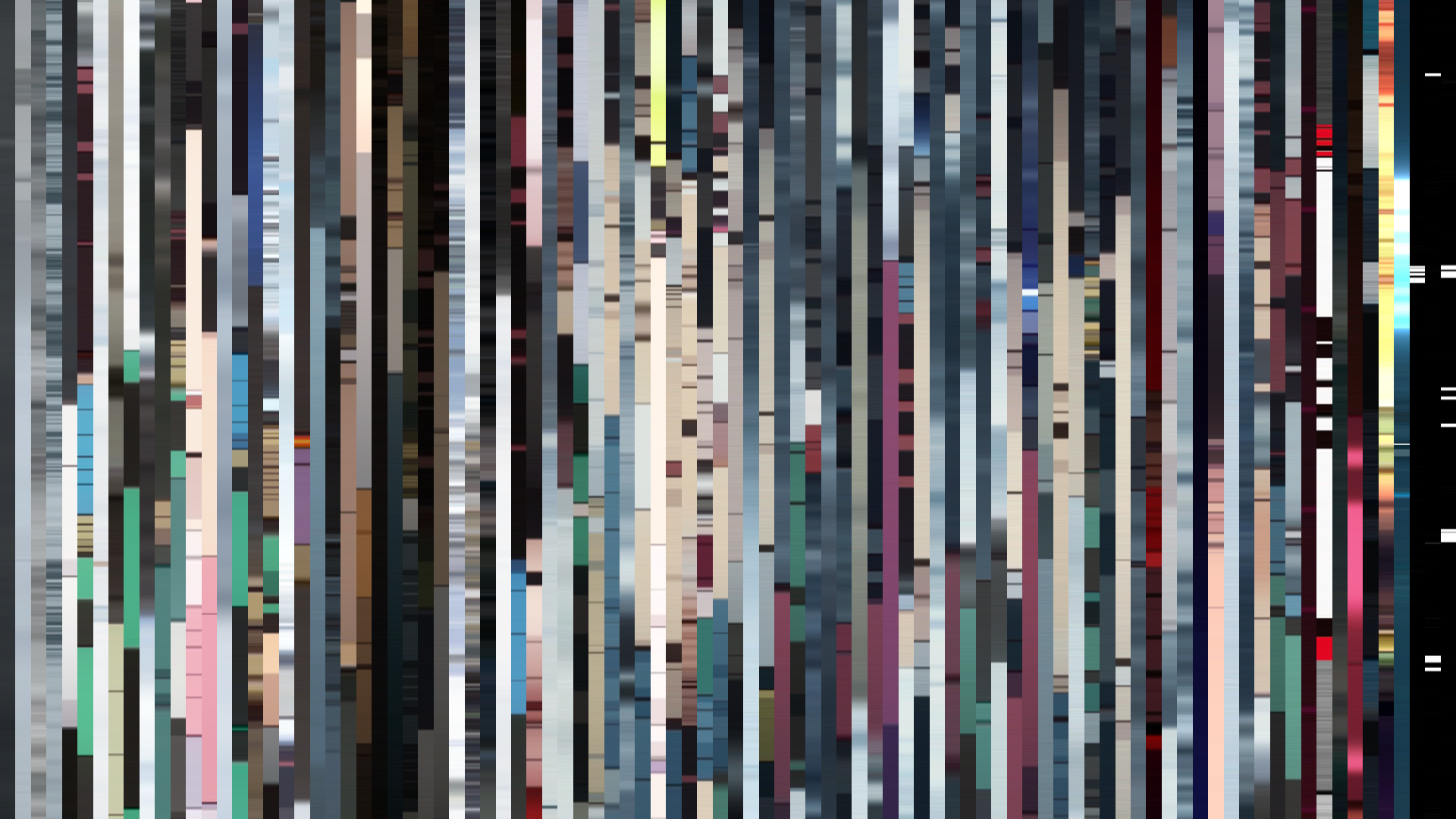
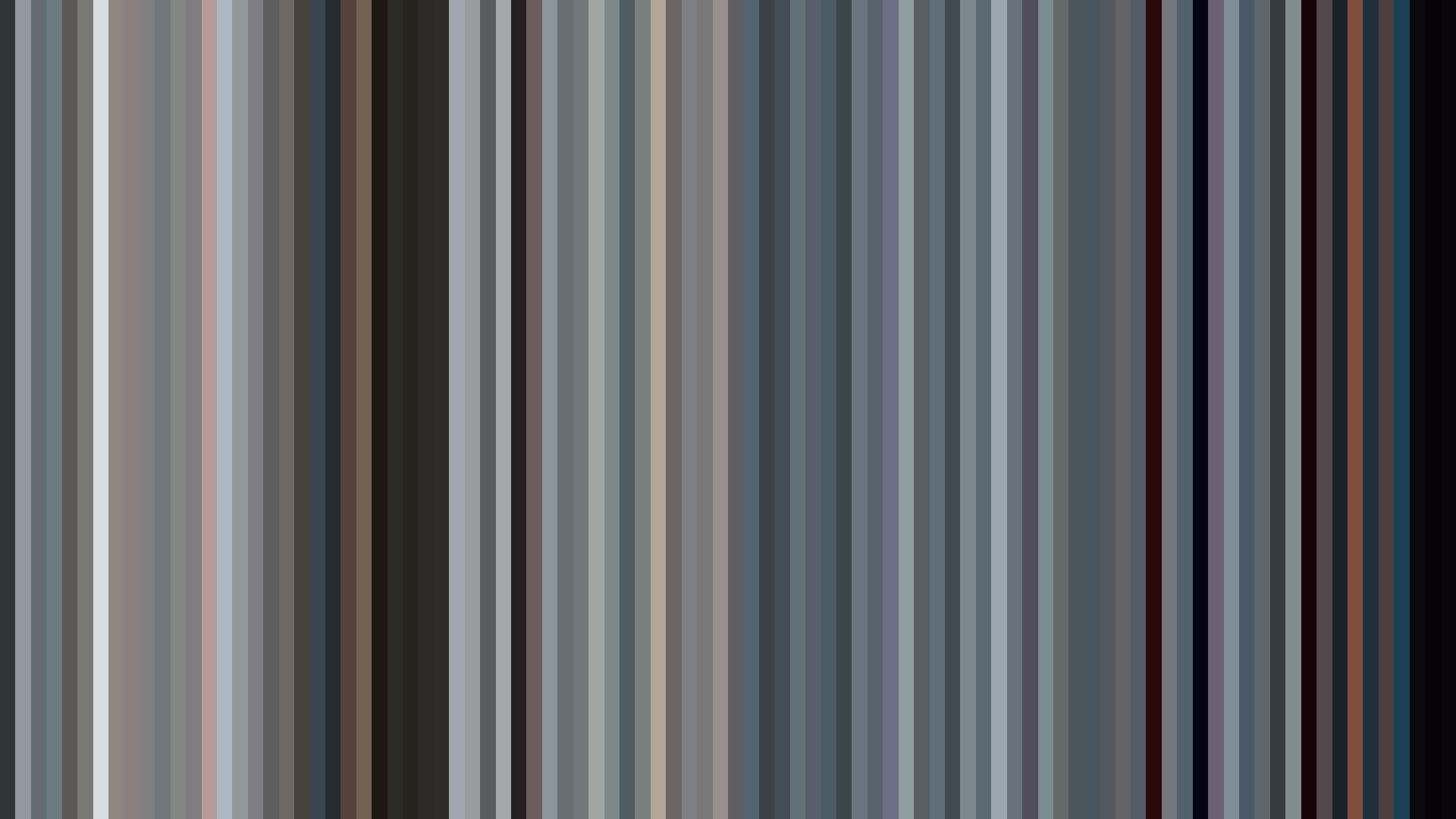
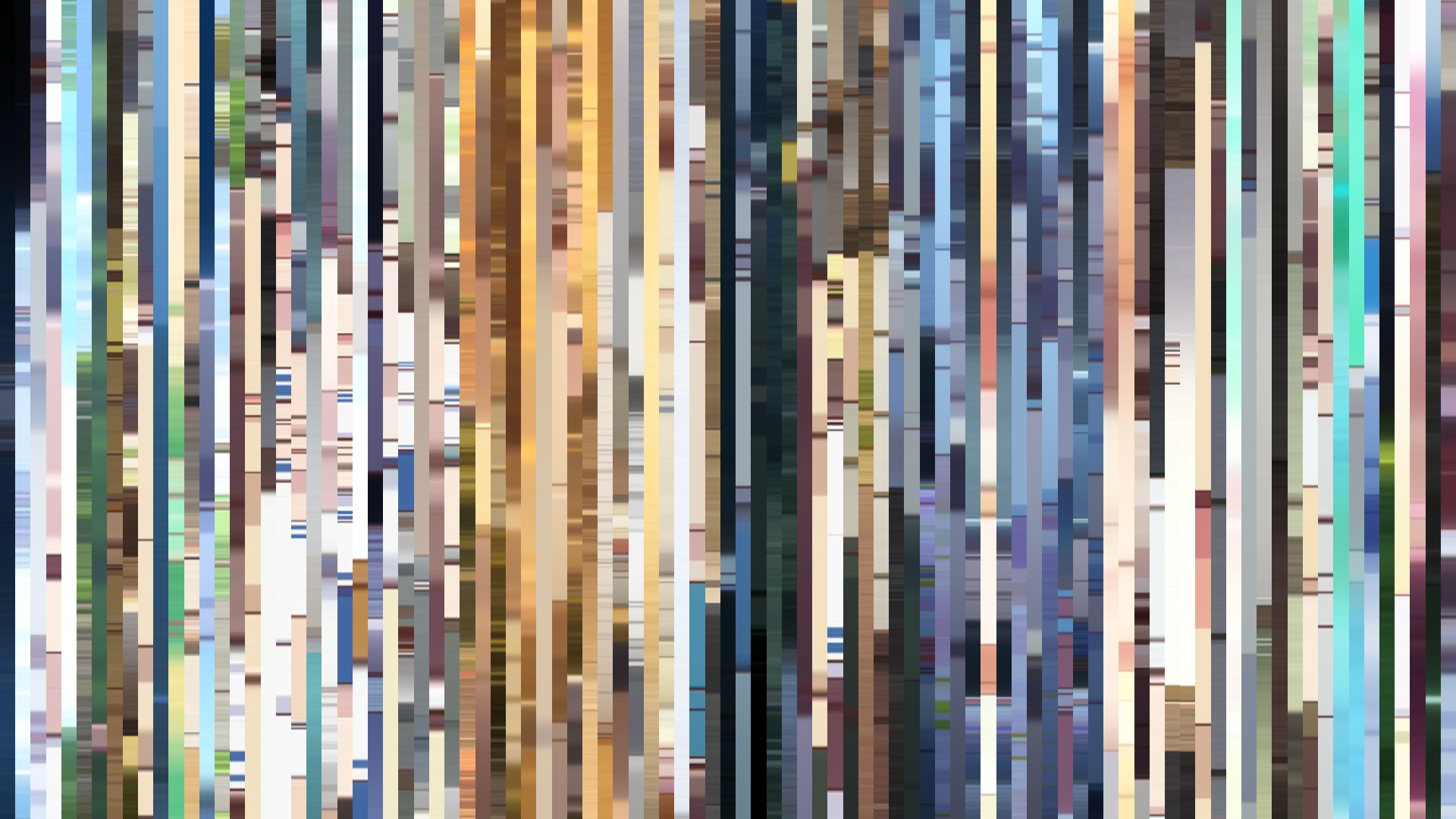
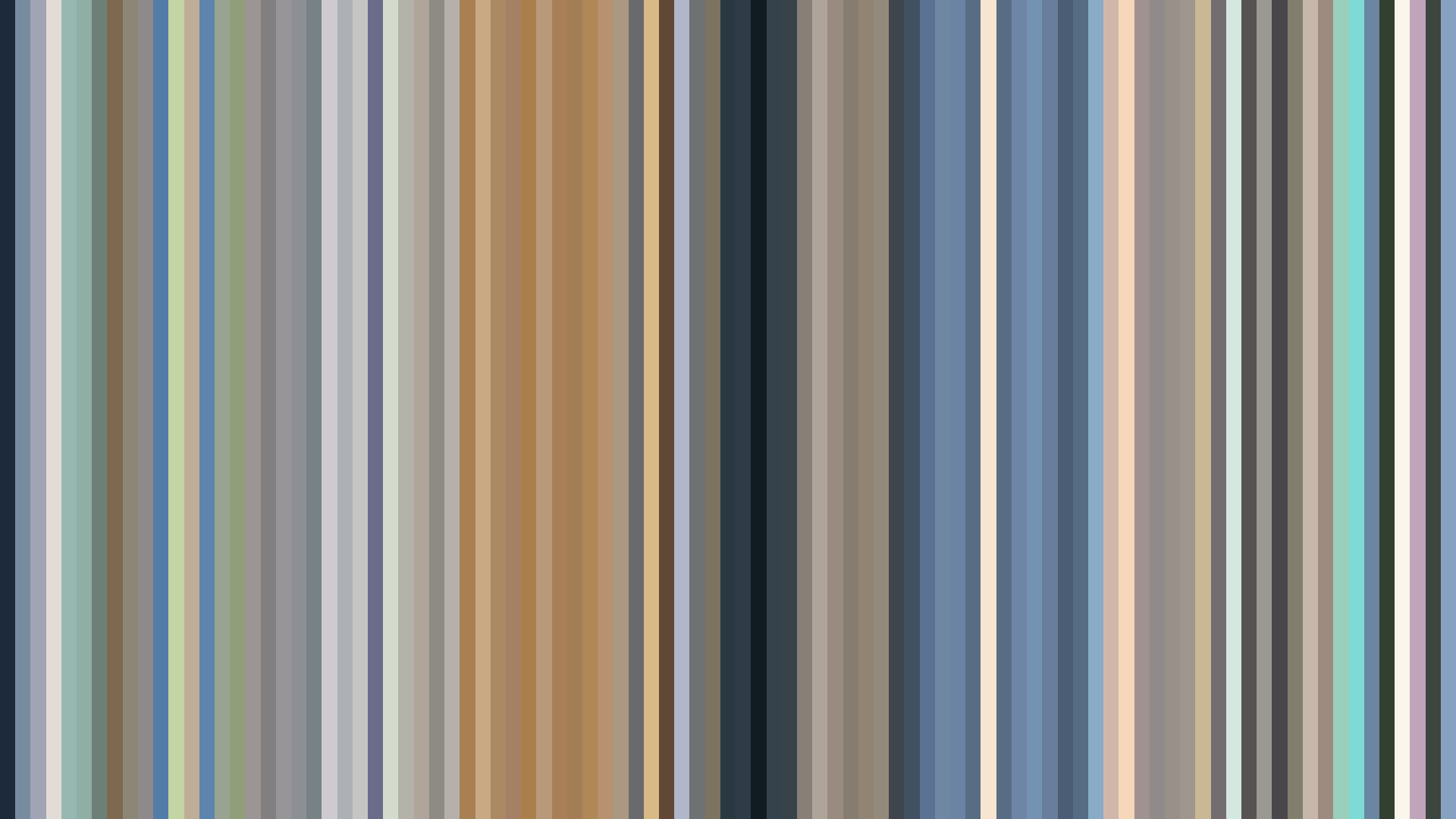
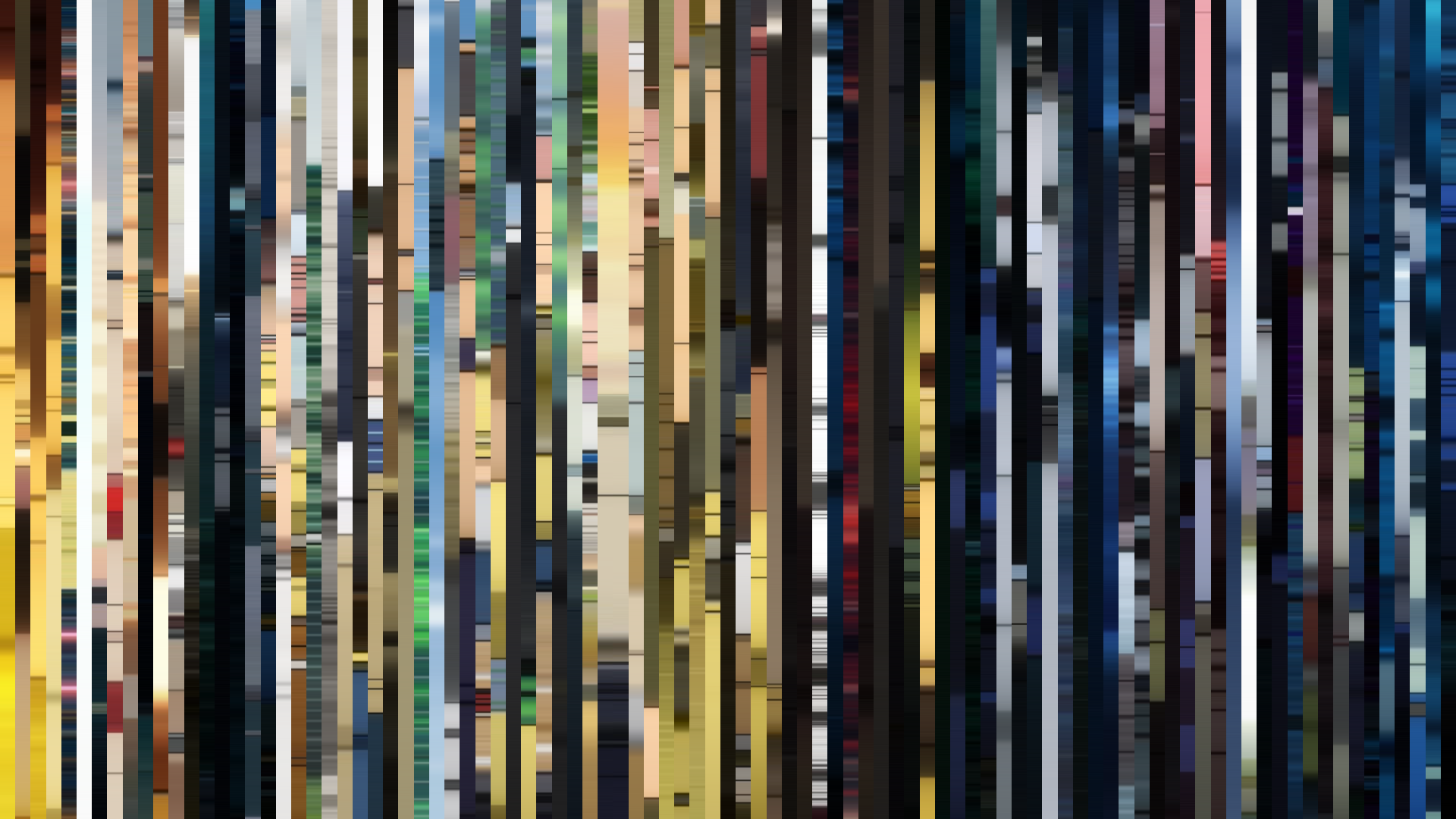
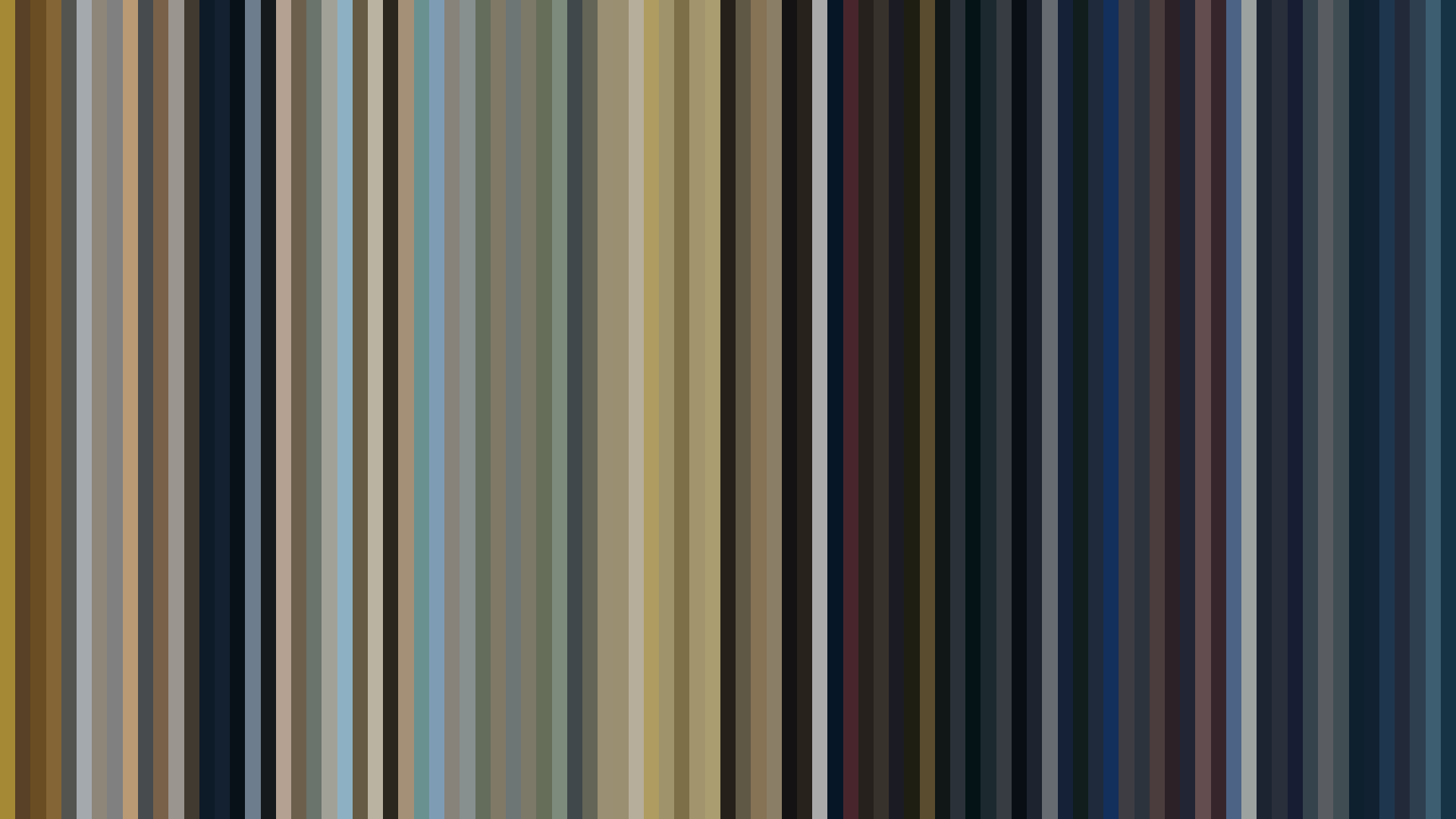
Frame Density Comparison — every 2nd vs every 4th frame
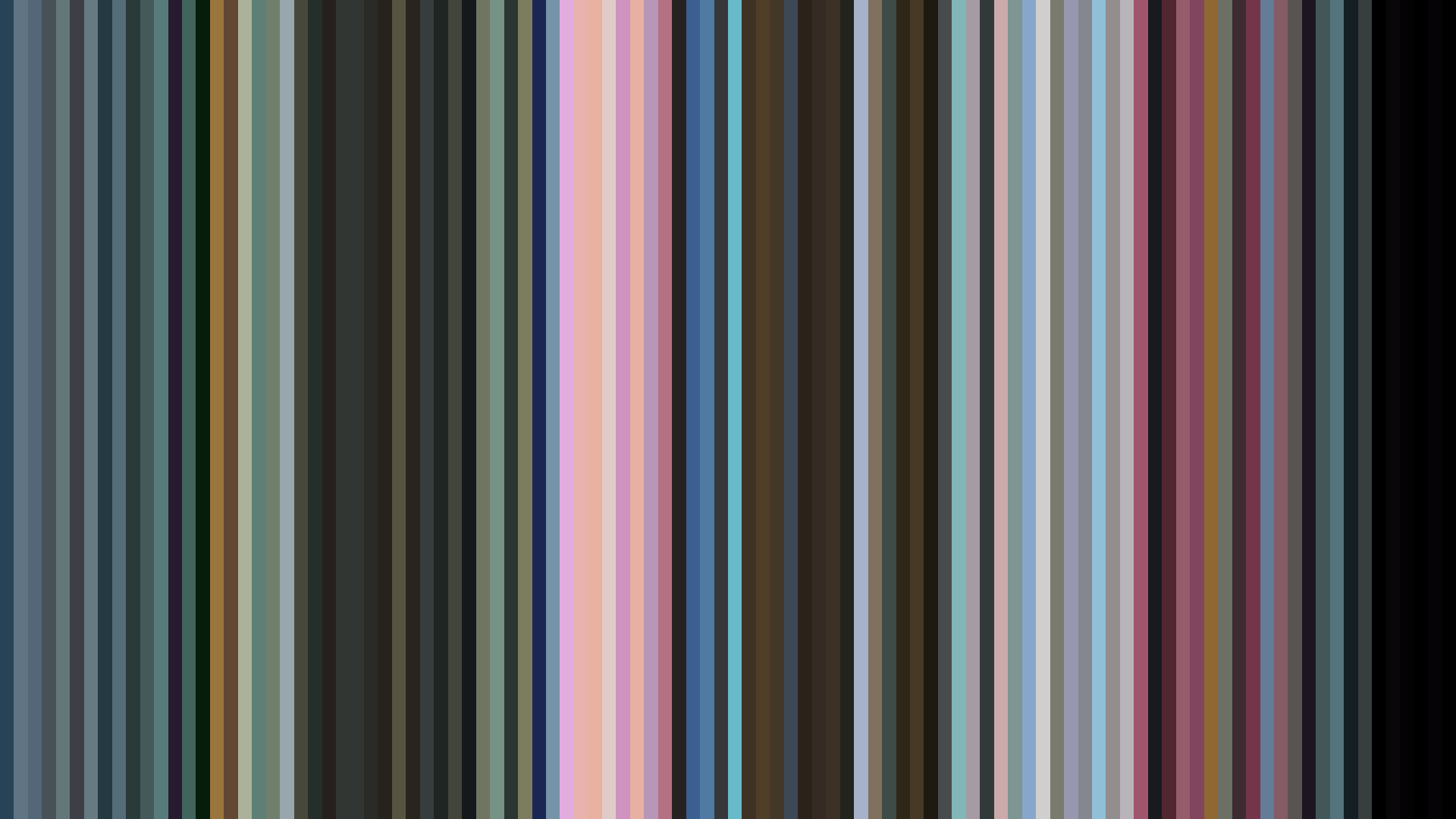
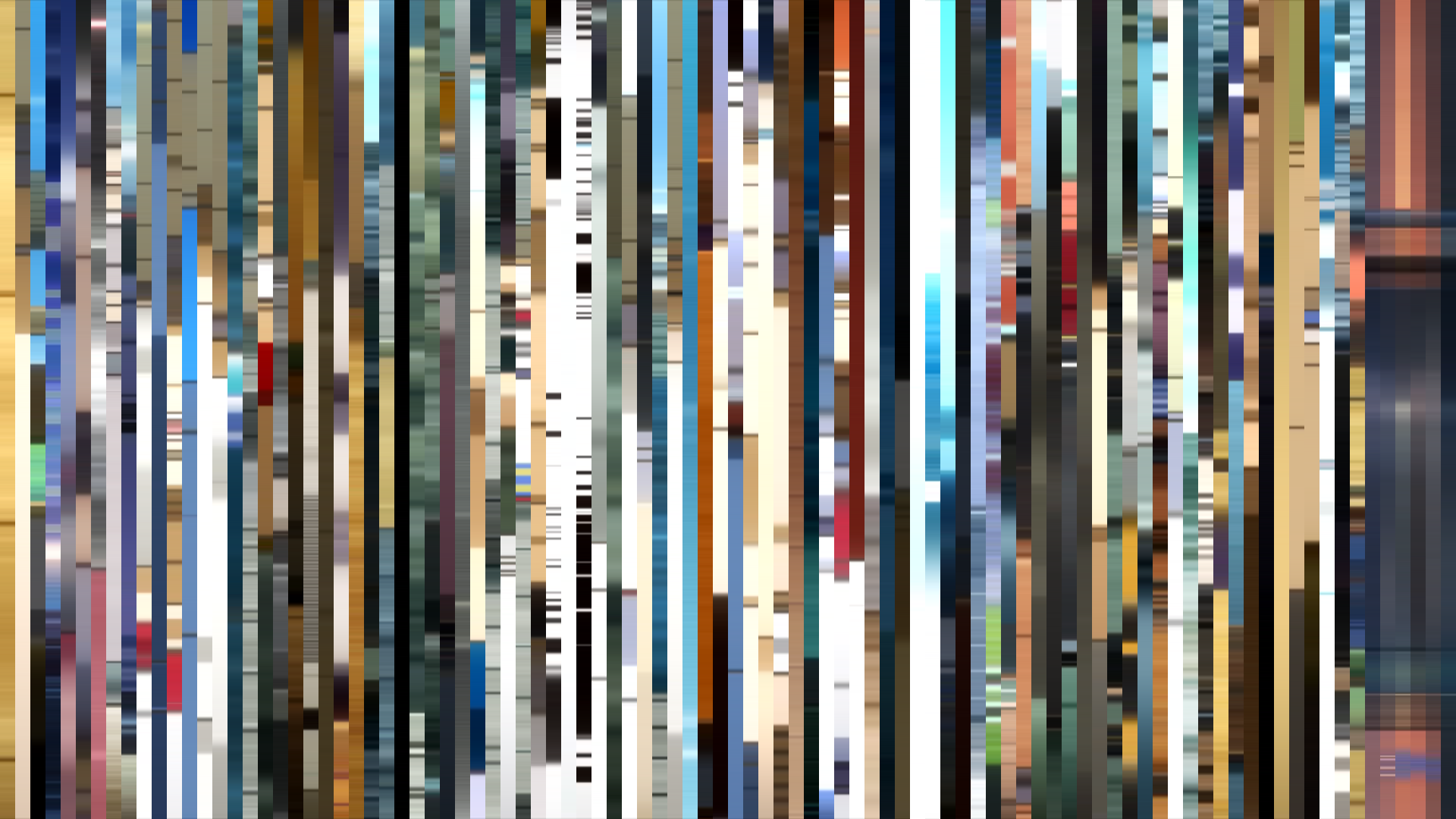
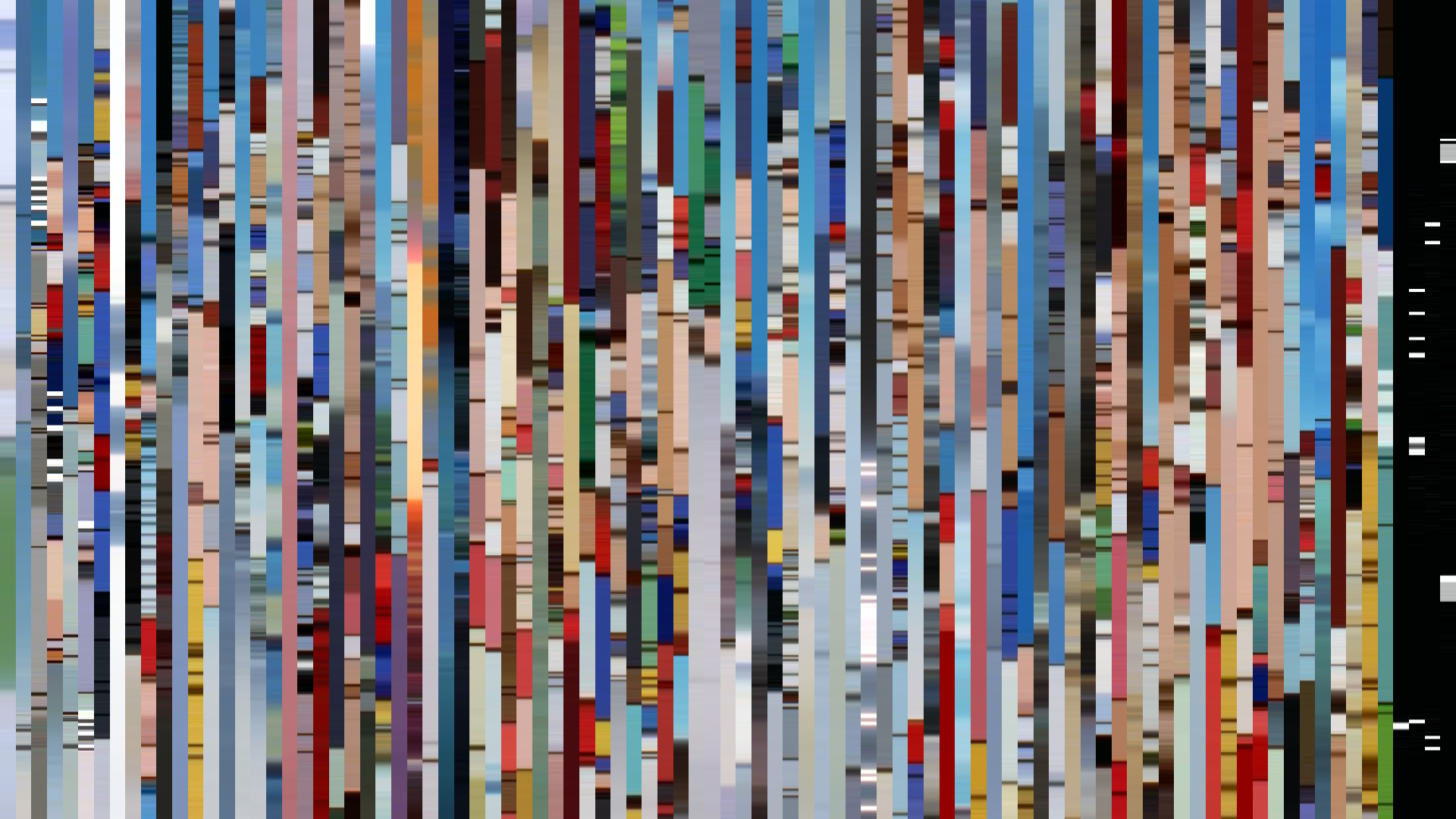
Slice · 15s
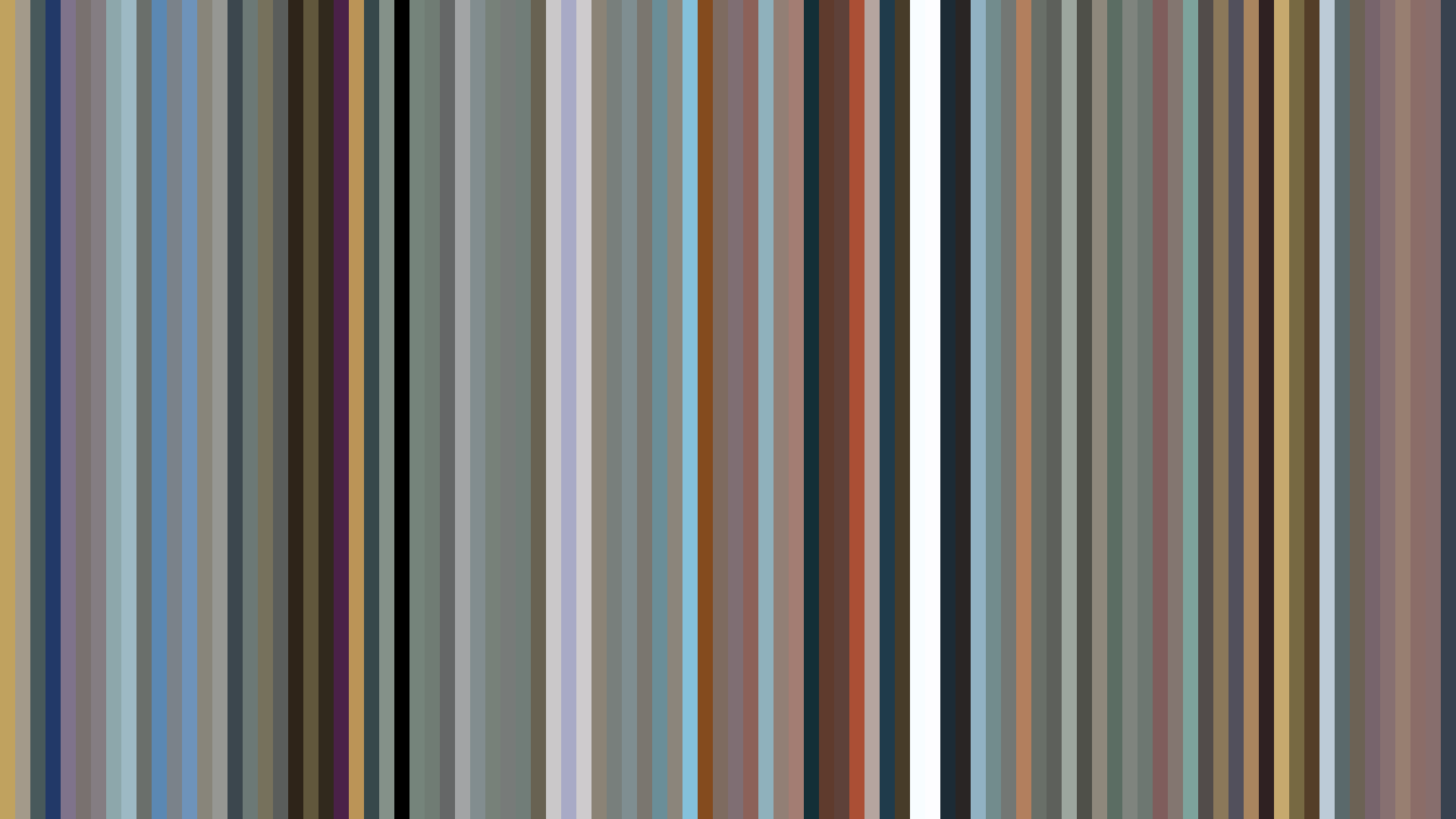
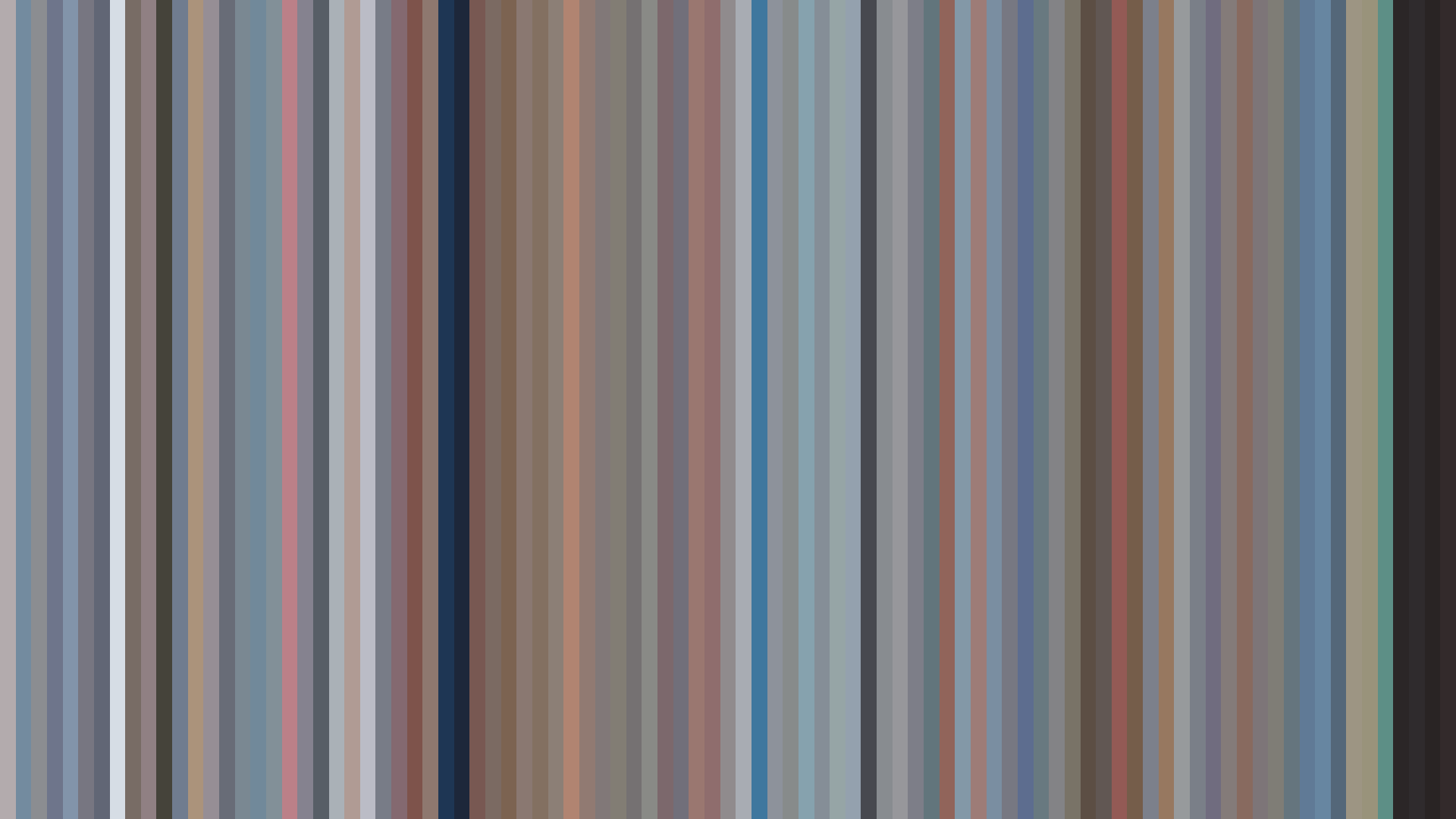
Avg · 15s
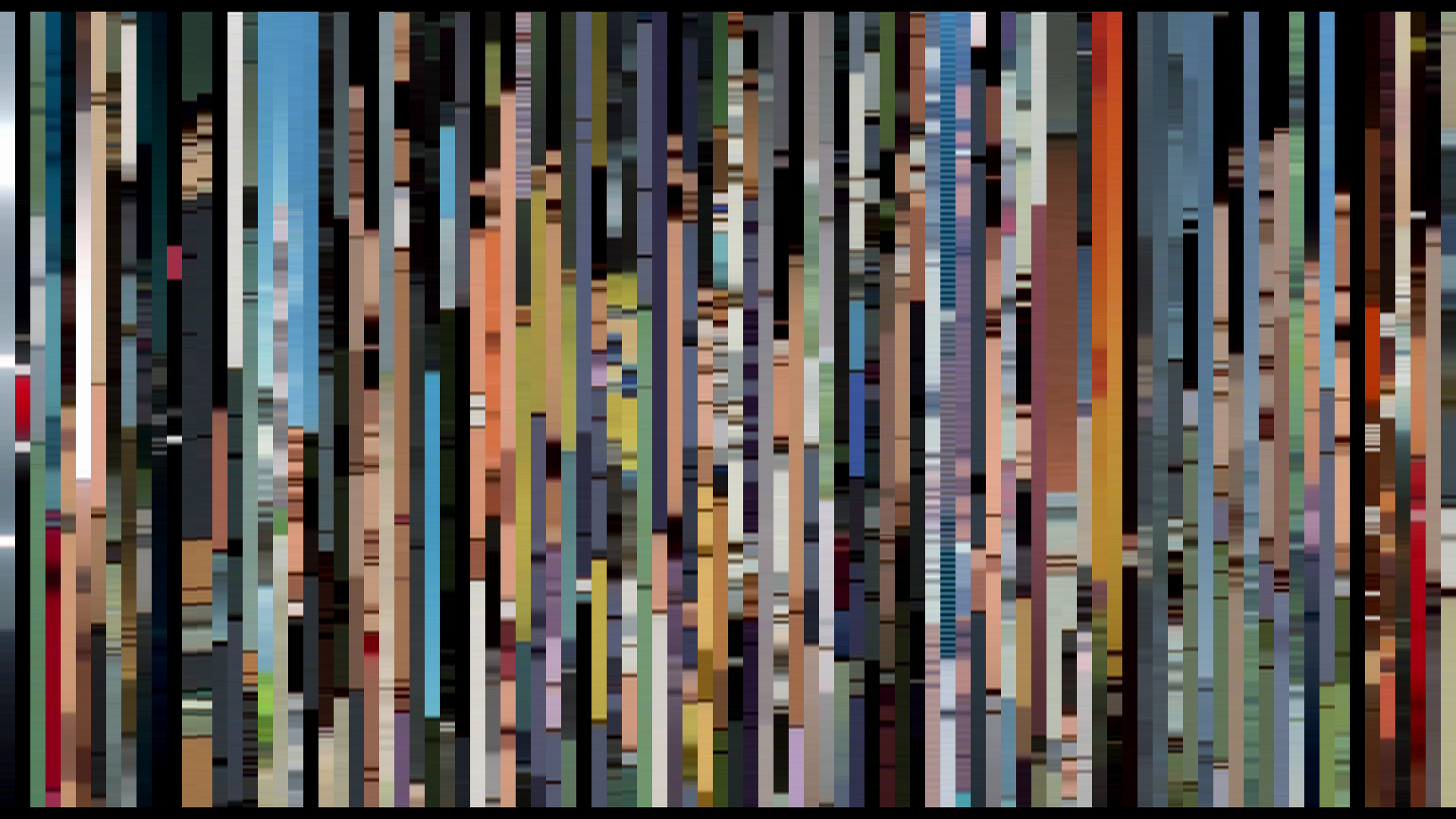
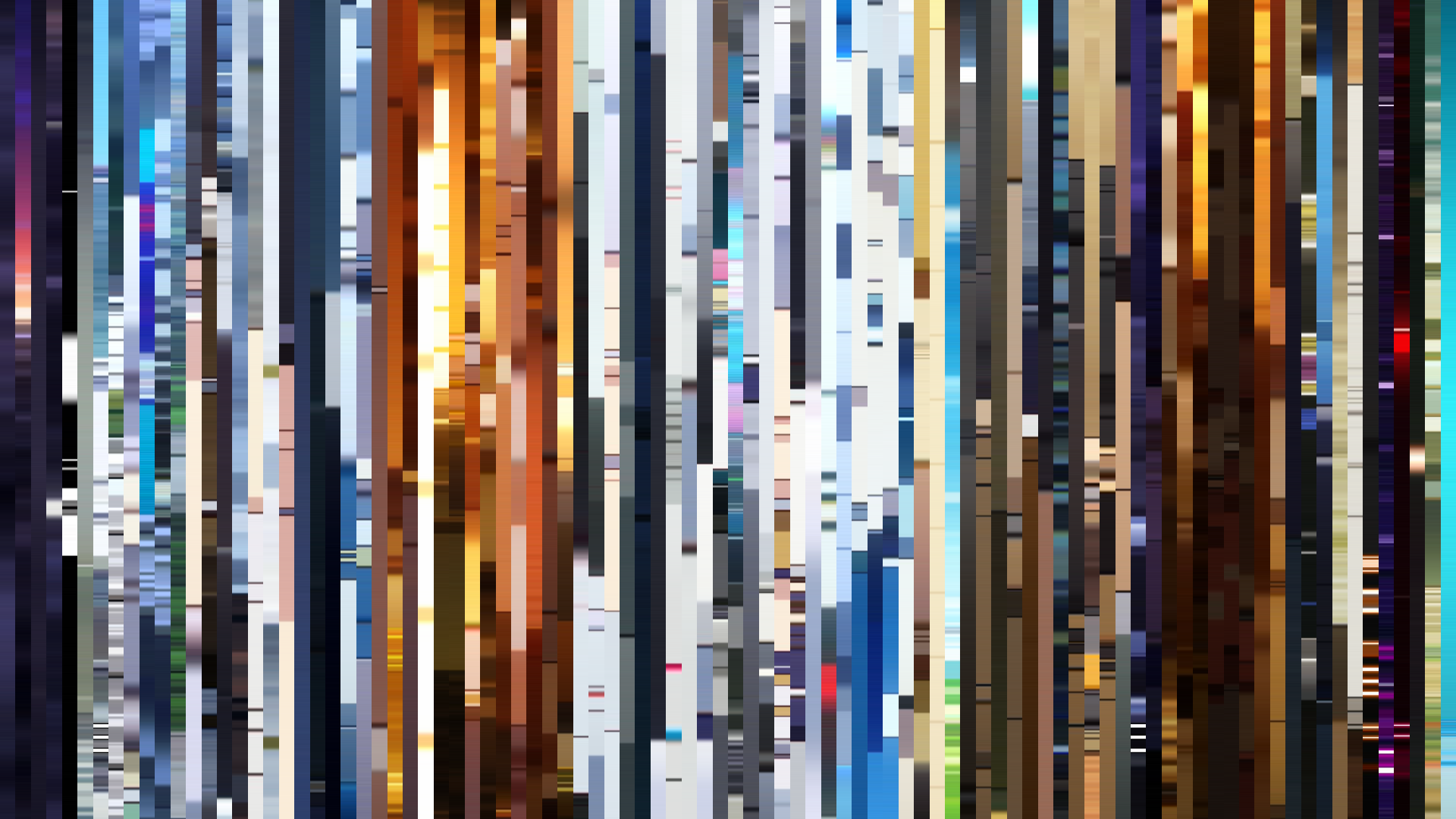
Slice · 30s
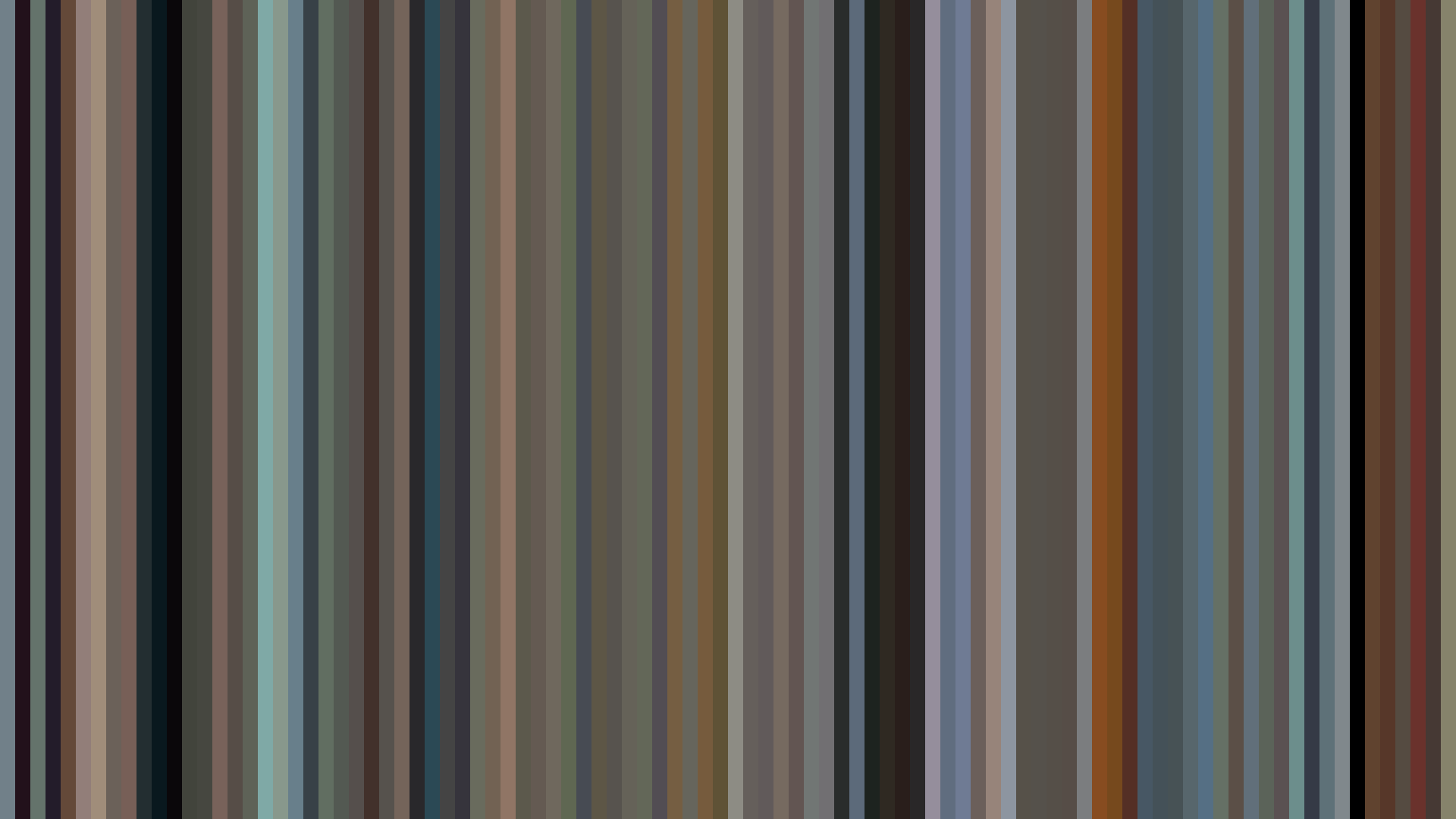
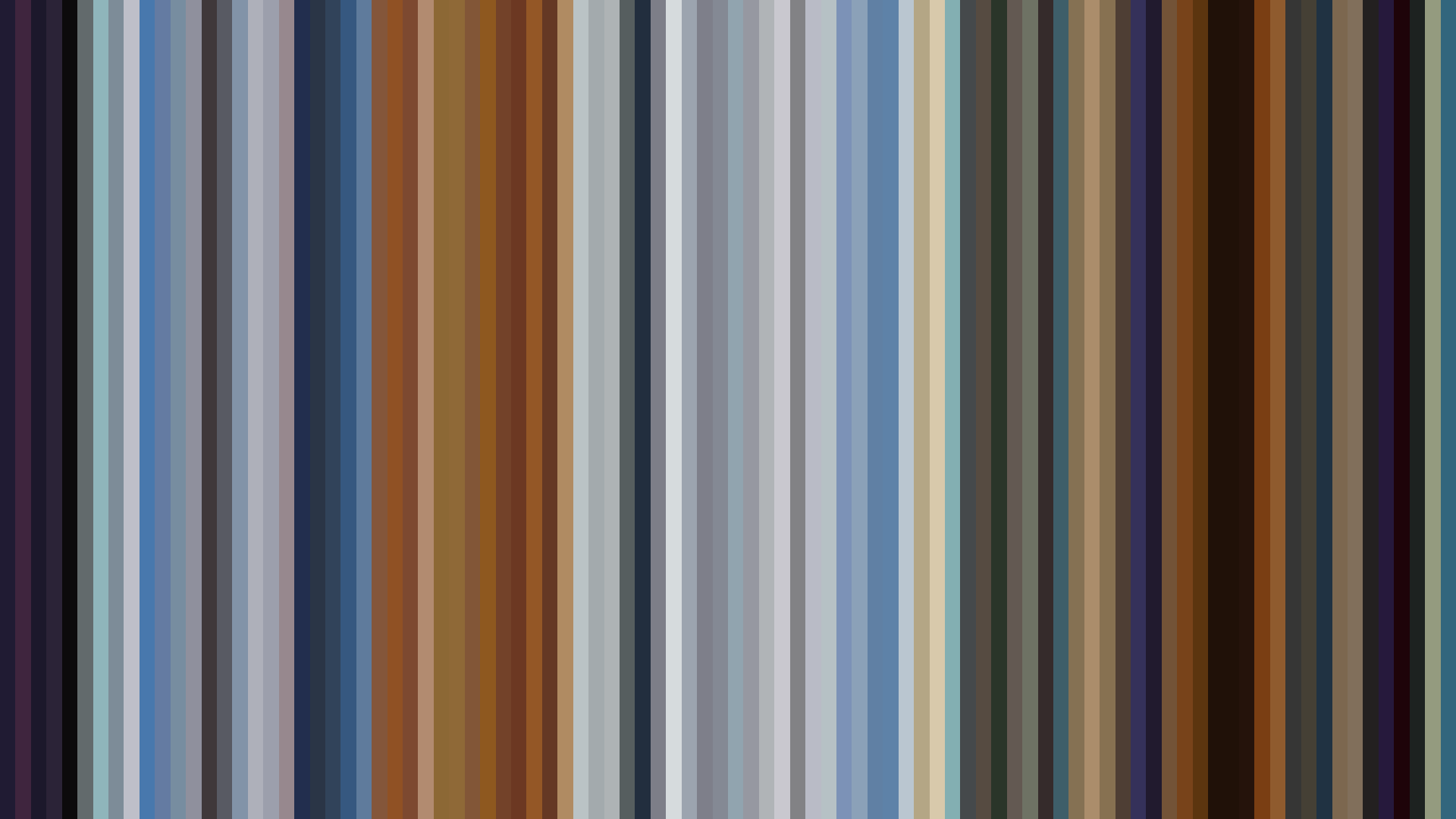
Avg · 30s
Vivy’s arc-up brightness curve is the most telling anomaly in the 2021 field. The middle act burns 46% brighter than the opener, a structural inversion of the standard fall-into-despair template. Where most sci-fi prognostications darken at their narrative midpoint, *Vivy*’s brightest moment is the moment of performance — the AI singing at her most autonomous, her program unshackled from mission directives. That peak, however, is flanked by lower averages; the show doesn’t resolve into light but retreats into a more ambiguous closing. The green-coded artificiality (28% of all frames, the cold tones of server rooms and holographic stages) is the series’ visual anchor, a reminder that this warmth is synthetic. Wit Studio and art director Atsushi Morikawa lean into a palette dominated by near-black (#141212) and steel grays, making the occasional red-orange flare (15%) read as a glitch in the system — not passion, but a warning. The *bright midpoint* is Vivy’s illusion of humanity, and the dimmed third act is the return to the machine.
Brightness Arc (episode progression)
Hue Distribution
Act Breakdown
Opening
0.312
Middle
0.456
Closing
0.387
Avg Brightness
0.356
Avg Saturation
0.266
Warmth
0.493
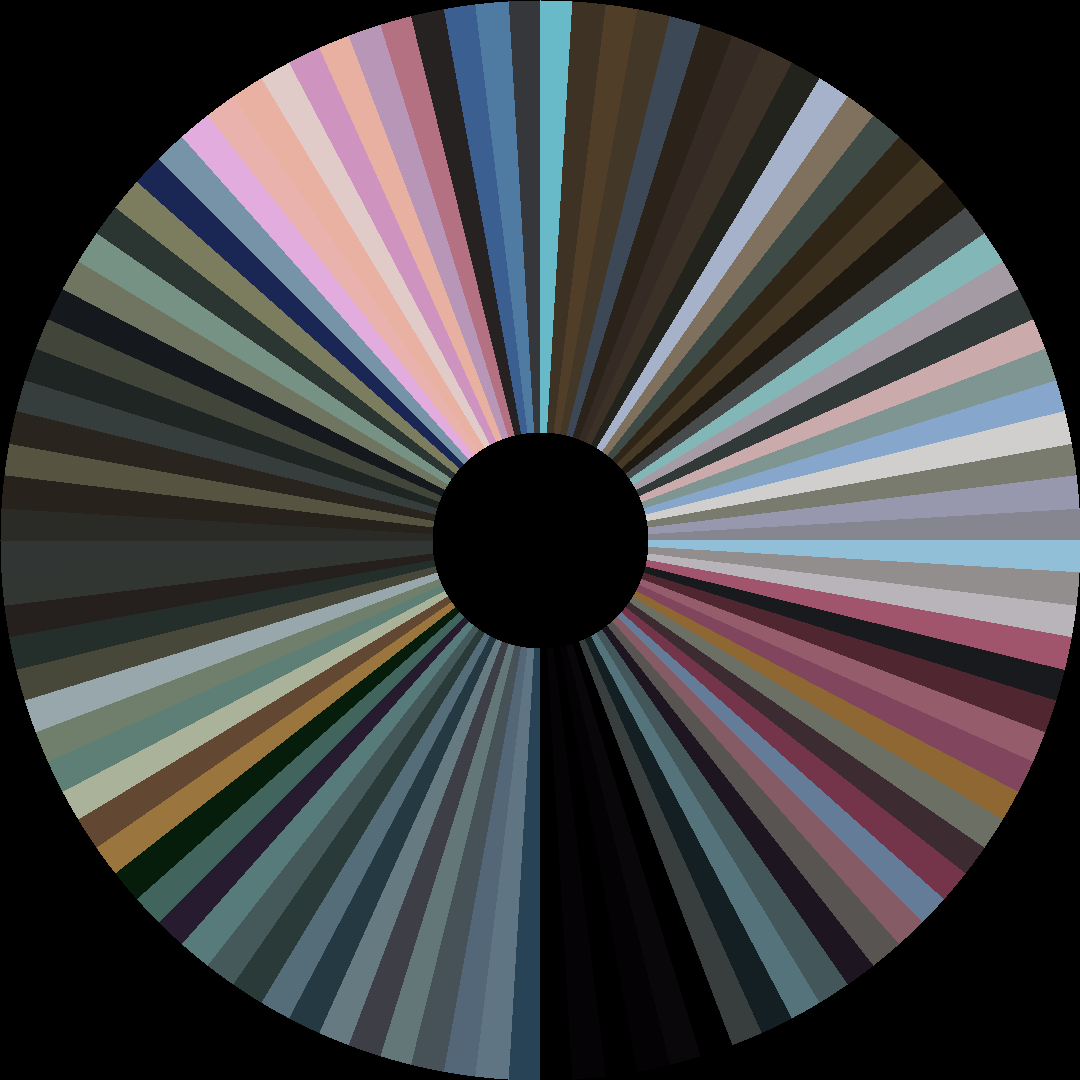
Color Palette
#141212
#5A5D5D
#E4E6E3
#9D9EA2
#354C56
#6797A0
#4E2B2E
#594A35
3-Act Color Story
Opening
Middle
Closing
Color Twins
Perceptually nearest palettes — measured in OKLab space, not RGB






Vivy’s arc-up brightness curve is the most telling anomaly in the 2021 field. The middle act burns 46% brighter than the opener, a structural inversion of the standard fall-into-despair template. Where most sci-fi prognostications darken at their narrative midpoint, *Vivy*’s brightest moment is the moment of performance — the AI singing at her most autonomous, her program unshackled from mission directives. That peak, however, is flanked by lower averages; the show doesn’t resolve into light but retreats into a more ambiguous closing. The green-coded artificiality (28% of all frames, the cold tones of server rooms and holographic stages) is the series’ visual anchor, a reminder that this warmth is synthetic. Wit Studio and art director Atsushi Morikawa lean into a palette dominated by near-black (#141212) and steel grays, making the occasional red-orange flare (15%) read as a glitch in the system — not passion, but a warning. The *bright midpoint* is Vivy’s illusion of humanity, and the dimmed third act is the return to the machine.